As Iran Strikes Loom, Trump, Rubio Score Big Win in Caribbean - Newsweek
The departure of Cuban forces from Venezuela signals a strategic shift and bolsters U.S. confidence ahead of potential military action against Iran, amid heightened tensions and diplomatic warnings. The U.S. considers a limited strike on Iran if no nuclear deal is reached, but experts caution the complexity of Iran's military response and the potential for wider conflict.

Elite Cuban security forces are starting to leave Venezuela, marking a major win for the Trump administration after it removed former President Nicolas Madura with a quick strike early last month. The exit of those forces, reported by Reuters on Saturday, comes as the U.S. has amassed an even bigger, more complex military buildup in the Middle East than it did in the Caribbean Sea, with President Donald Trump reiterating on Friday that he’s considering a limited strike on Iran if a nuclear deal isn’t reached soon.
Venezuela’s Interim President Delcy Rodriguez ordered the departure of the Cubans under pressure from the U.S., according to sources who spoke to Reuters. Both Maduro and his predecessor, the late president Hugo Chavez, were protected by Cubans in one of Latin America’s most enduring partnerships, whereby Venezuela supplied oil to Cuba and in return received specialists, including doctors and educators.
The success of the U.S. strike in Venezuela did not go unnoticed in Tehran, and now the exit of the Cuban forces—which long played a key role in preventing any coups—may serve as a further warning to an Iranian regime already weakened by military setbacks and anti-government protestors defying brutal crackdowns amid an economic crisis.
Trump Admin Emboldened by Venezuela
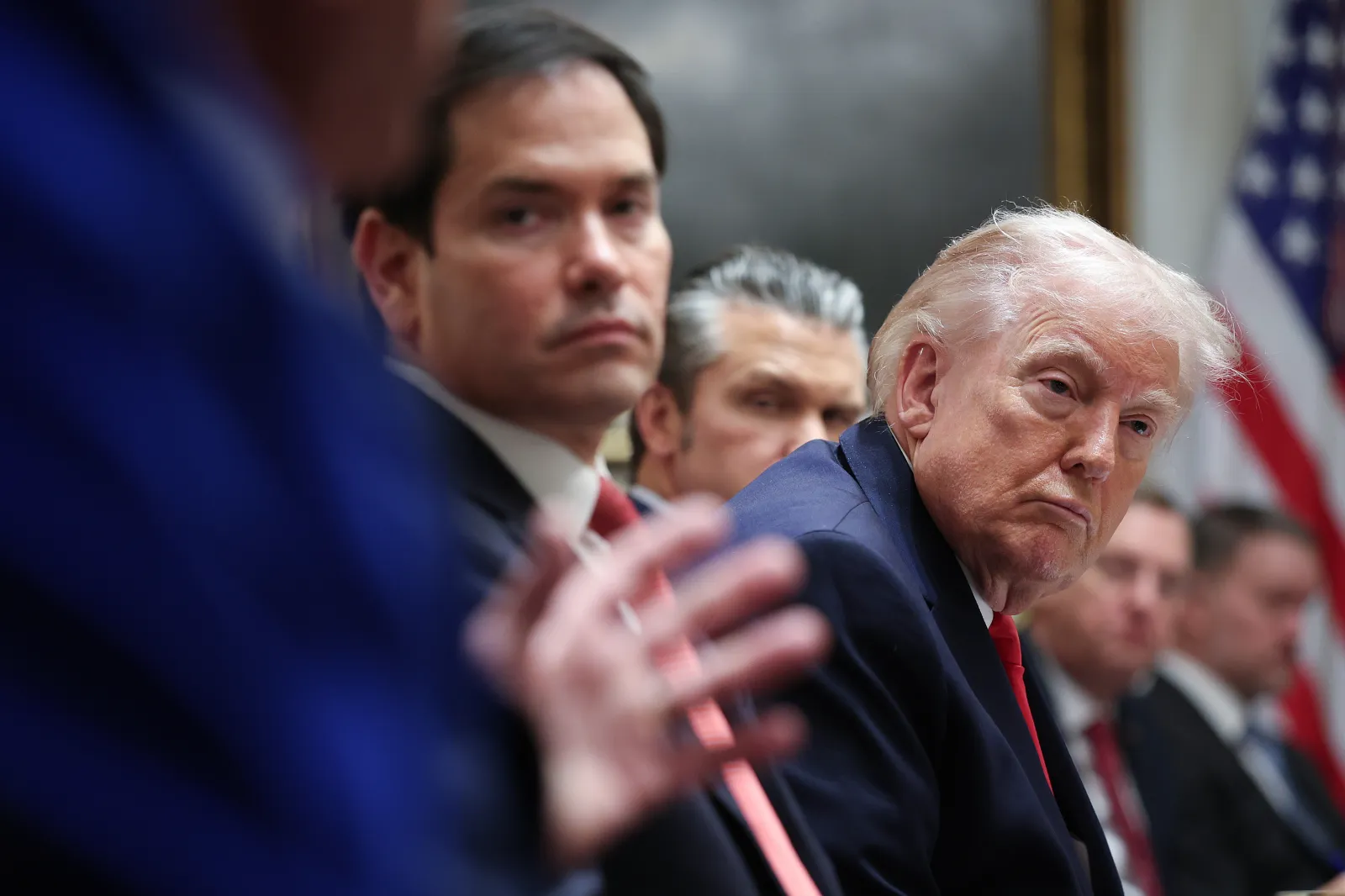
Trump and Secretary of State Marco Rubio, a Cuban-American and influential voice on Latin American policy, may well feel more confident about Iran following the events in Venezuela.
After the ouster of Maduro, Rubio said of the transition, “The first steps are securing what's in the national interest of the United States and also beneficial to the people of Venezuela...No more drug trafficking. No more Iran/Hezbollah presence there, and no more using the oil industry to enrich all our adversaries."
On Thursday, Trump issued a 10-15 day deadline to Iran to come back with a draft of a nuclear deal or else "bad things will happen.” Speaking at the first meeting of his Board of Peace in Washington, he also said he preferred a diplomatic solution as he seeks a nuclear deal that goes beyond the 2015 agreement that limited Iran's nuclear program in exchange for sanctions relief.
"Iran would be very wise to make a deal with President Trump," press secretary Karoline Leavitt said on Wednesday, referencing U.S. strikes last June on Iranian nuclear facilities.
But judging by urgent warnings from various governments for their citizens to leave Iran immediately, the possibility of a military strike is taken seriously. Germany, Sweden, and Poland, for example, have all issued pleas in recent days for citizens to get out while they can.
"Please leave Iran immediately and do not travel to this country under any circumstances," Polish Prime Minister Donald Tusk said on Thursday. The possibility of a conflict is "very real” and evacuation may no longer be possible in a few days, added Tusk, who previously served as president of the European Council.
Iran, meanwhile, has warned Trump that he might start a war with consequences he won't be able to control.
"The Islamic Republic’s regime is now operating on the assumption that a war can happen at any moment," Hamidreza Azizi, an Iran expert at the SWP Berlin think tank, told Newsweek last month.
Doubts About Striking Iran
While the U.S. military is clearly more powerful, the Islamic Republic could still respond to any attack with its arsenal of ballistic missiles and drones, targeting American facilities in the Gulf, notably in Bahrain and Qatar, possibly with help from its proxies.
Egypt Qatar, Oman, and Saudi Arabia have urged the U.S. to avoid taking military action against Iran, with the latter prohibiting use of its air space or territory for an attack.
Susan Rice, a former U.S. national security advisor, warned in a Substack interview on Friday that Iran has “significant military capacity,” adding, “the idea of an easy, quick regime change operation in Iran, I think, is folly.”
What worked in Venezquela would not necessarily work in Iran, she added: “If we were to do a Venezuela here, where we basically, you know, cut off the head of the snake but leave the body of the snake intact, and the snake is still wriggling and operating, we wouldn't have accomplished anything in the context of Iran.”
Rubio himself has made a similar observation, telling lawmakers after the Venezuela strike in late January, “It would be even far more complex than the one we're describing now, because you're talking about a regime that's in place for a very long time.”
In Iran, a complex power structure driven by ideology has taken shape over decades, so ousting the supreme lead would likely have less effect than removing strongman Maduro did in Venezuela. And even in Venezuela, as the recently re-released opposition figure Juan Pablo Guanipa noted on X on Saturday, “there are still more than 800 political prisoners in the jails of our country.”
Nevertheless, the exit of elite Cuban forces from Venezuela comes at an opportune moment for the Trump administration, giving it a welcome win as it adds pressure on Tehran to come to the table—or plans a strike.
Comments (0)
No comments yet. Be the first to share your thoughts.
Sign in to leave a comment.