Brink of Collapse: Cuba Is Running Out of Oil Fast - 19FortyFive
Cuba faces a severe economic crisis due to the U.S. blockade cutting off its vital oil supply, primarily sourced from Venezuela. With estimated reserves dwindling to as little as 20 days, the country struggles with hyper-inflation, a declining population, and increasing emigration. Cuba's regime may be at risk of collapse, prompting discussions with Russia for potential aid, though Russia's support appears limited amid its own setbacks.

20 Days of Oil: Inside the U.S. Blockade Pushing Cuba to the Brink
*WARSAW, POLAND – *“Cuba is in crisis” is a phrase heard more frequently with each passing day. The communist regime that has ruled the island nation for 67 years is in its weakest state since the revolution that took control in 1959.
This current state of affairs is one of the follow-on effects of Washington’s Operation Absolute Resolve on January 3 that captured and extracted Venezuelan dictator Nicolás Maduro and his wife from Caracas. In December 2025, prior to this raid, U.S. President Donald Trump had already directed the U.S. military to begin boarding and seizing tankers belonging to the shadow fleet of ships shipping oil illegally from sanctioned nations.
With these shipments being interdicted, the flow of Venezuelan oil, which has been the sole energy lifeline for Cuba, has essentially been shut down. As a result, the regime in Havana faces a mounting set of problems. Last week, Bloomberg reported that the situation has deteriorated even further over the past month.
Cuba has historically maintained about a 45-day reserve supply of oil, which it is now using judiciously to preserve whatever remains. Some analysts believe at this point that the Caribbean nation has as little as 20 days’ supply currently remaining in storage.
Weakness Could Mean Regime Change for Cuba
A recent report from CNN found that “Cuba may be experiencing the most profound moment of economic uncertainty that the island’s residents have endured in decades if not over their entire lives.”
The country was already in near-dire straits because of a four-year economic slump. This situation was then exacerbated by hyper-inflation and the migration abroad of almost 20 percent of the population.
That escalating outflow of largely younger Cubans already damaged the country’s proper function. Cuba depended on Venezuela for oil, and Cuban specialists had forecast that the country would soon also have to depend on their South American ally for the manpower to maintain an everyday labor force.
A conversation last month in Miami with Dr. Sebastian Arcos, the Associate Director of the Cuban Research Institute at Florida International University, revealed just how pronounced Cuba’s crisis is.
Waves of emigration and a declining economy have depressed the birthrate to a level where “at present Cuba is a demographic catastrophe,” said Arcos. “Its population is today the oldest in all of Latin America.”
Regime Change or Russian Rescue?
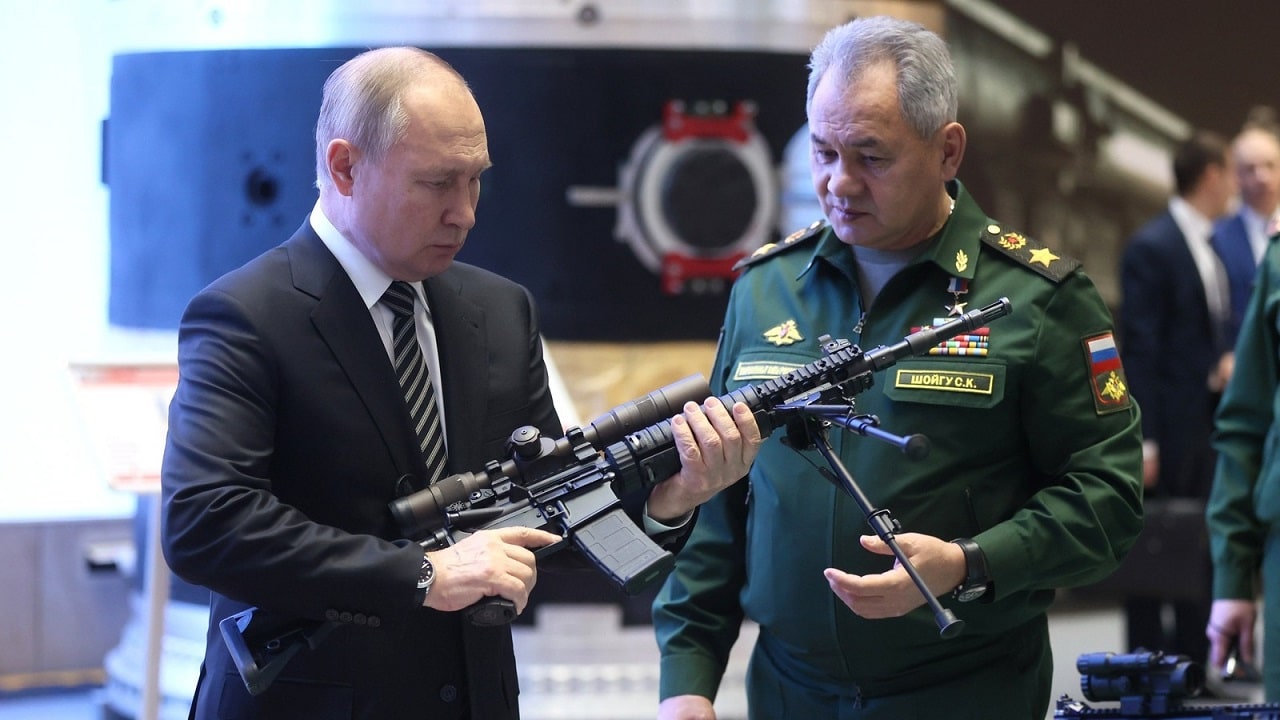
Russian President Putin with Russian Military Forces. Image Credit: Creative Commons.
The Trump administration’s goal in choking off Cuba’s oil lifeline is to achieve regime change—compounding the current economic decline is the best way to achieve that.
U.S. Secretary of State Marco Rubio is the official in charge of negotiating with individuals close to senior Cuban officials to resolve the crisis. Rubio is himself Cuban American and a longtime opponent of the regime in Havana.
However, it is not at all clear what U.S. concessions would be offered to reach a settlement. The Secretary of State previously said he would only speak with Cuba’s leaders to arrange their relinquishment of power.
“This is a regime that has survived almost entirely on subsidies – first from the Soviet Union, then from [former Venezuelan President] Hugo Chavez,” Rubio said last week during the Munich Security Conference. “For the first time, it has no subsidies coming in from anyone, and the [communist] model has been laid bare.”
In what may be a last-resort move to stave off collapse, Cuban Foreign Minister Bruno Rodriguez traveled to Moscow this week. On Wednesday, he met with Russian President Vladimir Putin to discuss what economic relief he might be able to provide.
Putin told Rodríguez that Russia has “always stood by Cuba in its struggle for independence, for the right to develop along its own path and has always supported the Cuban people.”
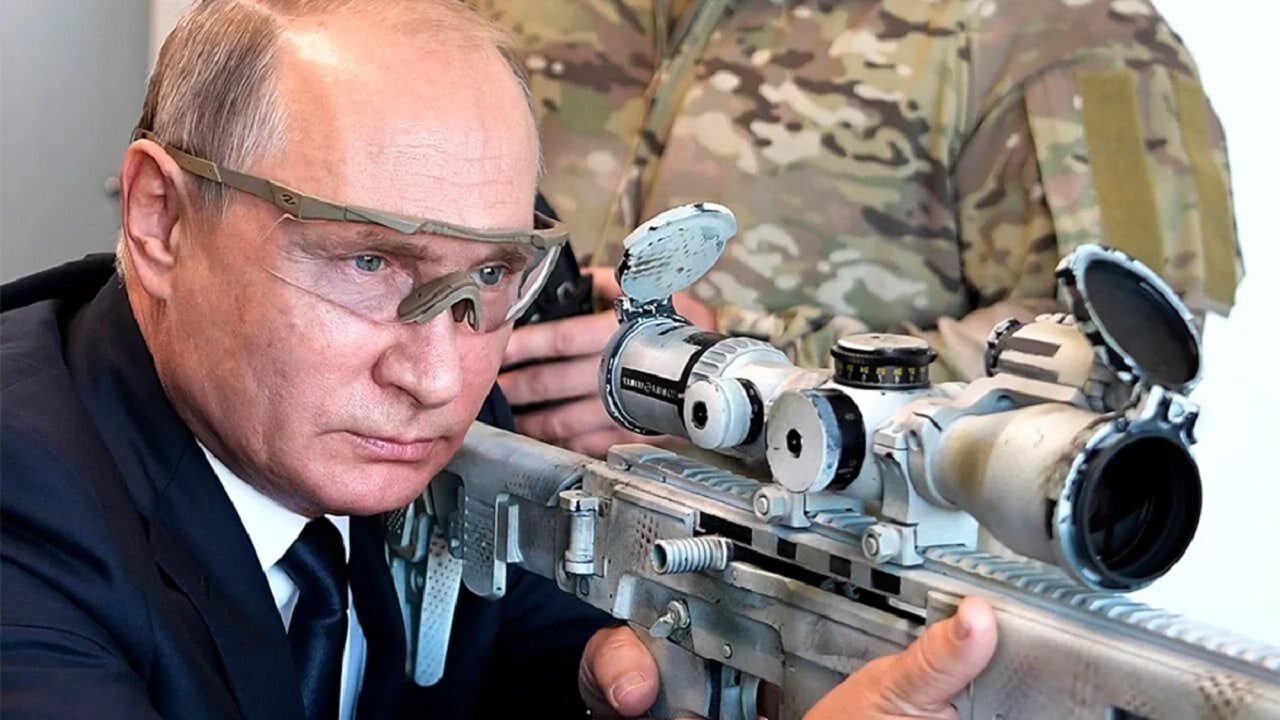
Russian President Putin testing a new sniper rifle. Image Credit: Russian State Media.
“Now we’re in a special period, with new sanctions. You know how we feel about this. We won’t tolerate anything like that,” Putin added.
But it is unclear whether Moscow is really prepared to ride to Cuba’s rescue and try to break the U.S. oil blockade. Russia’s Embassy in Havana said last week that Moscow planned to send oil and other petroleum products to Cuba as humanitarian aid, but did not indicate how the shipments would be made, or when.
It remains to be seen whether that oil will be permitted to pass through the U.S. blockade.
For the most part, Russia is willing to provide only moral and diplomatic support. Moscow’s increasing setbacks in Ukraine leave it unable to provide much more.
*About the Author: Reuben F. Johnson *
Reuben F. Johnson has thirty-six years of experience analyzing and reporting on foreign weapons systems, defense technologies, and international arms export policy. Johnson is the Director of Research at the Casimir Pulaski Foundation. He is also a survivor of the Russian invasion of Ukraine in February 2022. He worked for years in the American defense industry as a foreign technology analyst and later as a consultant for the U.S. Department of Defense, the Departments of the Navy and Air Force, and the governments of the United Kingdom and Australia. In 2022-2023, he won two awards in a row for his defense reporting. He holds a bachelor’s degree from DePauw University and a master’s degree from Miami University in Ohio, specializing in Soviet and Russian studies. He lives in Warsaw.
Comments (0)
No comments yet. Be the first to share your thoughts.
Sign in to leave a comment.