Businesses could spend years waiting for tariff refunds in wake of SCOTUS decision, experts say
The U.S. Supreme Court ruled that the Trump administration's emergency tariffs were imposed illegally under the International Emergency Economic Powers Act, leading to potential refunds totaling up to $175 billion for businesses. Litigation over these refunds is expected to take years, and the administration plans to implement new tariffs under different authorities, such as Section 122, which requires congressional approval after 150 days. Small and mid-sized businesses, heavily affected by previous tariffs, may struggle to recover due to limited resources and may need to pass additional costs onto consumers.

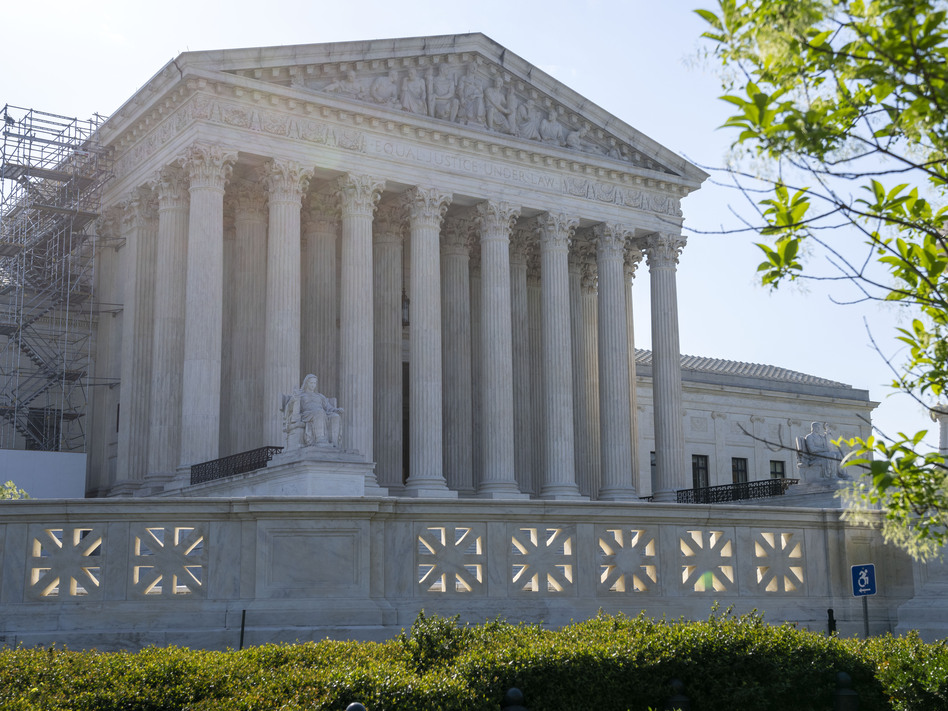
The U.S. Supreme Court's ruling on Friday to strike down the Trump administration's emergency tariffs means many businesses are due a refund from the federal government, but those refund checks may not come soon enough to help small and mid-sized companies that have borne the brunt of those tariffs.
The high court ruled 6-3 last Friday that the International Emergency Economic Powers Act (IEEPA) does not grant the president the authority to unilaterally impose open-ended tariffs. According to an analysis by economists at the University of Pennsylvania's Wharton School, the ruling that the administration collected those tariffs illegally means businesses can claim refunds totaling up to $175 billion.
Margaret Kidd, who chairs the logistics and supply chain management department at San Jacinto College, told Hello Houston that litigation over those refunds could take years to resolve.
"It’s not going to happen automatically," Kidd said. "So, more than likely, it'll go to the Court of International Trade and then come back down to an appellate court."
Speaking at the Economic Club of Dallas the day the ruling came down, Secretary of the Treasury Scott Bessent said the administration would apply other tariffs unilaterally going forward in place of the tariffs applied under IEPPA.
"Despite the misplaced gloating from Democrats, ill-informed media outlets, and the very people who gutted our industrial base, the court did not rule against President Trump's tariffs,” Bessent said. “Six Justices simply ruled that IEEPA authorities cannot be used to raise even one dollar of revenue. Treasury's estimates show that the use of Section 122 authority, combined with potentially enhanced Section 232 and Section 301 tariffs, will result in virtually unchanged tariff revenue in 2026."
President Trump subsequently said on social media that he would apply tariffs of 10%-15% worldwide. Kidd said those Section 122 tariffs may come with limits that the IEEPA emergency tariffs did not.
"The thing with the Section 122 tariffs is, after 150 days, Congress has to get involved if they want to keep those in place," Kidd said. "Now, I have to think, with midterms coming up, that one’s going to be a little bit of a stretch."
But Kidd said that may not provide enough relief for small and mid-sized business owners who have been squeezed the hardest by the administration's tariffs up to now.
"They just don’t have the deep pockets," Kidd said. "They don’t have the lines of credit, they don’t have the staff to do alternative sourcing, and they just don’t have, you know, the capital."
Kidd said that means many businesses will have few other options but to pass along cost increases to consumers in order to survive.
"We’ve all experienced inflation in housing, in clothing, in cars and electronics," Kidd said. "It’s still here. It’s not going away with this action."
Comments (0)
No comments yet. Be the first to share your thoughts.
Sign in to leave a comment.