Column: Whose Bible at the border? - The Newton Beacon
My heart sank when I read in the news recently about a wrongly detained blind refugee from Myanmar named Nurul Amin Shah Alam who was released far from home and died in the freezing snow [...]

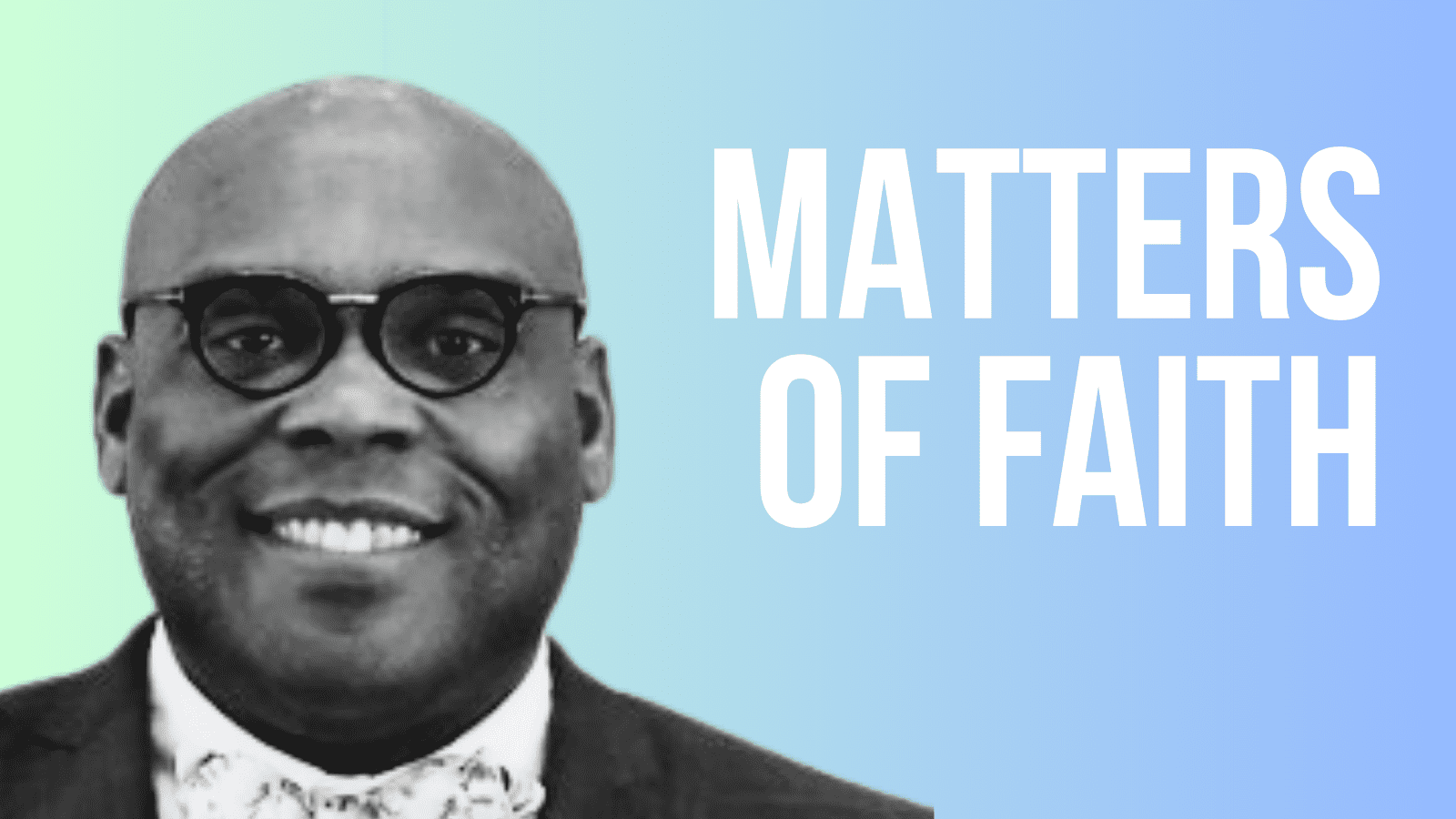
MATTERS OF FAITH
My heart sank when I read in the news recently about a wrongly detained blind refugee from Myanmar named Nurul Amin Shah Alam who was released far from home and died in the freezing snow in Buffalo during immigrant enforcement operations.
After our faith community was shaken this year by the killings of Renee Good and Alex Pretti in Minneapolis and Keith Porter in Los Angeles, all we can say is not again.
Those cases reveal more than disagreement over immigration policy. They expose a larger and deeper moral fracture about whose lives are treated as expendable.
This debate over immigration is not limited to documentation status. It asks what degree of force and dehumanization we are willing to normalize in the name of enforcement. When undocumented workers, asylum seekers, refugees, and people with disabilities become casualties within our systems, the procedural conversation halts and the moral conversation makes it way to the forefront
Here’s the real theological question: Do we truly believe that every human being bears the image of God? And, if so, does that belief meaningfully inform our public decisions?
In thinking about how to respond, there’s no clearer image to recall than when the Patriots played in the Super Bowl in 2017. (We can forget about this year’s disappointing game.) They trailed 28 to 3 in the third quarter in 2017, and the outcome seemed decided. So I turned off the lights and went to bed.
The next day I woke up to a stream of text messages saying the Patriots had made one of the greatest comebacks in professional sports history. How? Scoring more than 30 points in the fourth quarter. Although that victory’s credit is usually given to Tom Brady, it depended just as much on Julian Edelman’s unlikely catch, James White’s relentless effort, good coaching, the fans, and an entire team refusing to submit to the likely outcome.
What made that comeback remarkable was not simply athletic talent but collective participation, because no one assumed that someone else would carry the weight alone.
You might be asking what the Super Bowl has to do with religion in public life? I would say that 2017 memory is critical for us in 2026 because we are living in a moment when it is tempting to believe that the outcome of our great civic struggle is already settled – democracy is in hospice and it’s time to get ready for the funeral.
Rev. Dr. Martin Luther King Jr. warned, “In the end, we will remember not the words of our enemies, but the silence of our friends.” What makes that observation so enduring is how ordinary silence can feel. It rarely announces itself as moral collapse. It simply becomes habitual.
Let us not forget as we approach the 250th anniversary of the United States, this country was formed through migration and movement, some chosen and some violently imposed.
Families crossed oceans seeking opportunity or safety. Others were transported here in chains through the transatlantic slave trade. Migration is woven into our national story, and into human life more broadly. People move for work, for education, for survival, and for love. Relocation is as natural to human nature as the sun is to the sky.
As a Christian pastor, I cannot approach immigration just as a technical policy question, where if I respond I get an A-plus instead of an A for living the faith. Scripture repeatedly links hospitality to moral memory, reminding Israel, “You shall love the stranger, for you were strangers in Egypt.” Hospitality is not sentimental generosity but our covenantal responsibility to each other.
Jesus names that responsibility in the Parable of the Good Samaritan. It’s a story where a religious outsider crosses ethnic and religious boundaries to care for a wounded stranger on the side of the road and assume the cost of a stranger’s survival.
This is one example of how the Christian story does not elevate borders over bodies. That is why Pope Leo XIV’s insistence that immigration policy be measured by human dignity stands firmly within the Gospel’s moral arc. When House Speaker Mike Johnson responded by claiming that “borders are biblical,” Scripture was reduced to a crutch to support a policy rather than a lens through which to examine immigration.
The Good Samaritan does not express compassion based on migration status; compassion is exercised because a human being is wounded and needs care. Any reading of Christianity that reverses that order distorts it and turns Jesus into a prop on the stage of political theater.
Across Massachusetts, conversations about immigration reveal real concern about the law alongside equally serious concern about dehumanization. Many are tired of polarized debate, some are fatigued, and others demand that policy prioritizes people. As long as we choose the side of policy over humanity, the soul of our nation will continue to erode.
Let’s let the fond memory of the Patriots’ comeback in 2017 serve as a reminder that outcomes are not predetermined simply because they appear inevitable. Games are not scripted in advance. And our democracy is not dying. It can be revived and become more alive than ever before. For when people move from spectators to participants, the tide can shift.
What we choose to defend and whom we choose to protect will reveal whether we truly believe that every person bears the image of God.
The question for us now is whether we still believe the same thing about our democracy and about the worth of the people who have been most easily discarded in these times?
The Rev. Dr. Eric C. Jackson is pastor of Eliot Church of Newton, UCC. He welcomes your feedback at [email protected] or invites you to join him for coffee and conversation after the 10 a.m. service each Sunday.
Comments (0)
No comments yet. Be the first to share your thoughts.
Sign in to leave a comment.