Did Jeffrey Epstein Want to Take Down the Pope? - New York Magazine
Private correspondence between Jeffrey Epstein and Steve Bannon reveals the two men scheming in 2019 to use Frédéric Martel's book *In the Closet of the Vatican* — which alleged widespread homosexuality among Catholic clergy — as the basis for a documentary intended to undermine Pope Francis. Bannon, who had been recruited by Cardinal Raymond Burke to develop a curriculum for conservative Catholic activists, sought Epstein as executive producer for the project, framing it as part of his broader effort to align his global reactionary movement with traditionalist Catholic forces opposed to Francis's progressive reforms. The plan collapsed when Burke disavowed the documentary and distanced himself from the Dignitatis Humanae Institute, and Epstein was arrested weeks after the exchange. The released documents also show Epstein had longstanding interest in Vatican politics and finances, including connections to anti-Francis Catholic figures in Europe.

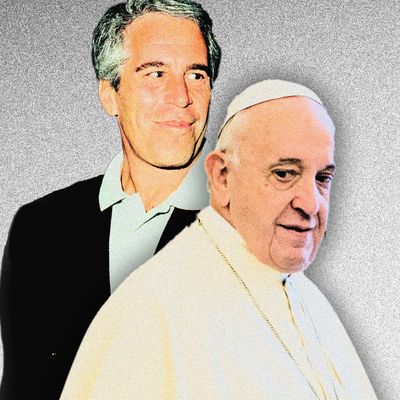
When you read the private correspondence of Jeffrey Epstein and his myriad associates, it’s very difficult not to wonder from time to time — somewhat absurdly, as though in self-defense against the heaves of outrage and disgust — who exactly these people think they are. Self-regard drips from these missives in putrid globs: the jokes at once dirty and corny (a grim combination); the unseemly opining on the moral state of the underclasses; the casual matchmaking between heads of state, oligarchs, and political impresarios. But then, of course, that’s the absurdity of it. Given their standing in the world and the extent of what they were able to get away with for so long, it’s no wonder Epstein & Co. seemed to see themselves as among not just the elite but the elect.
In a strong field, Steve Bannon stands out both for his hubris in thinking he can reshape reality in his own image and his tenacity in actually trying to make it happen. In the latest tranche of communiqués, we find Bannon scheming endlessly, as well as bragging about the recognition he is accruing. “Germans get it,” writes Bannon with a forwarded Breitbart article titled, “German Media Confesses to Underestimating Bannon: ‘He Is as Dangerous as Ever.’” Replies Epstein, “luv it.” Such is often the level of these exchanges, and yet the sheer audacity of their goals supersedes their vulgarity: Let’s have a massage, they might say, and after lunch we’ll take down the pope.
In June of 2019 — two years after Bannon’s ouster from the Trump administration, mere weeks before Epstein’s final arrest, and two months before his death in a Manhattan jail cell — the pair are texting in the early evening about some of their preferred subjects: casual sexual cruelty (reference is made to a “nutcase princess” who “loves” Bannon but whose looks, they judge, have faded), Donald Trump (to whose jowls they compare the princess’s), and their planned meetings with foreign dignitaries (in this case, “Miro,” or Miroslav Lajčák, a Slovak diplomat who resigned over his extensive ties to Epstein in January of this year). The tone is nonchalant, even a little unfocused, but, as Religious News Services and CNN have reported, this particular chat does seem to have a central point: Bannon wants to know if Epstein has yet read In the Closet of the Vatican, a 2019 best seller alleging that the upper crust of the Roman Catholic clergy was, in fact, majority gay, whether conservative or progressive, sexually active or not. He wants to make it into a documentary, and he wants Epstein as executive producer. (In characteristically gnomic fashion, Epstein replies with one word: “Porn.”)
This new project was part of Bannon’s long-standing effort to fuse his global reactionary movement with the symbolic and social power of the Catholic Church. In 2014, while giving a talk to the Dignitatis Humanae Institute in Rome, a right-wing think tank that cultivated a reputation as a hotbed of Catholic reaction, he announced a “global tea party movement,” in which insurgent parties in Europe like Britain’s UKIP and France’s Front National were beginning to catch up with their American counterparts, fighting “crony” or “state-controlled” capitalism and seeking to establish anti-abortion, anti-gay marriage, and anti-immigration laws — in other words, a movement fueled by the kind of proto-fascistic xenophobia that has reshaped global politics over the past decade.
It was around this time that Pope Francis began pursuing the reforms that would define the progressive bent of his papacy, including relaxing the punitive posture that had determined the Church’s ethical and social teachings for decades and reorganizing it around advocacy for the poor and oppressed. This met with significant backlash from conservatives among the laity and the clergy: Following Francis’s 2015 apostolic exhortation “Amoris Laetitia,” several cardinals, including American Raymond Burke, issued a dubia, a direct appeal to the pope for clarification widely understood as a rebuke to this new approach.
Before his friendship with Bannon began sometime around the first Trump election, Epstein’s attitude to the Vatican and to Catholicism in general seems to have been more or less what it was toward everything: dismissive, obtuse, but with a sense of direct involvement, from the casually intrusive to the unaccountably personal. He was frequently disdainful of the faith, referring to the kind of philanthropic humanism that treats every life as equal as “Catholicism at its worst.” He was also happy to make the odd sacrilegious joke, such as his suggestion that he invite Pope Francis for a massage during his 2015 visit to New York: “i thought id invite him for a massage,” he writes to his brother, Mark, “so when he hears oh jesus im coming. he feels happy.”
But his interest in the Vatican as a political player was more serious. The files contain dozens of emails about the Holy See, concerning everything from suspected Chinese hacks into its system to the ongoing fallout of the sexual abuse crisis. In one particularly revealing exchange, Epstein receives, the day after Pope Benedict XVI’s resignation, an email from Edward Jay Epstein (no relation), a Harvard professor and the author of Who Killed God’s Banker?, an investigation into the death of Roberto Calvi, a prominent banker with ties to the Vatican who was found hanging from Blackfriar’s Bridge in London. The author argues at length that however significant Benedict’s abdication, the more radical change was in the leadership of the Vatican bank, which he suggested was the result of a scandal involving corruption, bribery, and blackmail. Epstein found this so compelling that he seems to have retyped the email himself, making some minor edits along the way, and sent it to Larry Summers, passing the words off as his own.
This is the trouble with reading these documents: With so much smoke billowing around the place, one wonders whether the light of any fire could penetrate the gloom. Among the images released by the House Oversight Committee was a snapshot of Epstein and Ghislaine Maxwell meeting Pope John Paul II from 2003. Plenty of people were photographed with the Polish pontiff, of course, but what then to make of a 2015 email exchange between Epstein’s accountant and a contractor tasked with restoring one of Epstein’s residences in which the latter says of their shared boss, “He wants me to finish each column different, as when he was living with Pope John Paul the Second in Vatican.” Undoubtedly, Epstein was a bullshit artist, as well as scandalously free with the words he chose, and it’s possible the contractor simply misheard or misspoke; there is no evidence that Epstein spent any extended time around now-Saint John Paul II. But what baffles is how he was able to build such a reputation that almost everyone, it seems, believed it.
By the time Epstein and Bannon linked up, Bannon wanted Epstein’s help in consolidating his European network. Certainly, Epstein’s connections were of the anti-Francis stripe: A correspondent going by the name of “balerina Simona” reminisces in a 2018 email with the subject heading “Always Thinking of You” about seeing the photo of JPII in Epstein’s home and compares the Argentine unfavorably to his predecessor: “Today we were with Pope Francis … very exciting experience, but no feeling of holiness.” The “nutcase princess” mentioned in the 2019 texts seems to be Gloria von Thurn und Taxis, a German socialite (she was known in the ’80s as Princess TNT) turned traditionalist Catholic activist whom the New York Times called “the sun queen around which many traditionalist Roman Catholics opposed to Pope Francis orbit.” (In the same thread, Epstein quips that the princess’s “love” for Bannon “makes it harder for you to disclaim a nazi bent.”) What they all have in common seems to stem from their shared disdain for Francis’s campaigning for migrants’ rights and for social justice more generally. A woke pope, in other words, was diametrically opposed to how they envisioned the magisterium operating.
In 2019, Bannon had been tapped for a leadership role in the Dignitatis Humanae Institute by Cardinal Burke, who charged him with developing a curriculum for conservative activists. The planned film of In the Closet of the Vatican was to be a marquee event for their partnership. “Will take down Francis,” Bannon writes to Epstein. “The Clintons, Xi, Francis, EU—come on, brother.” If Epstein responded in greater depth to this plan, he did so elsewhere; the full extent of his involvement in this and in the wider network of Catholic conservatives remains unknown.
But what must have then seemed like the verge of triumph to Bannon was, in fact, the point of collapse. Frédéric Martel, the author of In the Closet, told CNN that he thought Bannon “wanted to instrumentalize” his book to “take down Francis.” Unfortunately for Bannon, the two primary takeaways of In the Closet were that the damage being done to the church by this cabal of high-powered clergymen is less due to their homosexuality than their flagrant abuse and hypocrisy and that only Francis’s two-pronged approach of tolerance for the laity and severity against abuser clerics stood a chance of healing such a profoundly corrupted institution. Burke’s response was to disavow the proposed documentary and abandon the Dignitatis Humanae Institute altogether.
The Catholic response to the Epstein revelations in general has largely mirrored that of wider society — horror, disgust, demands for an adequate reckoning — with some notable exceptions on its right wing. Bill Donohue, indefatigable president of the Catholic League, felt compelled to clarify that Epstein was not a pedophile, in order to reiterate his curious view that the real problem with the Church’s sexual-abuse crisis was likewise not pedophilia but homosexuality. Matthew Schmitz, a Catholic convert and the founder of Compact magazine, has made something of a campaign against what he calls the “Epstein myth,” arguing in First Things,
the Washington, and elsewhere that the exposure of Epstein’s depredations and international network of collaborators and enablers is largely an excuse for moral panic, conspiracy theory, and antisemitism. According to
PostCNN reporting, Bannon has not commented on this most recent release.
It would be unwise to consider his movement permanently disabled by this scandal, even as Epstein associates among the European elite are snatched from the firmament one after another. Among the depressing features of the cadre revealed by these files is its mentality of permanent insurgency. If these emails make it more tempting than ever to believe that a shadowy cabal controls the world, it is due not least to the fact that, no matter the status of Epstein’s correspondents, they all talk as if the world were controlled by shadowy cabals. None of them seems interested in anything like governance or even leadership, only infiltration; if anything, they’re enamored of the status quo, as it provides them both with friends to win and influence and a perpetual enemy to rail against. Perhaps this is what so intrigued Epstein about the Vatican, so famous for its intrigues, its darkened corners and whispered stratagems. It’s all conspiracy, all the way down; no pretenders to the throne, only swaggering, insinuating suitors, a type at once flightier and more durable than any sitting king.
Comments (0)
No comments yet. Be the first to share your thoughts.
Sign in to leave a comment.