Donald Trump Faces 'Epic Fury' From MAGA Over Iran - Newsweek
President Donald Trump announced the initiation of "major combat operations" against Iran, including regime-change language, which has elicited criticism from some MAGA members and allies, who see it as a betrayal of the movement's anti-war principles. While polling indicates moderate support among Trump supporters for military action against Iran, broader public opinion and internal conservative criticism suggest concerns about the escalation and potential quagmires. Trump's historical stance against the Iraq War and his emphasis on quick, interests-based intervention could influence how his base perceives this escalation, with potential for anger and accusations of betrayal if the conflict expands or prolongs.

"Epic Fury" is the name the Pentagon has given to President Donald Trump's operation against Iran. It also risks becoming the political outcome.
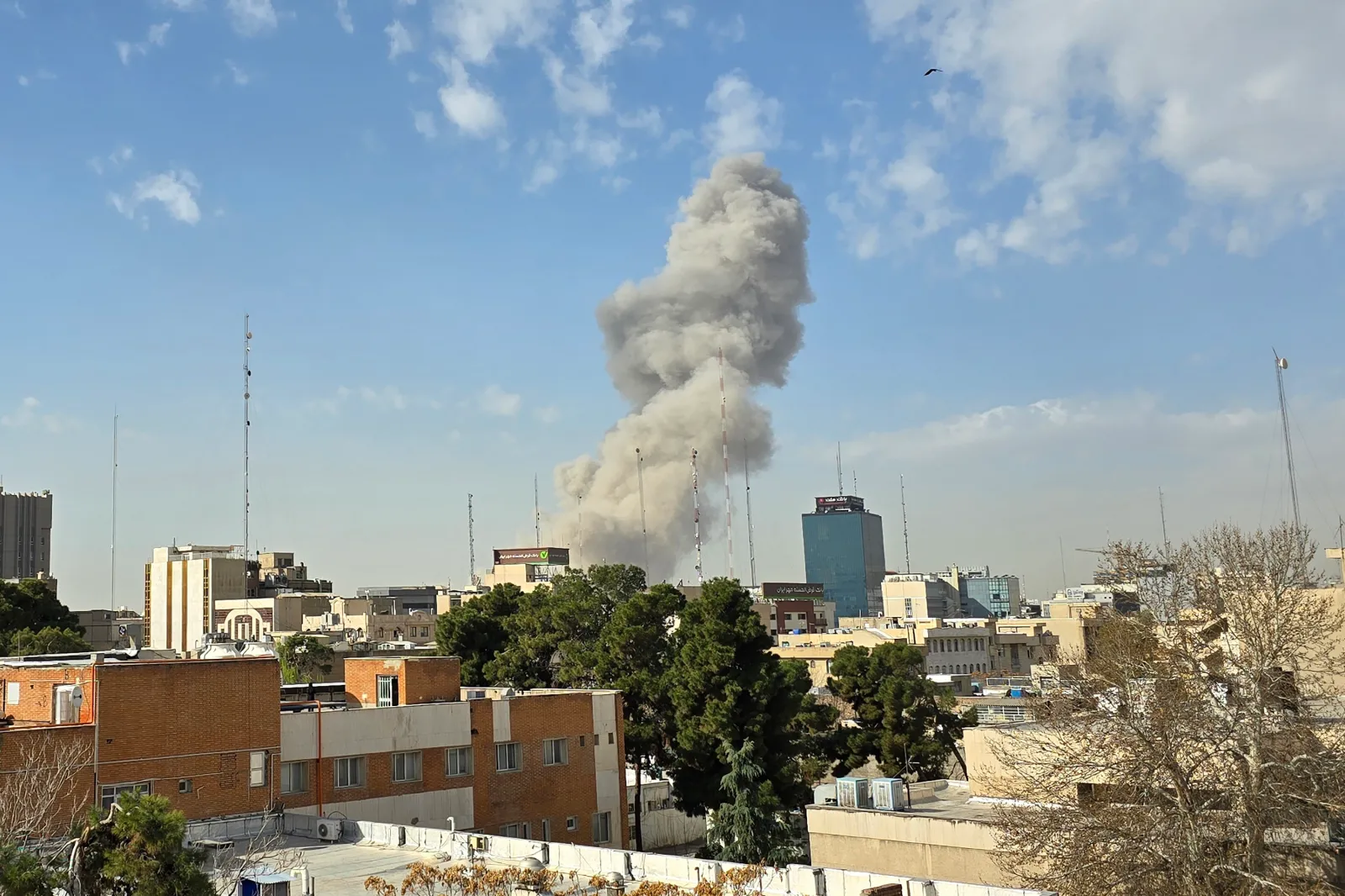
Trump announced today the U.S. had begun "major combat operations" in Iran, and paired the military escalation with a momentous goal: he urged Iranians to "take over your government," while warning Iranian soldiers to stand down or face "certain death."
That combination—large-scale force plus regime-change language—is exactly what Trump’s own movement has spent years describing as one of the original sins of Republicanism from the George W. Bush era. The question isn’t whether MAGA is pacifist. It’s whether Trump has started the one kind of conflict that makes his base feel cheated: a Middle East intervention that risks becoming bigger than advertised, messier than promised, and nothing like "America First."
Representative Thomas Massie, the Kentucky Republican and Tea Party member who has become a fierce Trump critic, made the point explicitly today in a post on X.
"I am opposed to this War," he wrote. "This is not ''America First.'"
Tucker Carlson, the former Fox News host, told Jonathan Karl of ABC that the attack on Iran was "absolutely disgusting and evil."
What MAGA Wants
If you look only at topline polling, it’s easy to assume Trump has plenty of runway with his voters. In a February 23 Economist/YouGov poll, 56 percent of Trump voters said they support using U.S. military force to attack Iran. Among self-identified MAGA supporters, support was 72 percent.
So that is not an anti-war movement. It’s a movement that likes demonstrations of strength, especially for self-declared enemies of America.
But there’s a catch. The public as a whole was more opposed than supportive of attacking Iran (49 percent oppose versus 27 percent support). More pertinently, other surveys show shakier support once the framing was changed from "strikes" to "a new war." A University of Maryland/SSRS poll earlier in February also found only 21 percent favored the U.S. initiating an attack, with 49 percent opposed. Among Republicans, 40 percent favored, 25 percent opposed, and 35 percent didn’t know. Hardly a ringing endorsement.
Trump can probably sell a strike. The risk is what happens after the strike. Part of that risk, if the war widens, is to Trump's own brand.
Trump as 'Peacemaker'
In his January 2025 inaugural address, Trump promised, "Our power will stop all wars," and framed his second term as the restoration of order.
Then, in his 2026 State of the Union earlier this week, he claimed victory: "My first 10 months, I ended eight wars," he said, then listed them—Cambodia/Thailand; Pakistan/India; Kosovo/Serbia; Israel/Iran; Egypt/Ethiopia; Armenia/Azerbaijan; Congo/Rwanda; plus Gaza, which he said was "at a very low level."
He acknowledged the largest exception by calling Ukraine the "ninth war" he’s "working very hard to end," then boasted that "Operation Midnight Hammer" in June 2025 "obliterated Iran’s nuclear weapons program."
Four days later, he was announcing "major combat operations" to prevent Iran getting its hands on a nuclear weapon and to urge regime change. MAGA is not a movement that forgives what it sees as betrayal.
MAGA’s Fault Line
Some MAGA figures have already been preparing their audiences for exactly this argument: that "America First" needs to be more than just a slogan.
In the June 2025 Iran crisis, Trump faced internal revolt over whether to deepen U.S. involvement. Steve Bannon warned, "We can’t do this again…We can’t have another Iraq."
Marjorie Taylor Greene, then still a Trump loyalist, said, "Anyone slobbering for the U.S. to become fully involved in the Israel/Iran war is not America First/MAGA…We are sick and tired of foreign wars. All of them."
Greene has been even more blunt since then, framing Iran escalation as something the average Republican voter does not recognize as a priority: "Americans don’t want to bomb Iran because the secular government of Israel says that Iran is on the verge of developing a nuclear bomb any day now," she said, adding she doesn’t "know anyone that even thinks about Iran" in her district. She reacted similarly today.
None of this proves the base will abandon Trump. But it does show MAGA already has the language for accusing leaders of betrayal. And Trump has now handed that narrative a fresh target.
Why the 'MAGA Anger' Scenario Is Plausible
The Iraq comparison is radioactive inside MAGA because it focuses on three things Trump has sworn he will not do: launch a conflict without a clear end-state, sell it with inflated claims, and let it turn into a quagmire.
Trump himself has repeatedly warned about the risk and said he was against the 2003 invasion of Iraq. It was a significant part of his pitch during his first presidential campaign.
Because of this, MAGA is likely to judge Iran by three concrete measures:
First: Is it quick? Trump's "peacemaker" brand depends on closing the deal.
Second: Is it in America’s interest? Away from the nuclear justification or supporting Iranian protesters, a fifth of global oil and petroleum flows through the Strait of Hormuz, which could be disrupted. Voters are unlikely to forgive higher gas prices.
Third: Is Trump still Trump? In June 2025, Trump dismissed claims of a rift. "My supporters are more in love with me today," he said, but admitted "some…are a little bit unhappy." Unhappiness can turn quickly into anger and claims of betrayal.
Hey gang, Carlo Versano here. I hope you enjoyed this article. As Newsweek's Director of Politics and Culture and editor of the 1600 *newsletter, I'm keen to hear what you think. Now, *Newsweek *is offering a new service to allow you to communicate *directly **with me in the form of a text message chat. You can sign up and get a direct line to me, as well as the reporters who work for me. You can shape our coverage.
As a Newsweek member, we're offering this service to you for free. You can sign up below, or read more about how it works here. Let's talk!
Comments (0)
No comments yet. Be the first to share your thoughts.
Sign in to leave a comment.