Don't Get Too Excited About the Supreme Court's Tariff Decision - Alliance for Justice
The Supreme Court's decision in Learning Resources, Inc. v. Trump, which overturned Trump's tariffs, was achieved with a majority that relied on the "major questions doctrine," a controversial legal standard often used to limit presidential and agency powers. While the ruling temporarily favored the public, conservative justices' use of this doctrine raises concerns about its potential to be wielded in ways that reinforce judicial and political influences, especially if a Court vacancy occurs during Trump's tenure. The dissenting justices argued for a more straightforward interpretation, indicating deep ideological divides, and the outcome reflects broader concerns about the Court's direction and future nominations.

Don’t Get Too Excited About the Supreme Court’s Tariff Decision
Issues
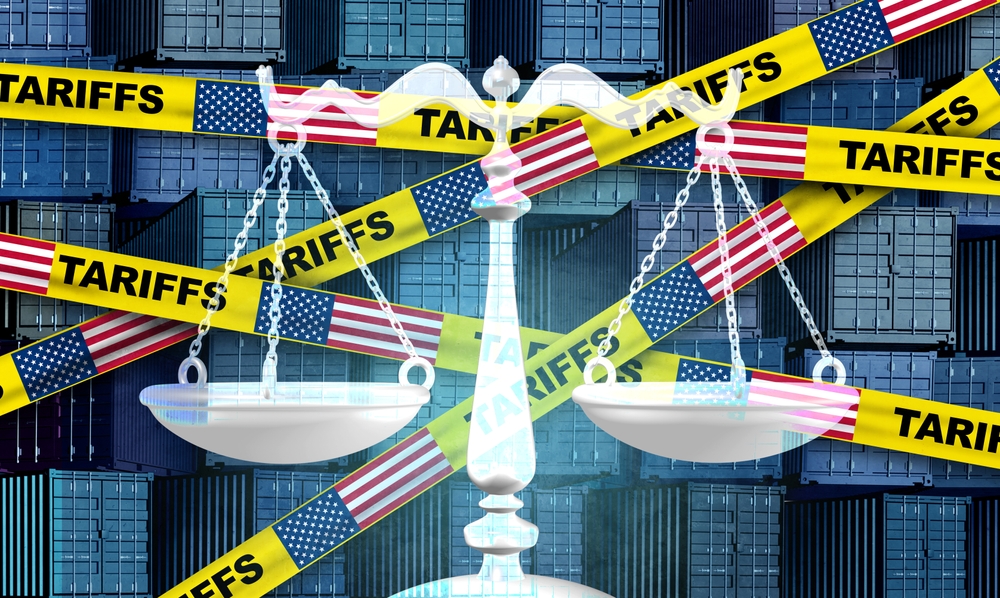
When reliably bad agents produce seemingly positive results, it can be tempting to breathe a sigh of relief or even applaud. That is certainly the temptation in the wake of the Supreme Court’s decision in Learning Resources, Inc. v. Trump overturning President Trump’s unlawful tariffs, which have caused devastating economic consequences for small business owners and everyday Americans.
It’s true that six justices ruled against the tariffs, but how the conservative half of that majority arrived at that decision is still troubling. Moreover, the three conservatives who dissented remind us how deeply troubling a Supreme Court vacancy would be. Justice Alito’s recent book tour has many wondering if retirement is on the horizon, which would offer Trump a fourth justice on the Court — one that likely looks more like the three dissenters in this case.
Chief Justice Roberts, joined by Justices Gorsuch and Barrett, once again deployed the “major questions doctrine” (MQD) to justify blocking Trump’s tariffs. This doctrine, which the Court only invented in recent decades, suggests that there are certain issues — “major questions” — for which the standard is higher when it comes to interpreting what exactly Congress can authorize federal agencies to do. Who decides which questions are “major” or what that standard even is? The justices themselves, of course. The major questions doctrine is a major power grab by the Court to impose its political will.
While this particular tariff ruling may be favorable to the American people, the conservative justices typically — and increasingly — wield the MQD in the opposite political direction. Some recent examples include:
Biden v. Nebraska(2023) – The Court used the MQD to block President Biden’s executive action forgiving $10,000 in student loans for low-income Americans.
West Virgina v. EPA(2022) – The Court used the MQD to invalidate the EPA’s Clean Power Plan, which addressed carbon dioxide emissions from fossil fuel-burning power plants.
NFIB v. OSHA(2022) – The Court used the MQD to strike down COVID-19 vaccine-or-test requirements for all employers with more than 100 employees, which was designed to protect roughly 84 million workers.
In other words, though the Court’s decision curbed the president’s power, it did so in a way that reinforced its own. In her concurrence on behalf of the liberals, Justice Kagan rebuffed the MQD, reaching the same conclusion blocking the tariffs without its use and dismissing Gorsuch’s claim that she was secretly signing onto the doctrine. “Given how strong his apparent desire for converts,” she wrote in a footnote, “I almost regret to inform him that I am not one.”
The three dissenting conservatives, Justices Kavanaugh, Thomas, and Alito, exhausted a lot of words to arrive at their preferred conclusion: Trump gets to do what he wants. Writing for the trio, Kavanaugh actually disagreed that the MQD even applied, insisting he has no trouble reading “clear congressional authorization” for tariffs in a law that doesn’t mention tariffs. He also wrote that there is magically a “foreign affairs” exception to the MQD, as it has never been applied in such contexts.
In short, they’re making it all up as they go along. It almost seems like the dissenting justices believe that “major questions” only come into play when the president is doing something they don’t like (i.e. any liberal policy initiative). Trump, on the other hand, should be permitted to do whatever he wants.
Indeed, Trump posted on Truth Social warmly praising the dissenting trio with a specific thank you to Kavanaugh, whom he appointed. In public statements, he then said that he was “ashamed” of the members of the majority “for not having the courage to do what’s right for our country.” On January 6, 2021, Trump similarly called on then-Vice President Pence to show “extreme courage” and overturn the 2020 election.
Trump has learned a lesson when it comes to nominating judges during his second term, nominating only judges who demonstrate their loyalty to him, and we should expect no less from a Supreme Court nomination. Friday’s ruling may be a setback for Trump’s policies, but it offers no hope that the Court is moderating. Indeed, it lays out exactly what we can expect should there be a vacancy on the Court during Trump’s remaining three years. It’s all but guaranteed he’ll nominate someone whose judicial philosophy is simply: whatever MAGA wants.
Zack Ford is the senior manager of press and editorial communications at Alliance for Justice.
Comments (0)
No comments yet. Be the first to share your thoughts.
Sign in to leave a comment.