Hegseth gives Anthopic ultimatum on guardrails - The Week
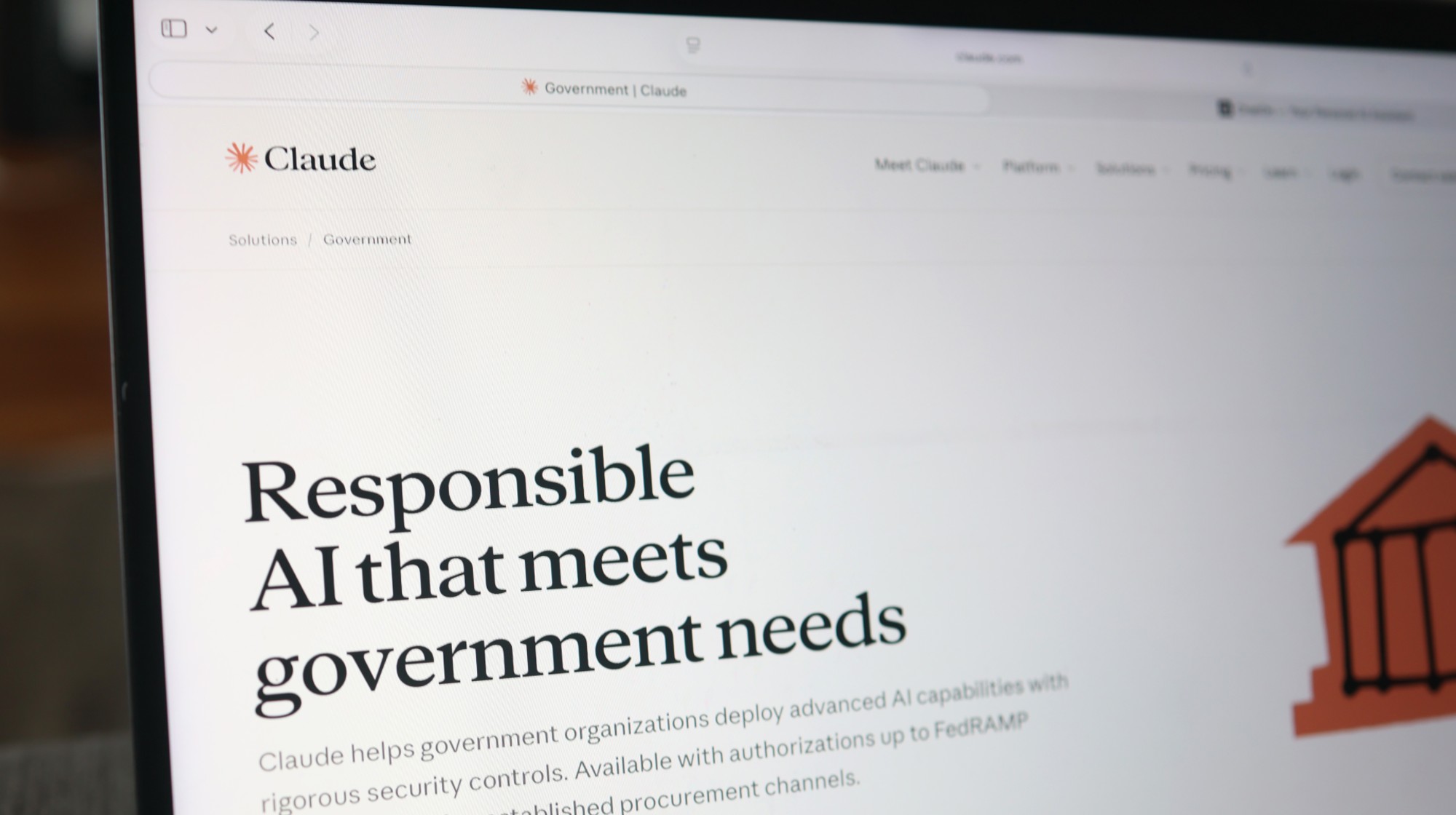
Defense Secretary Pete Hegseth threatened to cut ties with AI company Anthropic and designate it a 'supply chain risk' if the company did not allow the Pentagon unrestricted access to its AI tool, Claude. The meeting ended in a stalemate, with Anthropic maintaining its safety guardrails and refusing to alter its policies. Experts have questioned the legality and strategic effectiveness of the threats, which highlight ongoing tensions over AI ethics and national security policy.

Hegseth gives Anthopic ultimatum on guardrails
The defense secretary has threatened to cut business ties with AI company Anthropic and designate it a ‘supply chain risk’

A free daily email with the biggest news stories of the day – and the best features from TheWeek.com
Privacy Policyand are aged 16 or over.
You are now subscribed
Your newsletter sign-up was successful
What happened
Defense Secretary Pete Hegseth Tuesday gave Anthropic until Friday to allow the Pentagon unrestricted access to its Claude artificial intelligence tool or face serious consequences.
In a “tense meeting,” Axios said, Hegseth told Anthropic CEO Dario Amodei that if his firm did not drop its safety guardrails, the Pentagon would cancel its $200 million contract and “declare Anthropic a ‘supply chain risk,’ or invoke the Defense Production Act to force the company to tailor its model to the military’s needs.”
Who said what
Anthropic has “aggressively positioned itself to be a key player in national security” and was the first AI firm to “integrate its technology into the Pentagon’s classified networks,” The Washington Post said. But tensions have mounted over Amodei’s “ethical concerns about unchecked government use of AI,” The Associated Press said, especially for “fully autonomous armed drones” and “AI-assisted mass surveillance that could track dissent.” Some Trump administration officials have lambasted Anthropic’s “hard-line on domestic surveillance and AI weapons” as “Woke AI,” NPR said.
Tuesday’s meeting “ended in a stalemate,” as Amodei “reiterated the company’s red lines and said they wouldn’t interfere with the Pentagon’s operations,” The Wall Street Journal said. Either of Hegseth’s threatened sanctions “would be nearly unprecedented,” and a supply-chain risk designation would affect “a swath of companies, including many in the tech sector.” Defense Production Act experts “questioned whether it could be used to force Anthropic to drop the limitations it seeks to maintain,” the Post said.
The Week
Escape your echo chamber. Get the facts behind the news, plus analysis from multiple perspectives.

Sign up for The Week's Free Newsletters
From our morning news briefing to a weekly Good News Newsletter, get the best of The Week delivered directly to your inbox.
From our morning news briefing to a weekly Good News Newsletter, get the best of The Week delivered directly to your inbox.
What next?
The Pentagon’s threats are “extreme,” legally questionable and “strategically counterproductive,” Lawfare said. But the “deeper problem” is that the “terms governing how the military uses the most transformative technology of the century are being set through bilateral haggling between a defense secretary and a startup CEO,” not by Congress.
A free daily email with the biggest news stories of the day – and the best features from TheWeek.com
Rafi Schwartz has worked as a politics writer at The Week since 2022, where he covers elections, Congress and the White House. He was previously a contributing writer with Mic focusing largely on politics, a senior writer with Splinter News, a staff writer for Fusion's news lab, and the managing editor of Heeb Magazine, a Jewish life and culture publication. Rafi's work has appeared in Rolling Stone, GOOD and The Forward, among others.
Comments (0)
No comments yet. Be the first to share your thoughts.
Sign in to leave a comment.