Live updates: Trump urges regime change as Iran's supreme leader is killed in U.S., Israel attack
Questions remain over who succeed Iran’s supreme leader, Ayatollah Ali Khamenei, who Iranian state media said was killed in U.S. and Israeli strikes. According to Iran’s constitution, electing his successor will fall to an 88-member body of clerics.

Live updates: Trump urges regime change as Iran's supreme leader is killed in U.S., Israel attack
More than 200 are reported to have died in Iran following U.S. and Israeli strikes, and 10 in Israel.
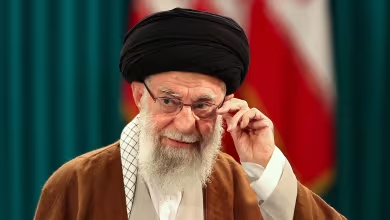
What to know
SUPREME LEADER SHOCK:Israel launched a new wave of strikes in Tehran today as it continued to hit targets in Iran a day after the killing the country's supreme leader,Ayatollah Ali Khamenei.IRAN RETALIATES:Air raid sirens sounded in Tel Aviv as Iran fired back at Israel, and the Israeli military said it was working on intercepting the incoming missiles.IRAN THREATENS NEIGHBORS:Iranian Foreign Minister Abbas Araghchi warned the foreign ministers of Saudi Arabia, the UAE, Qatar, Kuwait, Bahrain and Iraq that they could become “legitimate targets” if they allow the U.S. and Israel to use their territory to attack Iran.DEATH TOLL:More than 200 have died in Iran following U.S. and Israeli strikes, according to the Iranian Red Crescent Society. Ten people have been killed in Israel, eight today in a single strike, as Iran and its enemies trade blows, and two in the UAE.IRAN LEADERSHIP COUNCIL: Ayatollah Ali Reza Arafi has been appointed as the jurist member of Iran's Leadership Council, the body temporarily running Iran after Khamenei's killing. Other members include President Masoud Pezeshkian and judiciary chief Gholamhossein Mohseni Ejei.U.S. CONSULATE ATTACKED: At least nine people were killed in a protest outside the U.S. consulate in Pakistan’s port city of Karachi as local police clashed with protesters trying to enter the premises.REGIME CHANGE NOT EASY:Trump has urged Iranians to “take over your government,” but the Iranian regime has been historically adept at maintaining control. Iranian regime change is “mission impossible,” Araghchitold NBC News.
148 dead, 95 injured in strike on girl school, Iran state media says
More than 140 people were killed and another 95 injured in a strike on a girls primary school in the southern Iranian town of Minab yesterday, the semi-official Tasnim news agency reported today citing the city’s prosecutor Ebrahim Taheri.
NBC News could not independently confirm the reported casualties.
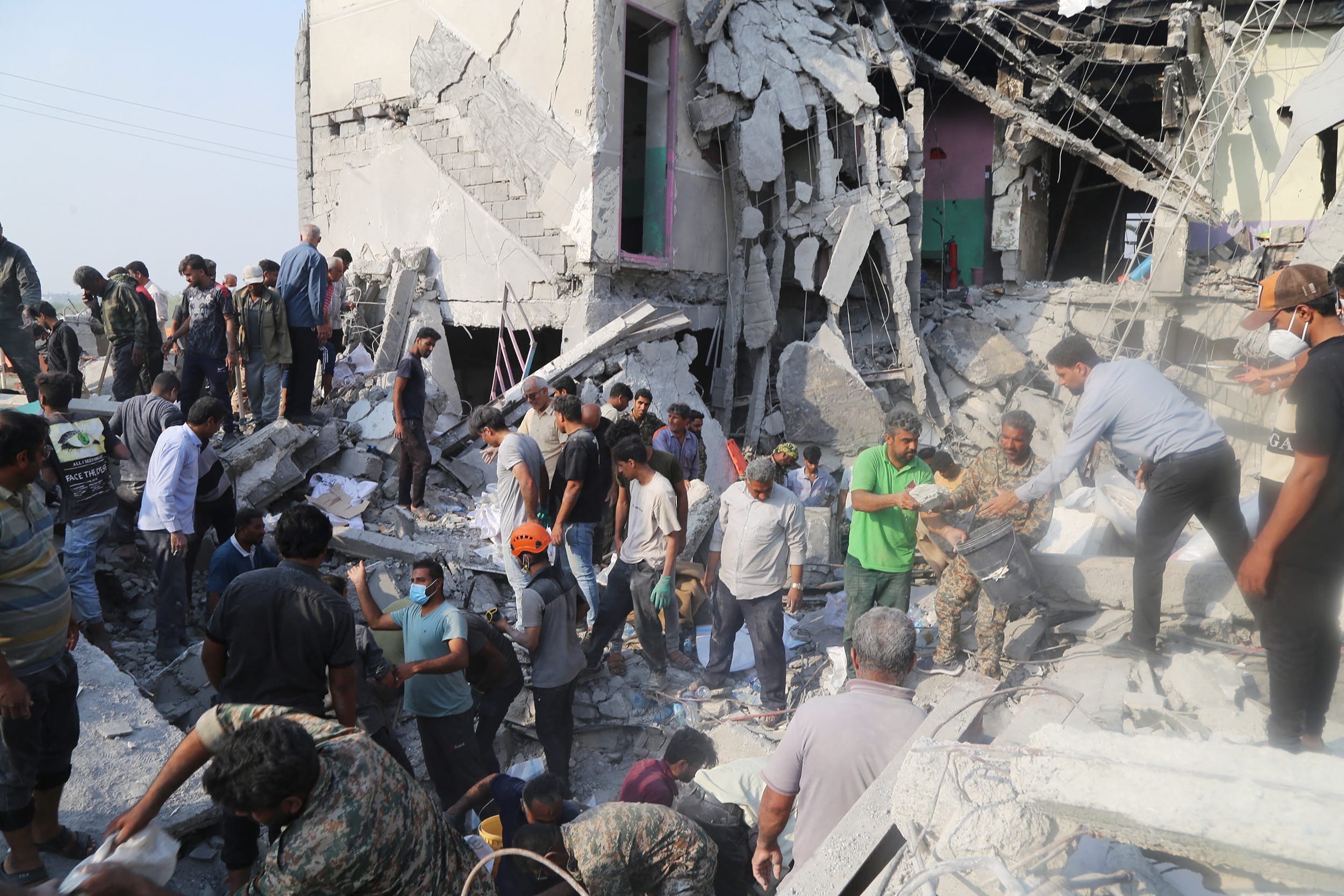
The aftermath of an Israel strike on a school in Minab, Iran on Saturday. Abbas Zakeri / Mehr News via Reuters
Footage from Reuters showed crews and rescue equipment digging at the site of the destroyed school overnight. Dust billowed as rescuers were going through mangled wreckage.
New supreme leader 'must be determined as soon as possible,' Guardian Council says
Iranian law requires new leader “must be determined as soon as possible,” according to a spokesperson for the country’s powerful Guardian Council, which includes theologians selected by the country's now deceased Supreme Leader Ayatollah Ali Khamenei.
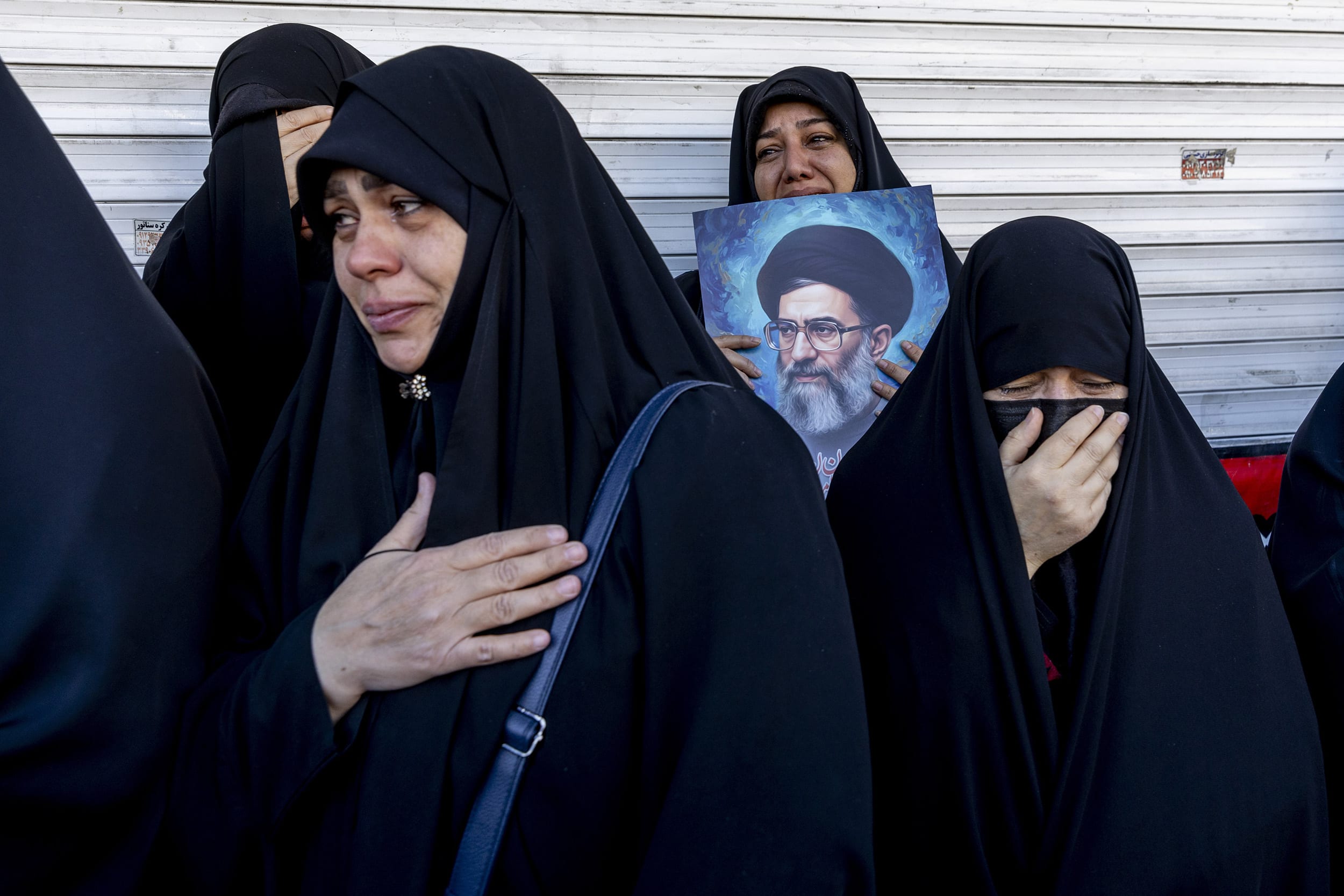
Women mourn the death of Ayatollah Ali Khamenei in Tehran this morning. Majid Saeedi / Getty Images
“Given the wartime conditions, this will take place at the earliest opportunity,” Hadi Tahan Nazif told Iranian state media outlet IRIB News today.
“The constitution has provisions for the current circumstances, and until a leader is appointed, the leadership council will assume responsibility,” he added.
Blasts rock cities across the Middle East
Fresh strikes rocked cities across the Middle East today as Iran continued to retaliate for the U.S. and Israeli attack.
Authorities in Dubai confirmed that two people were injured when debris from intercepted drones fell into the courtyards of two homes.
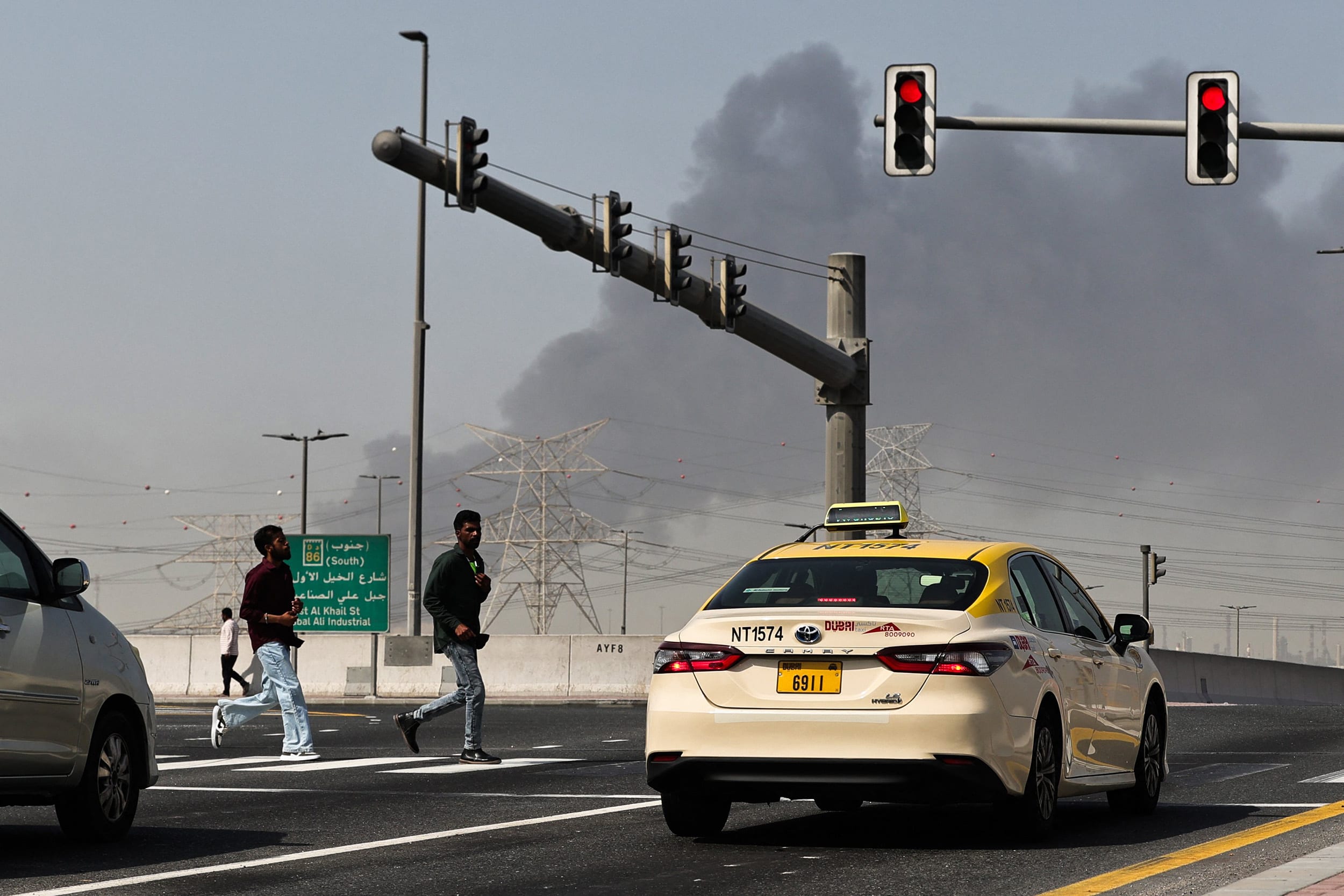
Smoke rises from the site of a reported Iranian strike in Dubai today. Fadel Senna / AFP - Getty Images
Elsewhere, authorities in Abu Dhabi, the the capital of the United Arab Emirates, said a woman and her child were injured by debris falling from an intercepted drone onto one of the buildings of the Etihad Towers complex in the city.
Bahrain’s interior ministry also said the Crowne Plaza Manama hotel in the country’s capital was targeted, resulting in damage but no loss of life.
Iranian attacks on Gulf states a 'bizarre strategy,' analyst says
Iran’s strategy of attacking Gulf states in the Middle East is “bizarre” and likely to “backfire,” an analyst told NBC News.
“The strategy of the Iranians seems to be, ‘We’re going to attack U.S. allies in the region, not just U.S. bases,’” said H.A. Hellyer, a senior associate fellow at the Royal United Services Institute, a London-based think tank.
The point of doing this is to “provoke these allies to push the Americans to stand out,” he said in a telephone interview today.
But “this a really bizarre strategy,” he added, which only works as a threat. “Once you’ve already attacked,” he said, the bluff is over, and that could mean countries in the region lining up with the U.S. to stop getting attacked.
"I think that’s going to backfire quite bad," he said.
So far, Hellyer said, the regime appears to be intact despite President Donald Trump's calls for Iranians to overthrow their government amid the death of Supreme Leader Ayatollah Ali Khamenei.
“I think the system is fairly resilient at present,” he said. “You haven’t seen mass defections, you haven’t seen a complete breakdown in any in any shape or form.”
Trump and Vance 'lied directly' to Americans, senator says
Democratic Sen. Chris Van Hollen D-Md. has accused President Donald Trump and Vice President JD Vance of lying to the American people after striking Iran yesterday.
"Do you remember all the times that Donald Trump and JD Vance looked the American people in the eye and said they would not drag America into a war?" he asked in a video posted to his YouTube channel.
"They lied," he added. "They lied directly to the American people."
Calling the attacks on Iran a "war of choice," Van Hollen said the conflict was putting American forces in danger, and that innocent civilians had been killed.
"What's the Trump plan?" he said. "To use military force against every regime in the world that we don't like?"
This approach will "make the world a more dangerous place for America," he added, calling the strikes, without approval from Congress, a "gross violation of the Constitution."
At least 8 people killed near Jerusalem, police say
At least eight people people were killed and 28 were taken to hospital after missiles hit the Israeli city of Beit Shemesh, Israel’s emergency service, Magen David Adom, said on X.
Two of the injured were in serious condition, two in moderate condition and 24 in mild condition, it said.
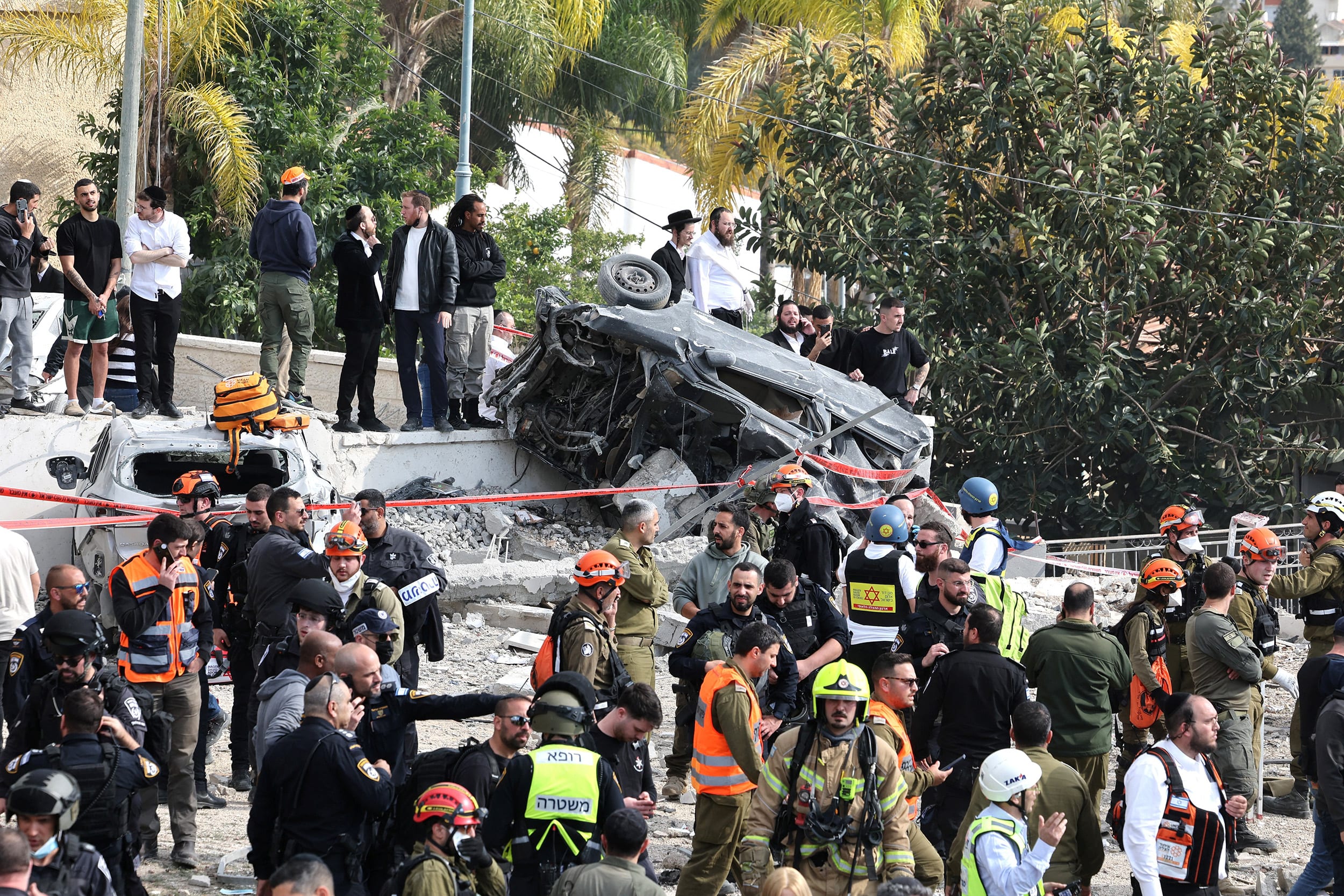
Emergency services in Beit Shemesh today. Ahmad Gharabli / AFP - Getty Images
A Jerusalem Police spokesperson said a building in Beit Shemesh, which sits about 20 miles west of Jerusalem, suffered a direct hit and collapsed.
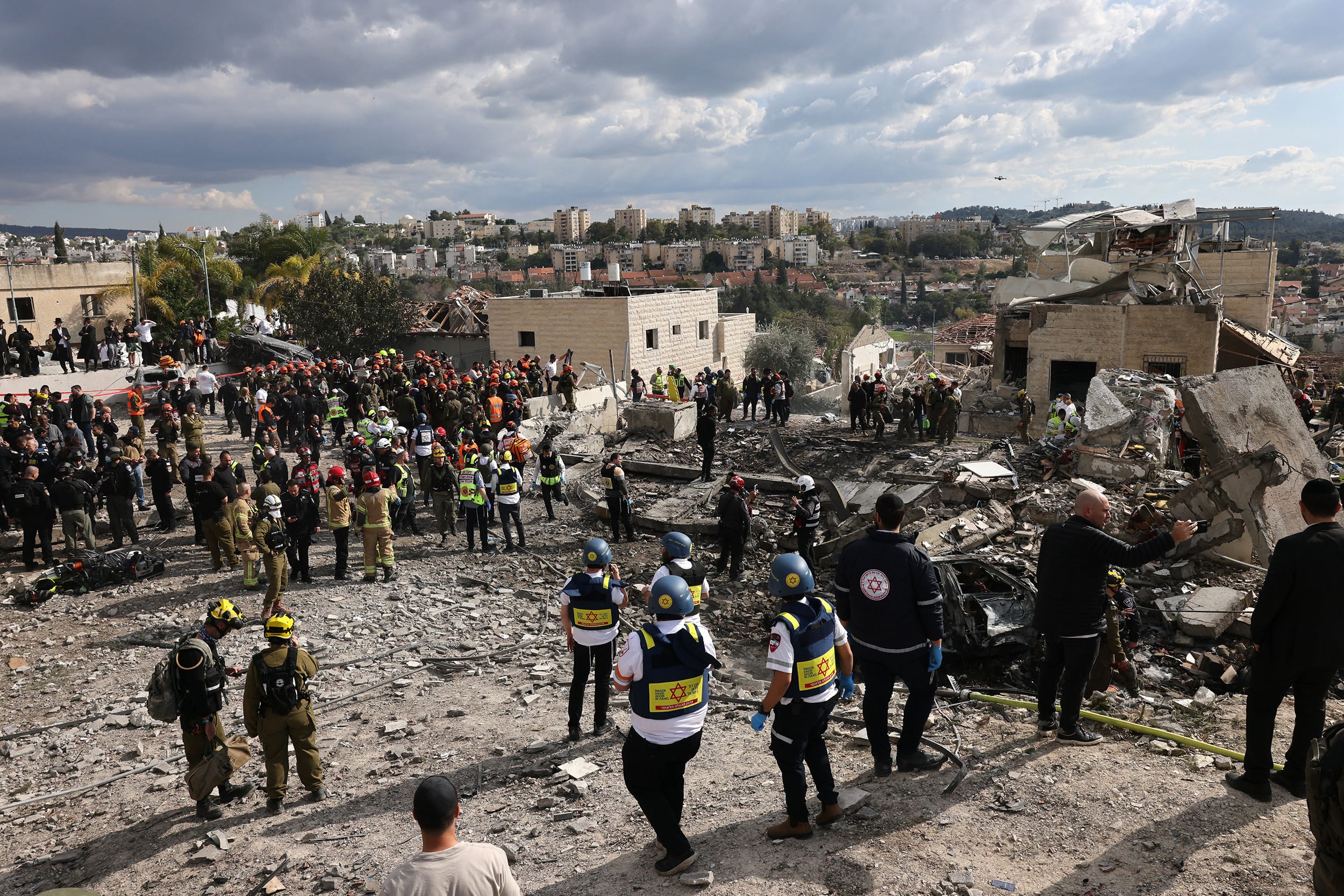
The scene of a missile attack in Beit Shemesh. Ahmad Gharabli / AFP - Getty Images
Sirens and blasts keep hitting Tel Aviv
Overnight in Tel Aviv, there were many sirens, one every 40 or 50 minutes. Yesterday was quite intense too, with sirens sounding one after another over a few hours, keeping us in shelters for hours.
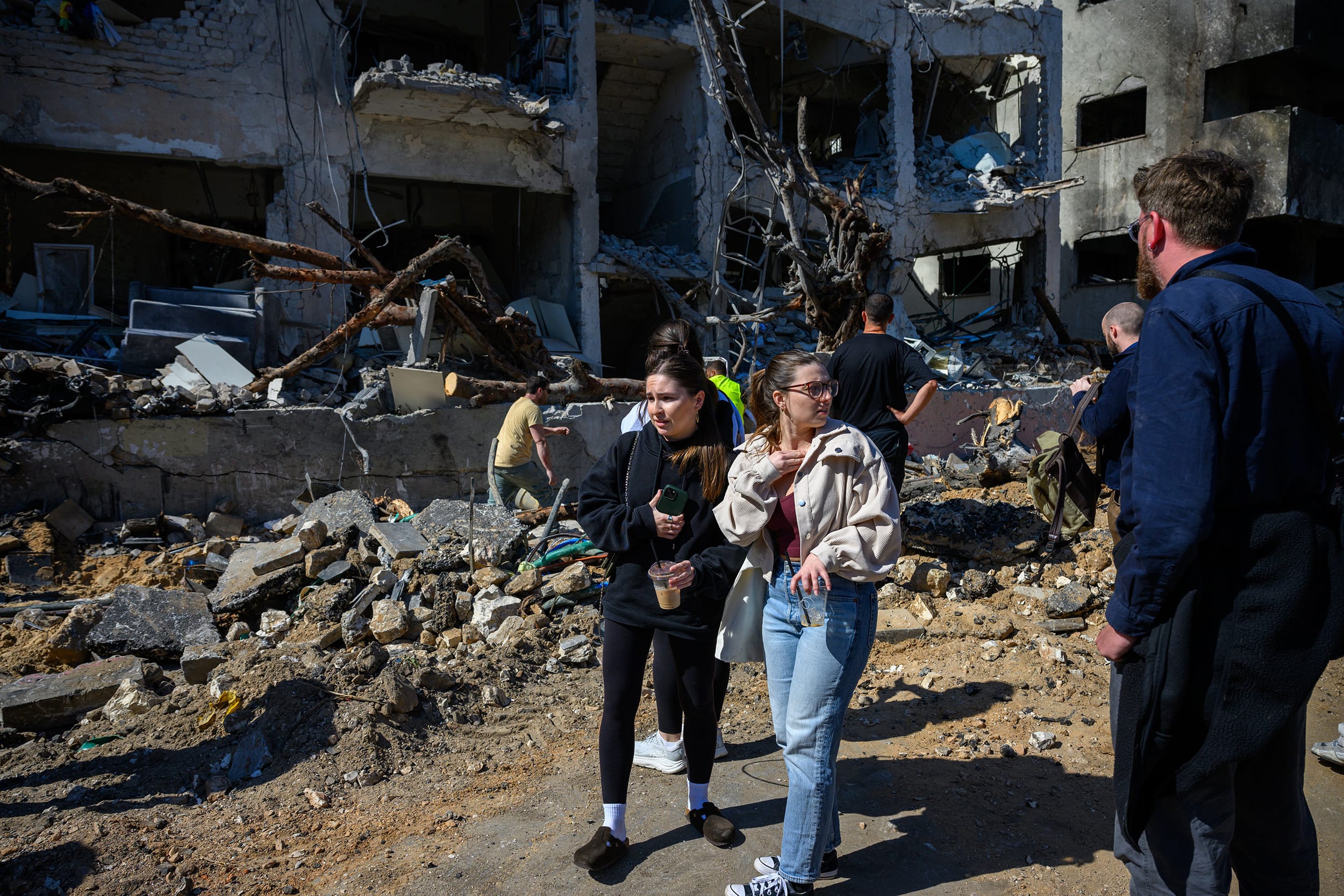
The scene of an overnight strike from an Iranian missile in Tel Aviv today. Alexi J. Rosenfeld / Getty Images
The loud explosions accompanying the moment of impact make it all especially scary. And I have to keep on working, and am managing to do one task in between sirens and plan what I’ll try to get through on the next break. It is very hectic!
According to Israeli media reports, around 20% of Israelis lack a proper in-house shelter, which makes public shelters very hectic.
Iran's top security official says 'temporary leadership council' will be formed
Iran’s top security official, Ali Larijani, said today “a temporary leadership council will be formed in accordance with the constitution to carry out the duties assigned to it,” a day after the killing of Supreme Leader Ayatollah Ali Khamenei at age 86 in airstrikes by Israel and the U.S.
He accused the United States and Israel of trying to plunder and disintegrate Iran and reminded them that “the people of Iran will not allow division of their country.”
Pope Leo calls for stopping 'spiral of violence'
Pope Leo XIV said today that he is following events in the Middle East with "deep concern" after U.S.-Israeli strikes on Iran and the retaliation that has followed.
“I address a heartfelt appeal to the parties involved to assume the moral responsibility to stop the spiral of violence before it becomes an irreparable abyss,” the pope said during his weekly address in St. Peter’s Square after a Sunday prayer.
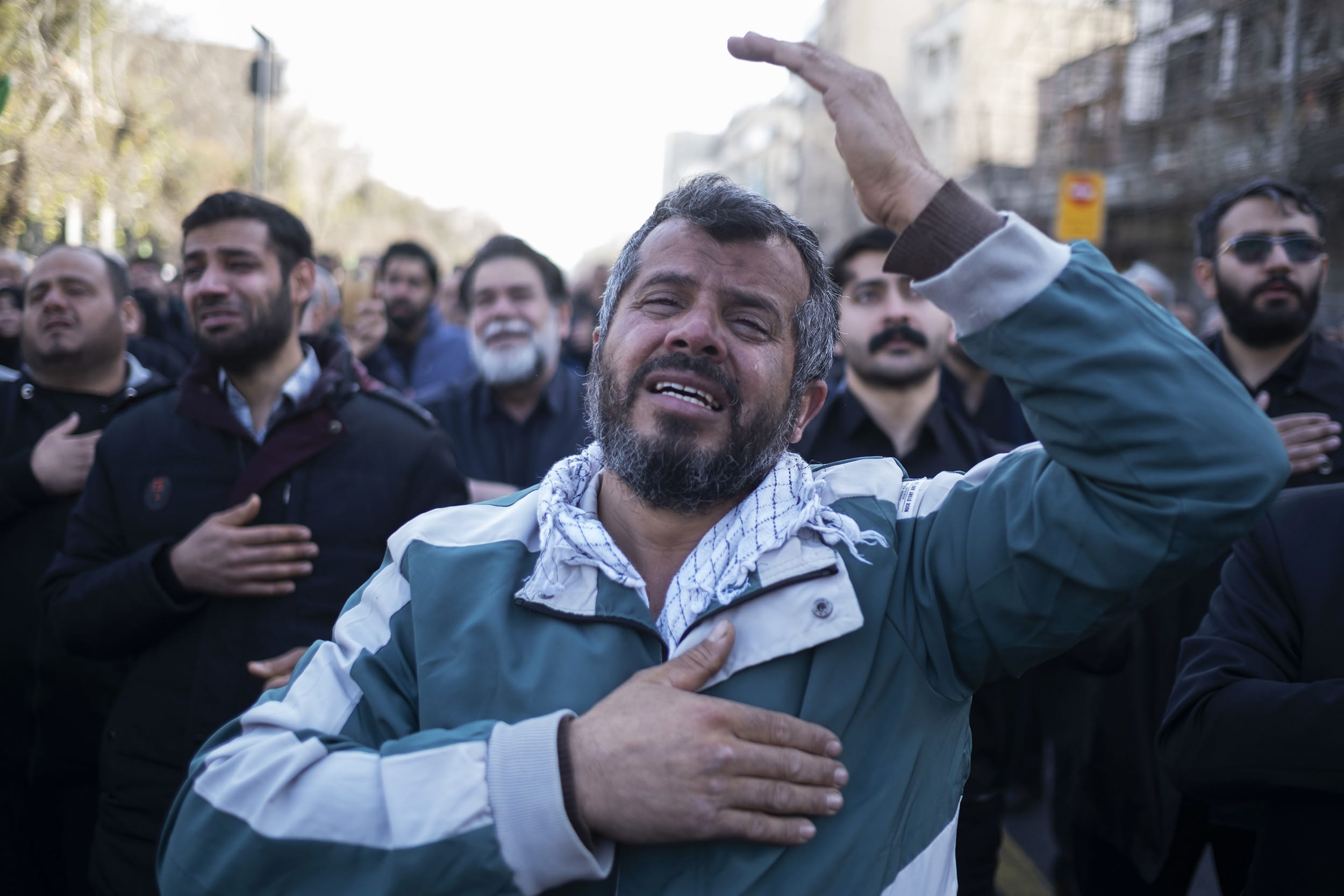
Crowds mourn the death of Ayatollah Khamenei in Tehran today. Morteza Nikoubazl / NurPhoto via Getty Images
“Stability and peace are not built through mutual threats or through weapons," the pontiff added, "but only through reasonable, genuine and responsible dialogue."
Iranian missiles strike Tel Aviv overnight
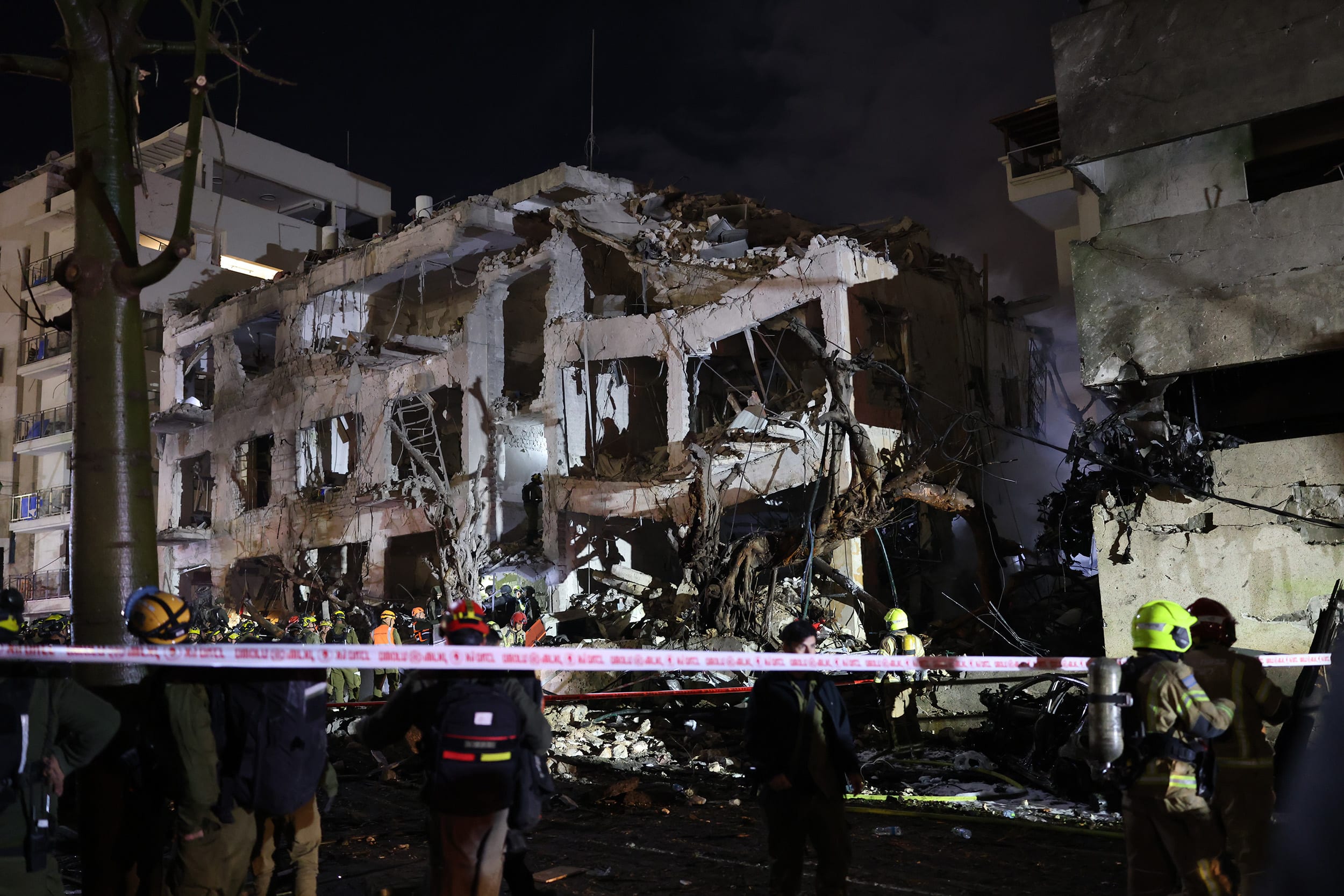
Oren Ziv / DPA via Getty Images
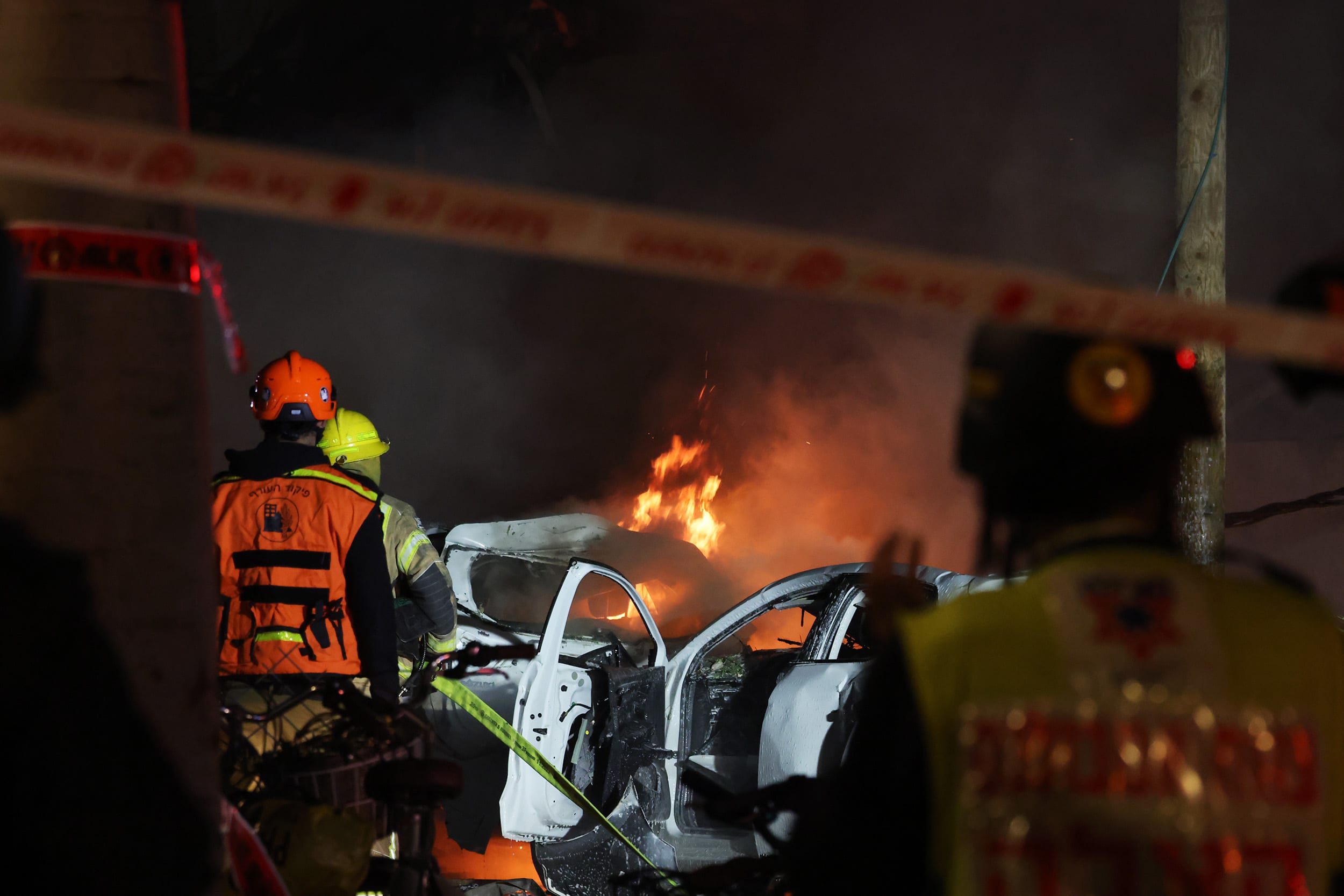
Oren Ziv / DPA via Getty Images
Israeli first responders arrive at the scene of an Iranian ballistic missile strike in Tel Aviv late last night.
Iran's government under attack like never before
The government in Iran is under attack like never before.
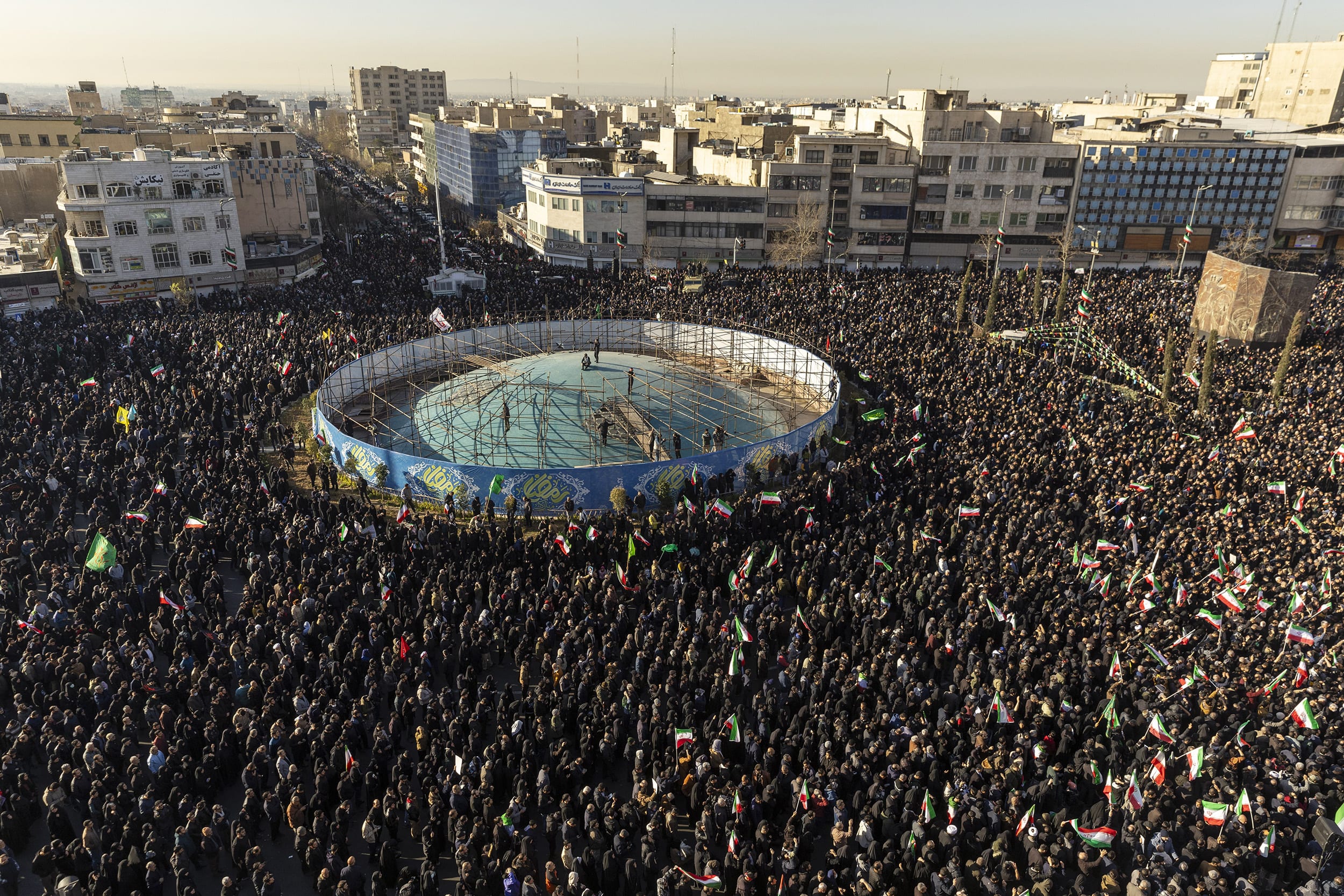
Today tens of thousands of regime supporters packed into Tehran’s Revolution Square to mourn the late Supreme Leader Ayatollah Ali Khamenei, who was killed in a joint U.S. and Israel military operation.
They chanted "God is great!" while officials promised revenge. One said Iran would deliver “terrifying blows” to make the U.S. and Israel beg for mercy.
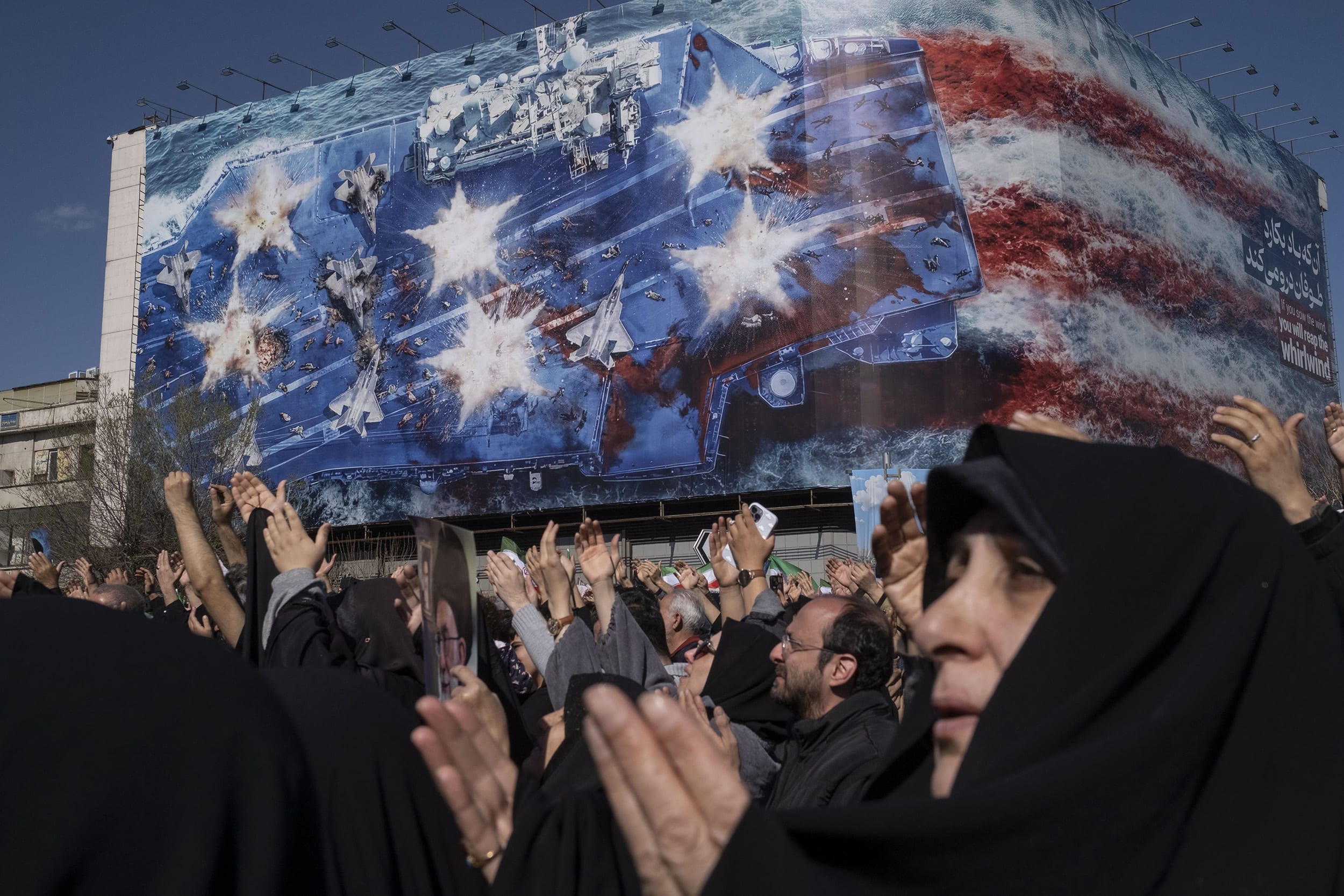
Supporters of Iran's Supreme Leader Ayatollah Ali Khamenei during a rally in Tehran today. Morteza Nikoubazl / NurPhoto via Getty Images
But others in Iran seemed to welcome the U.S. and Israeli strikes. As soon as the news broke last night that Khamenei was dead, young people in a city outside Tehran went out to dance in the streets.
Even in Tehran, where the government is hunting down the opposition after huge protests shook the clerical establishment earlier this year, some shouted "long live the shah" from the rooftops, a reference to Iran’s former king who was overthrown in 1979 during the Iranian Revolution.
For now, the Iranian government remains firmly in control and is lashing out in what it calls self-defense.
Iran launched attacks on American bases and allies in the Gulf, using drones to attack a building in Bahrain where the U.S. has a naval installation, hotels in Dubai, the airport in Kuwait and a U.S. base in Qatar.
But Iran’s main focus so far appears to be Israel, which Iran sees as the driving force behind this war.
Crowd topples ayatollah monument in southern Iran
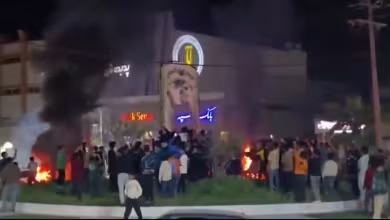
Eyewitness video shows a crowd in southern Iran toppling a monument dedicated to the Islamic Republic’s founder, Ayatollah Ruhollah Khomeini. Iran’s Supreme Leader Ayatollah Ali Khamenei, Khomeini’s successor, was killed at his compound in Tehran during a series of U.S. and Israeli airstrikes.
An artist, a geophysicist and a fruit seller: Accounts of Iran’s brutal protest crackdown
A fruit seller and father of two killed during his first protest. A biotechnology graduate with a passion for art who bled to death in her father’s arms. A distraught family ordered to pay morgue officials $7,000 for a loved one’s body unless they lie and say their relative died at the hands of anti-government rioters.
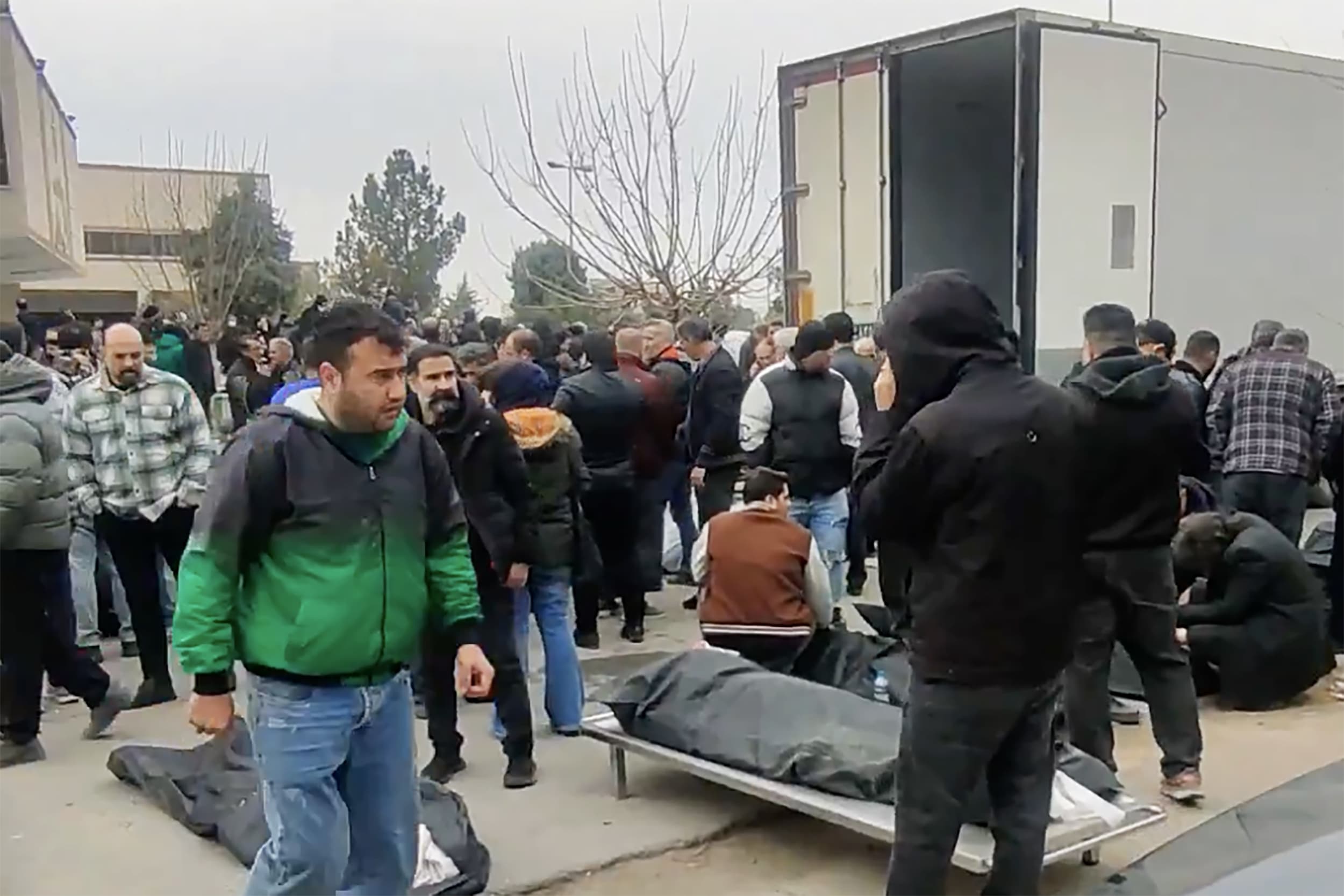
Videos showing body bags outside a medical facility in Tehran province were circulated on Jan. 11. Obtained by NBC News
These are a tiny fraction of the thousands of Iranians killed or wounded when the government cracked down in early January. With the nation still reeling, details about victims are trickling out and the world is gradually getting a clearer picture of the violence used to suppress the nationwide demonstrations.
Most of the killing happened during a two-day period between the night of Jan. 8 and Jan. 10, with over 7,000 people killed across the country, according to the U.S.-based Human Rights Activists News Agency.
GOP Rep. Lawler says military action should prompt end to DHS shutdown
Rep. Mike Lawler, R-N.Y., is calling for an end to the ongoing shutdown at the Department of Homeland Security amid the military action against Iran.
“Given the situation in the Middle East and the potential for Iran and its terrorist proxies to attempt some type of attack, it is imperative that @SenSchumer and @RepJeffries immediately drop all opposition to funding the Department of Homeland Security and pass the funding bill,” Lawler wrote on X.
A few other House Republicans concurred. Rep. Carlos Gimenez of Florida wrote “Agreed!” and Rep. Mario Diaz-Balart of Florida told Schumer on X, “don’t put our country at risk, fund DHS so they can do their job and thwart any possible attacks.”
DHS has been shut down since Feb. 14 as Democrats and Republicans remain divided over funding U.S. Immigration and Customs Enforcement following the fatal shootings of U.S. citizens in Minnesota.
A timeline of turbulent U.S.-Iran relations
For more than 70 years, the United States has had a complex and often hostile relationship with Iran.
In 1953, the CIA helped engineer a coup that toppled Iran’s democratically elected prime minister and put power firmly in the hands of its monarch, Shah Mohammad Reza Pahlavi, who opened his country to American oil companies and aligned with the U.S. in the Cold War. But the shah ruled through repression, and in 1979 was overthrown in the Iranian Revolution.
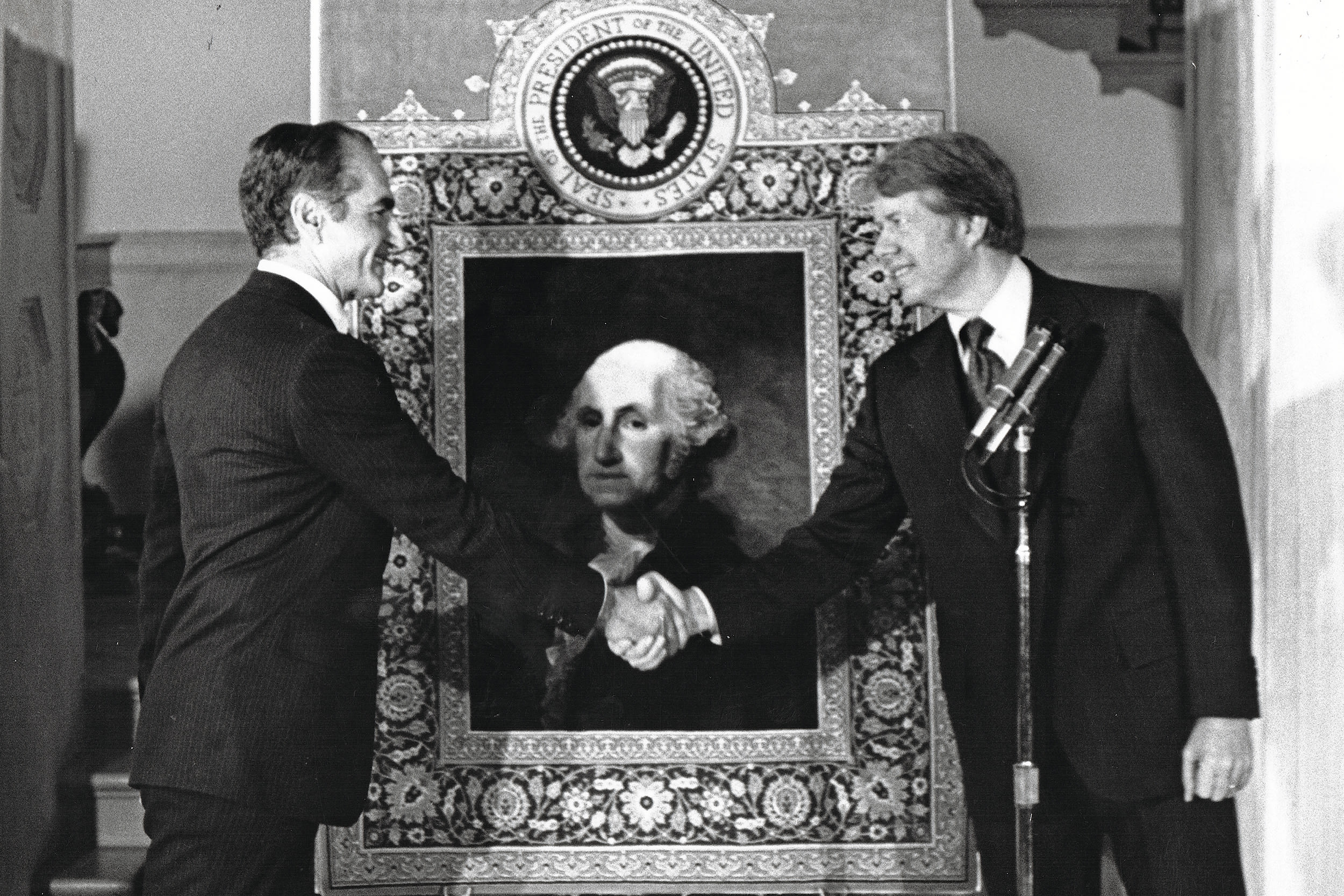
Shah of Iran Mohammad Reza Pahlavi and President Jimmy Carter shake hands in the White House in 1977. Getty Images
Iran’s new supreme leader, Ayatollah Ruhollah Khomeini, branded the United States “the Great Satan,” while a group of radical Islamist students seized control of the American Embassy in Tehran and took 52 Americans hostage.
For 444 days, the U.S. was consumed by the hostage crisis, with the yellow ribbon at home becoming a symbol of the Americans held overseas.
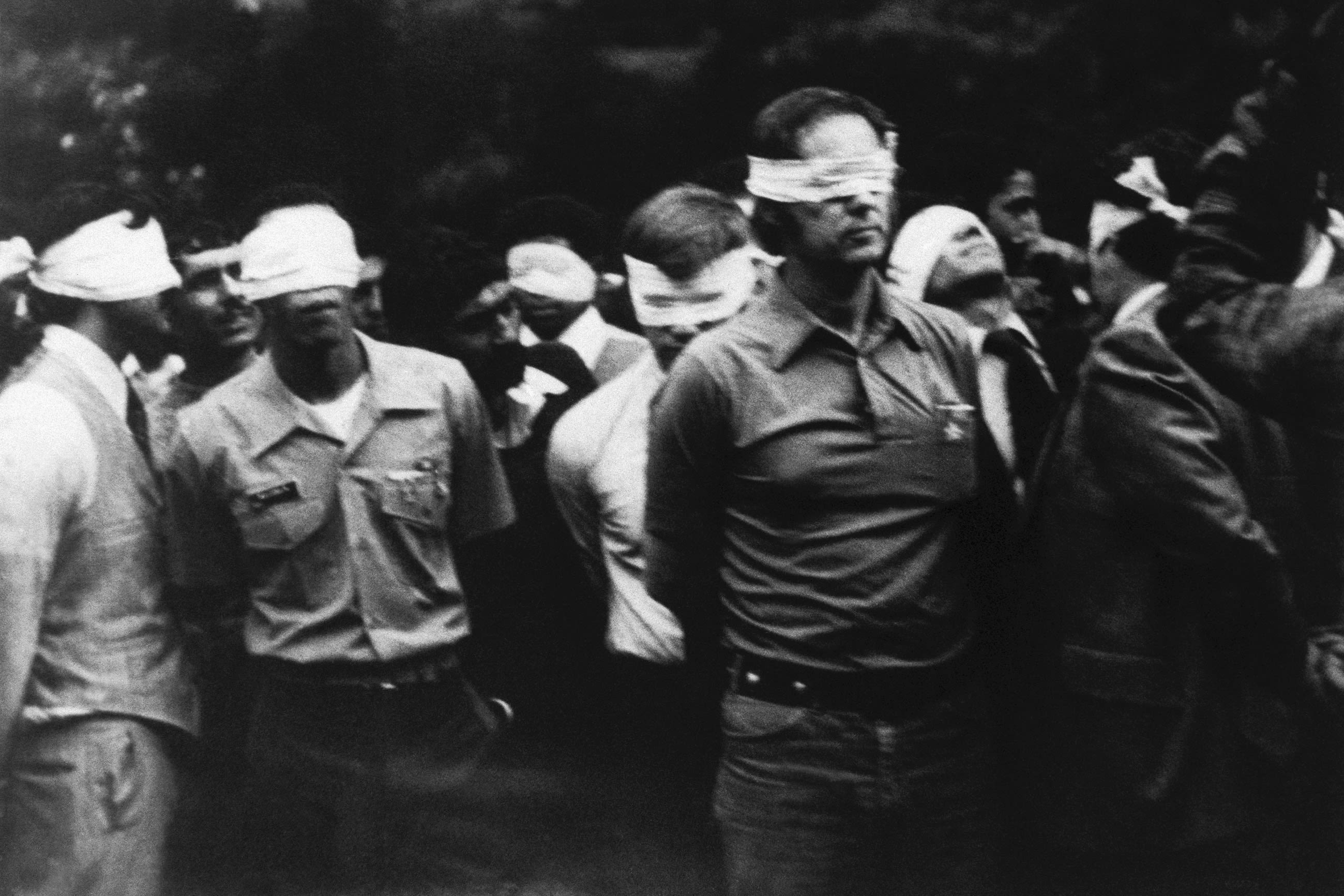
Blindfolded hostages inside the U.S. Embassy compound in Tehran in 1979. Bettmann Archive
Jimmy Carter ordered U.S. special forces to rescue the hostages, but the mission ended in disaster, with U.S. aircraft colliding in the desert. A covert effort to extract six U.S. diplomats did succeed and was immortalized in the Oscar-winning Ben Affleck movie “Argo.” But the hostage crisis helped sink Carter’s presidency, and the hostages were finally released minutes after Ronald Reagan took the oath of office.
In the 1980s, the U.S. supported Saddam Hussein’s Iraq during a bloody eight-year war against Iran, while Iranian-backed militants targeted the U.S. Marine barracks in Beirut, Lebanon, killing 241 American service personnel.
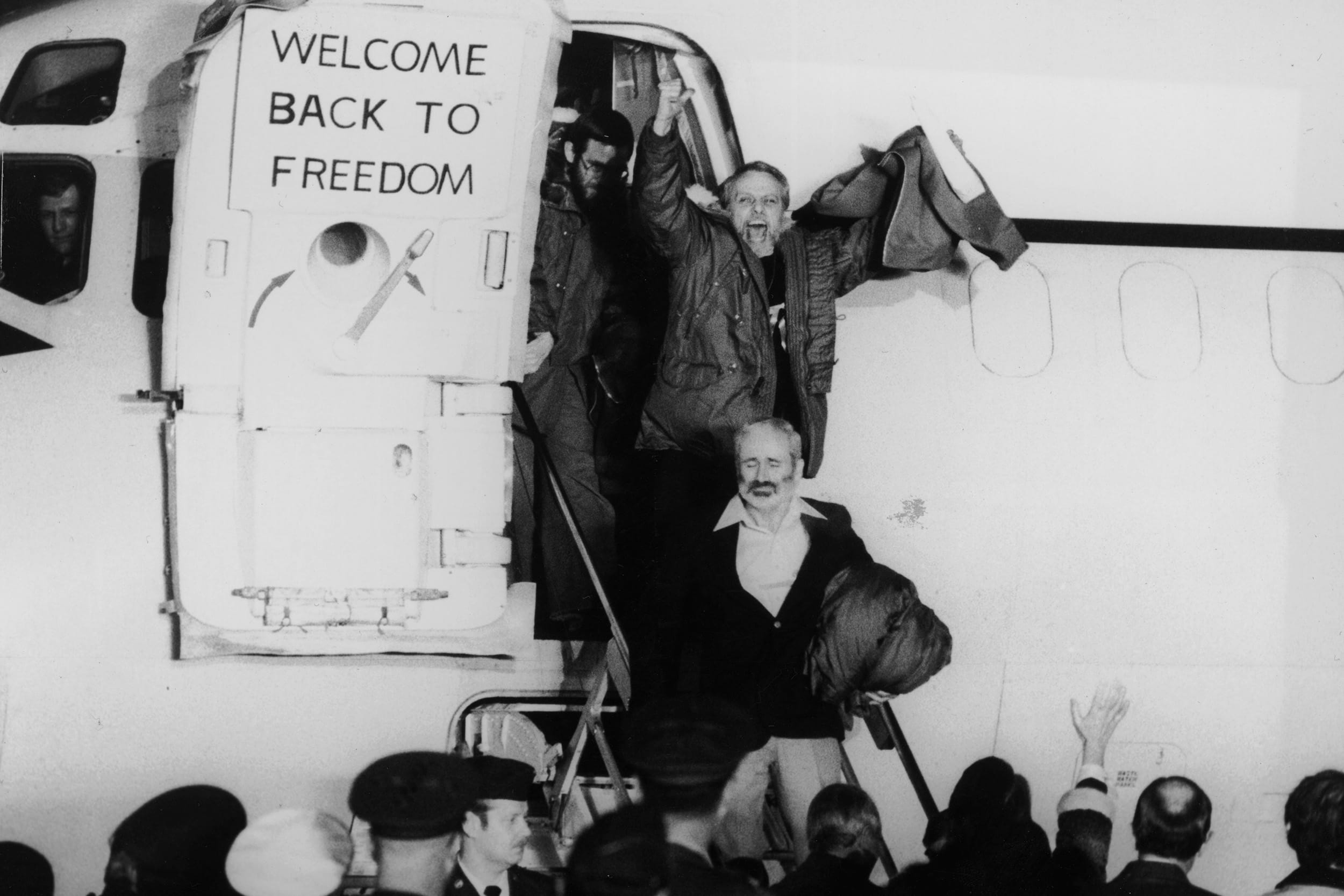
Freed hostages welcomed back to the United States after 444 days. Express / Getty Images
Since then, the U.S. has branded Iran a state sponsor of terror.
After yesterday’s attack, a new chapter in this complicated relationship is being written in fire and smoke.
Hundreds of ships drop anchor in Middle East Gulf as war escalates
At least 150 tankers including crude and liquefied natural gas vessels dropped anchor in open Gulf waters beyond the Strait of Hormuz and dozens more were stationary on the other side of the chokepoint, shipping data showed today, after U.S and Israeli strikes on Iran plunged the region into a new war.
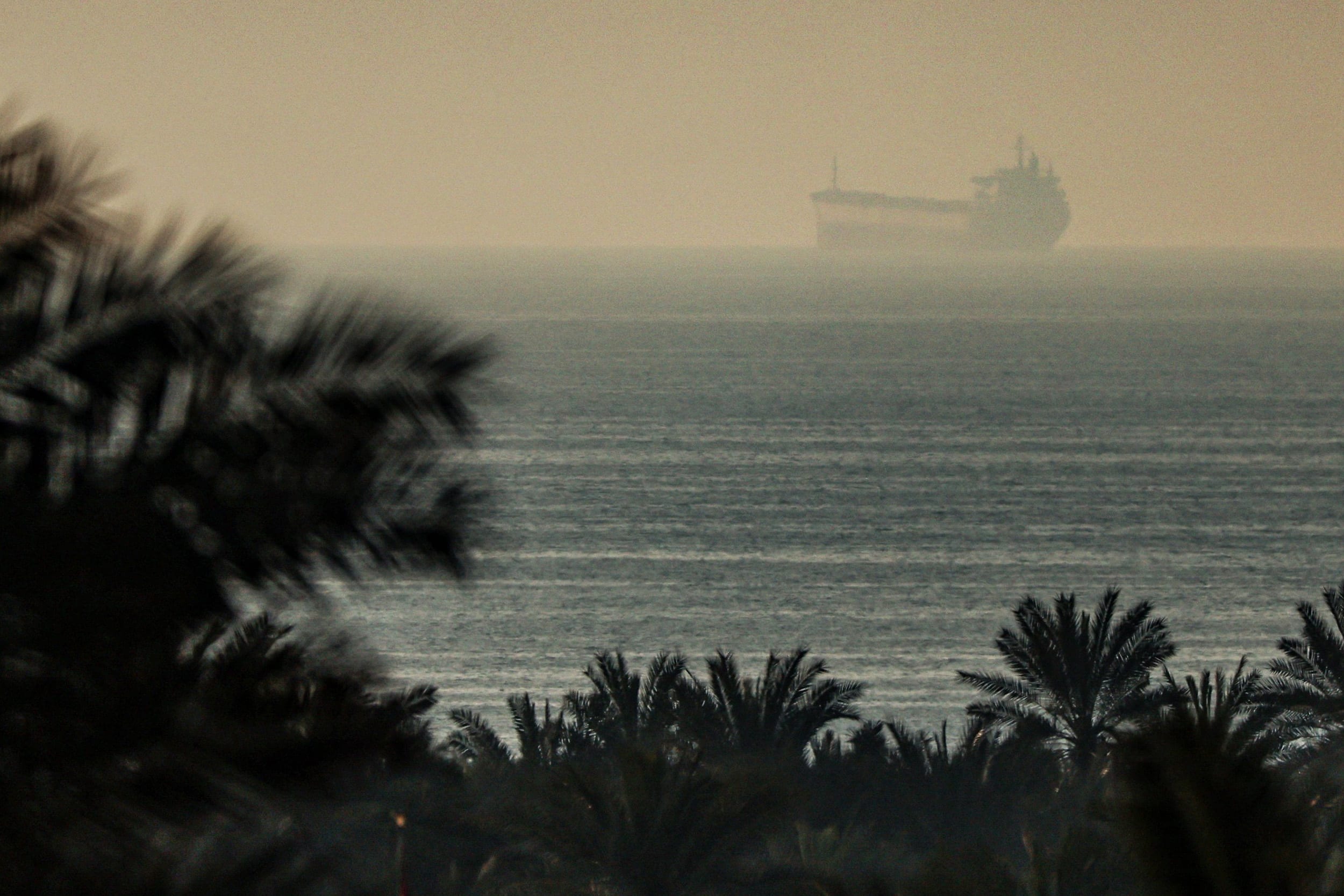
A tanker passes through the Strait of Hormuz in the northern emirate of Ras Al Khaimah on Wednesday. Fadel Senna / AFP - Getty Images
The tankers were clustered in open waters off the coasts of major Gulf oil producers including Iraq and Saudi Arabia as well as LNG giant Qatar, according to Reuters estimates based on ship-tracking data from the MarineTraffic platform.
E.U. foreign policy chief: Khamenei's death leaves 'open path to a different Iran'
The death of Ayatollah Ali Khamenei is a "defining moment" in Iran's history, E.U. foreign policy chief Kaja Kallas said in a post on X.
"What comes next is uncertain," Kallas said, adding that there is now "an open path to a different Iran, one that its people may have greater freedom to shape" and that she is working with partners in the Middle East to find "practical steps for de-escalation."
China calls for immediate ceasefire in Iran
China called for an immediate ceasefire in Iran, with state media calling the U.S.-Israel attack “an undisguised assault on sovereignty.”
The strikes suggest the U.S. was not serious about talks it was undertaking with Iran on its nuclear program, Xinhua, China’s state-run news agency, said in a commentary. “Resorting to force at the very moment diplomacy shows promise sends a dangerous message: that might, not law, has the final say,” it said.
Trump’s call for Iranians to overthrow their government is “even more alarming,” Xinhua said: “Urging the overthrow of another government while conducting military strikes is not deterrence; it is an undisguised assault on sovereignty.”
Earlier, the Chinese Ministry of Foreign Affairs called for an “immediate stop” to the attack and the resumption of dialogue. It also advised Chinese citizens in Israel to evacuate to safer areas within the country or leave for Egypt, and Chinese citizens in Iran to leave “as soon as possible.”
Explosions in Dubai as Iran continues to strike Gulf nations
Through the early hours of the morning here, there have been explosions, some louder than others, as missiles and drones are intercepted by the air defenses across the United Arab Emirates and by the UAE air force.
Some debris has dropped into residential homes here in Dubai and in Abu Dhabi. The authorities say shrapnel from a drone that was intercepted by air defenses hit the facade of a building and caused minor injuries to a woman and a child, and also material damage.
There’s news now that the Iranians are again striking Riyadh in Saudi Arabia and have extended their strikes to Oman, which was mediating the talks between the U.S. and Iran. The Omani foreign minister had criticized the U.S.-Israeli strikes on Iran.
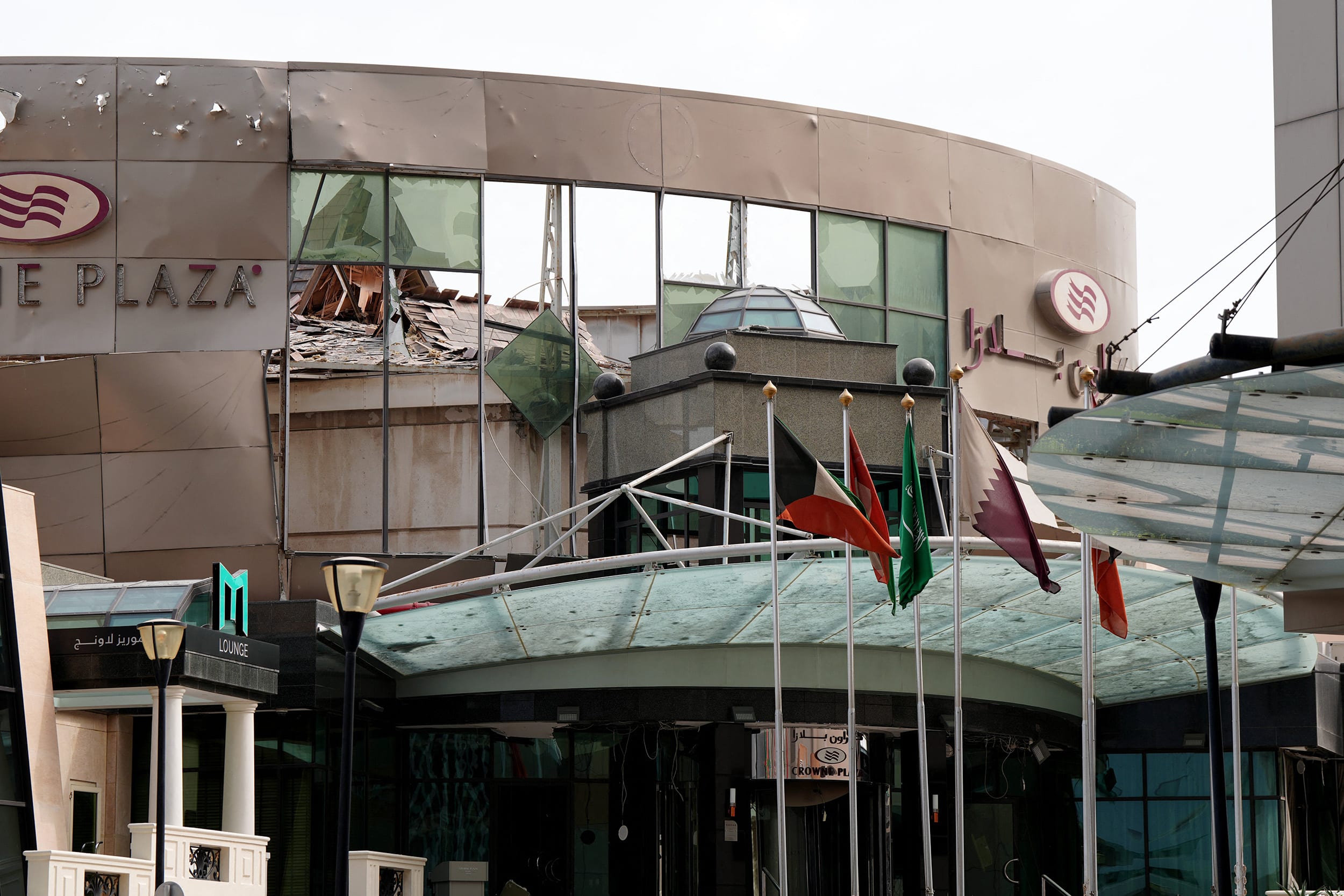
Damage to the Crowne Plaza hotel in Manama, Bahrain, following an Iranian strike on Sunday. Fadhel Madan / AFP - Getty Images
So these attacks by the Iranians appear to be more and more random, disparate and indiscriminate.
The aim appears to be to try and persuade governments in the Gulf to pressure Washington to stop its offensive, but in fact these attacks appear to be uniting Arab leaders. There was a call this weekend between the crown prince of Saudi Arabia and the president of the United Arab Emirates in which the Saudis pledged full support for the UAE.
So this scatter gun, almost machine gun, offensive by the Iranians seems to be backfiring.
Putin expresses condolences over Khamenei's death
Russian President Vladimir Putin expressed condolences to Iran's President Masoud Pezeshkian over the death of Supreme Leader Ali Khamenei, according to a statement on the Kremlin's website.
Khamenei will be remembered in Russia as an "outstanding statesman who made a huge personal contribution to the development of friendly Russian-Iranian relations," Putin said, describing Khamenei's death as a "cynical violation of all norms of human morality and international law."
The Kremlin has deepened its relationship with Iran since its invasion of Ukraine in 2022. Tehran has been accused by Kyiv of supplying Russia with drones that are being used in Ukraine.
Two countries bordering Iran have also just started a conflict
Afghanistan said it was firing at Pakistani jets in Kabul after blasts and gunfire rocked the capital today, compounding instability in a region rattled by U.S.–Israeli strikes on Iran and retaliatory attacks on U.S. targets in Gulf states.
The Taliban-ruled state has suffered Pakistani strikes against government installations over the past week following accusations, which it denies, that it harbors militants.
The heaviest fighting in years between the neighbors has raised fears of a protracted conflict along their 1,615-mile border, with several countries including Qatar and Saudi Arabia calling for restraint and offering to help mediate a ceasefire.
Khamenei mourners in Indian Kashmir
Shia Muslim women march in protest today in the city of Srinagar in Indian Kashmir following the death of Iran’s Supreme Leader Ayatollah Ali Khamenei.
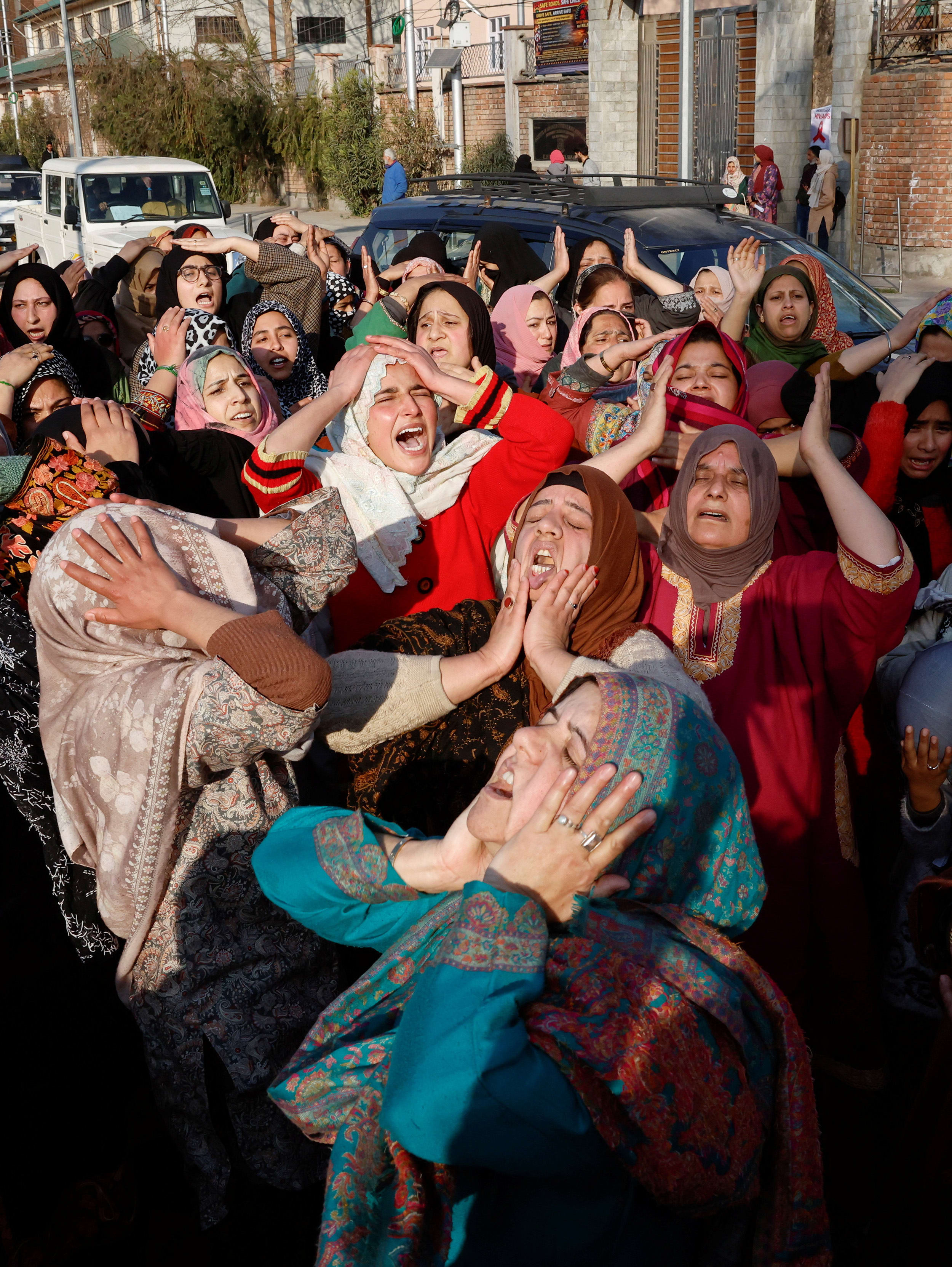
Sharafat Ali / Reuters
Iran unleashes attacks on multiple Arab countries
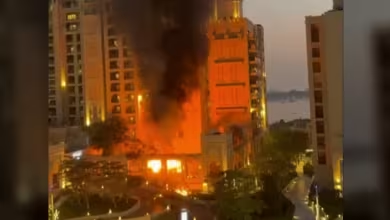
The United Arab Emirates said it has been targeted by hundreds of Iranian missiles and drones, making it one of several countries targeted by Iran in retaliation for joint Israeli and American strikes.
Sen. Lindsey Graham calls Europe 'pathetically weak'
Sen. Lindsey Graham, R-S.C., launched a scathing attack on the United States' European allies last night, accusing them of weakness after European leaders urged diplomacy following the attacks on Iran.
"To our European friends, you’ve lost your way," he said in an interview with Fox News. "You’ve lost your sense of who you are and what makes you different. You’re pathetically weak."
European leaders yesterday urged Iran to seek a “negotiated solution” as they attempted to end the outbreak of war between the U.S., Israel and Iran through diplomatic means.
European Union foreign policy chief Kaja Kallas said the bloc was "coordinating closely with Arab partners to explore diplomatic paths."
But Graham said recommendations to negotiate with the Iranian regime were an "offense to the Iranian people."
"You seem to only care about your backyard," he said, addressing Europe, in reference to the war between Russia and Ukraine. "You make me sick when it comes to your values."
Iran conflict causes worldwide travel chaos
The Iran conflict is disrupting air travel around the world as ongoing airstrikes close some of the biggest airports in the Middle East and much of the region’s airspace remains empty.
Thousands of flights have been affected after retaliatory strikes by Iran hit key transit hubs, including in the United Arab Emirates cities of Abu Dhabi and Dubai, home to the world’s busiest international airport.
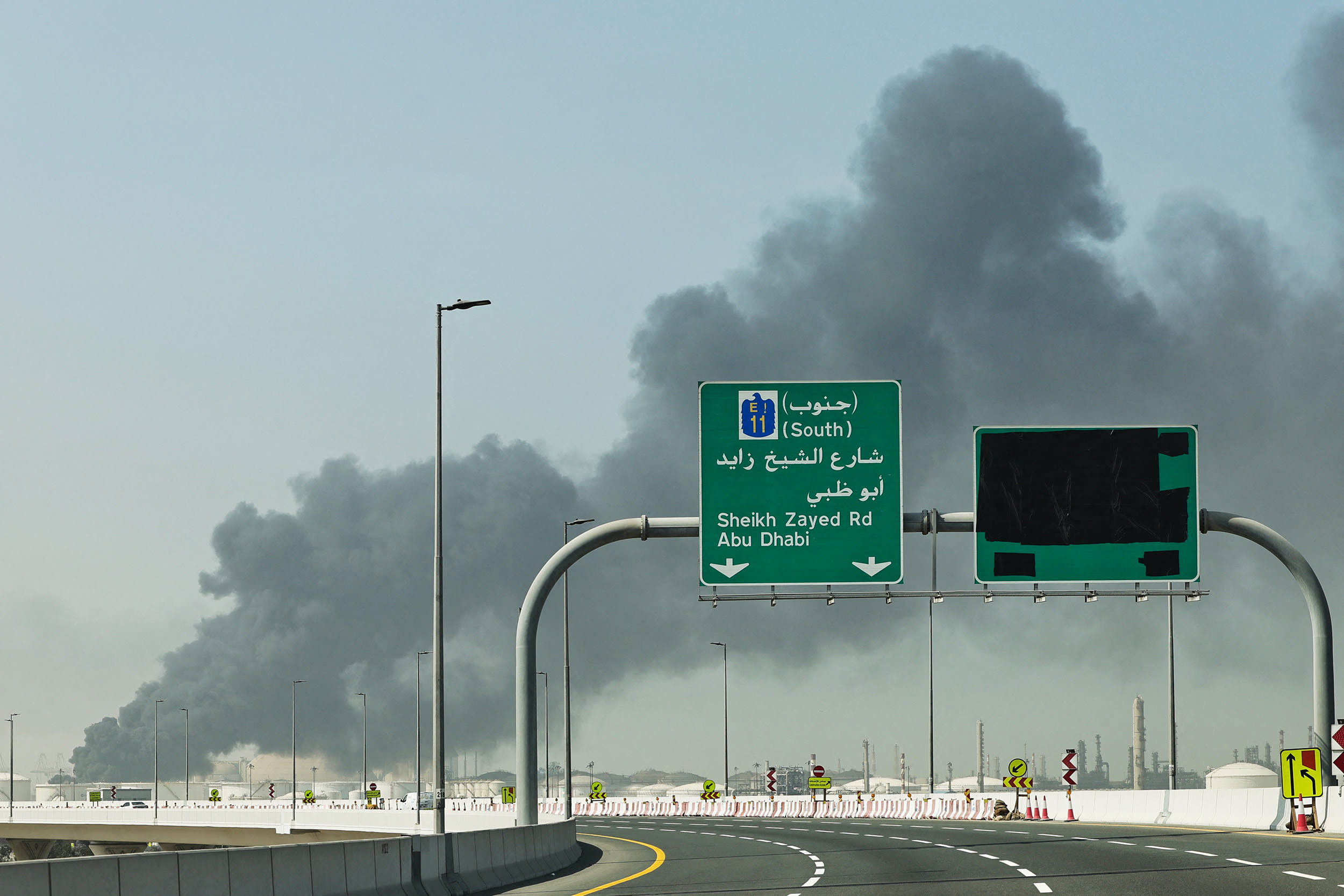
A plume of smoke rises from the port of Jebel Ali following a reported Iranian strike in Dubai today. Fadel Senna / AFP - Getty Images
As of early today, there was virtually no flight activity over Iran, Iraq, Kuwait, Israel, Bahrain, the UAE and Qatar, maps from live flight tracker Flightradar24 showed. The effects of the flight disruptions are rippling far beyond the Middle East.
“It’s the sheer volume of people and the complexity,” U.K.-based aviation analyst John Strickland told Reuters. “It is not only customers, it is the crews and aircraft all over the place.”
Afghan refugees stuck at U.S.-run camp in Qatar 'terrified' by nearby Iranian counterstrikes
Afghan refugees stranded at a U.S.-run camp in Qatar are “terrified” as Iran launches retaliatory strikes around them, a U.S. advocacy group said.
There are more than 1,100 people, mostly women and children, at Camp As Sayliyah, a former U.S. military base outside Doha for Afghan allies awaiting U.S. resettlement. Advocacy group AfghanEvac said it had received multiple recordings from residents showing missile interceptions in the skies above or near the camp.
“They do not have hardened bunkers. They are being told conditions are safe while watching active military activity unfold in the sky above them,” Shawn VanDiver, the group’s president, said in a statement.
Those at the camp include Afghan allies who worked with the U.S. military, as well as the immediate family members of U.S. military personnel, whose lives advocates say are at risk in Taliban-ruled Afghanistan. Though most of them have been approved for U.S. resettlement after extensive vetting, the Trump administration says it plans to shut down the camp in March without relocating them to the U.S.
The camp experienced similar terror last summer during a 12-day war between Israel and Iran that included U.S. strikes on three Iranian nuclear facilities. VanDiver called on the State Department to provide the camp’s residents with “adequate hardened shelter” and expedite their relocation to the U.S.
“These families stood with us. They trusted us,” he said. “They have already sacrificed enough.”
Inside President Donald Trump’s decision to strike

After months of close coordination with Israel and weeks of direct negotiations with Iran, President Donald Trump ordered an attack on Iran.
Senior administration officials said the administration determined Iran's efforts to reconstitute its nuclear program after American strikes on nuclear sites last year, combined with Iran's refusal to discuss its ballistic missile program, constituted an "intolerable risk" to the U.S.
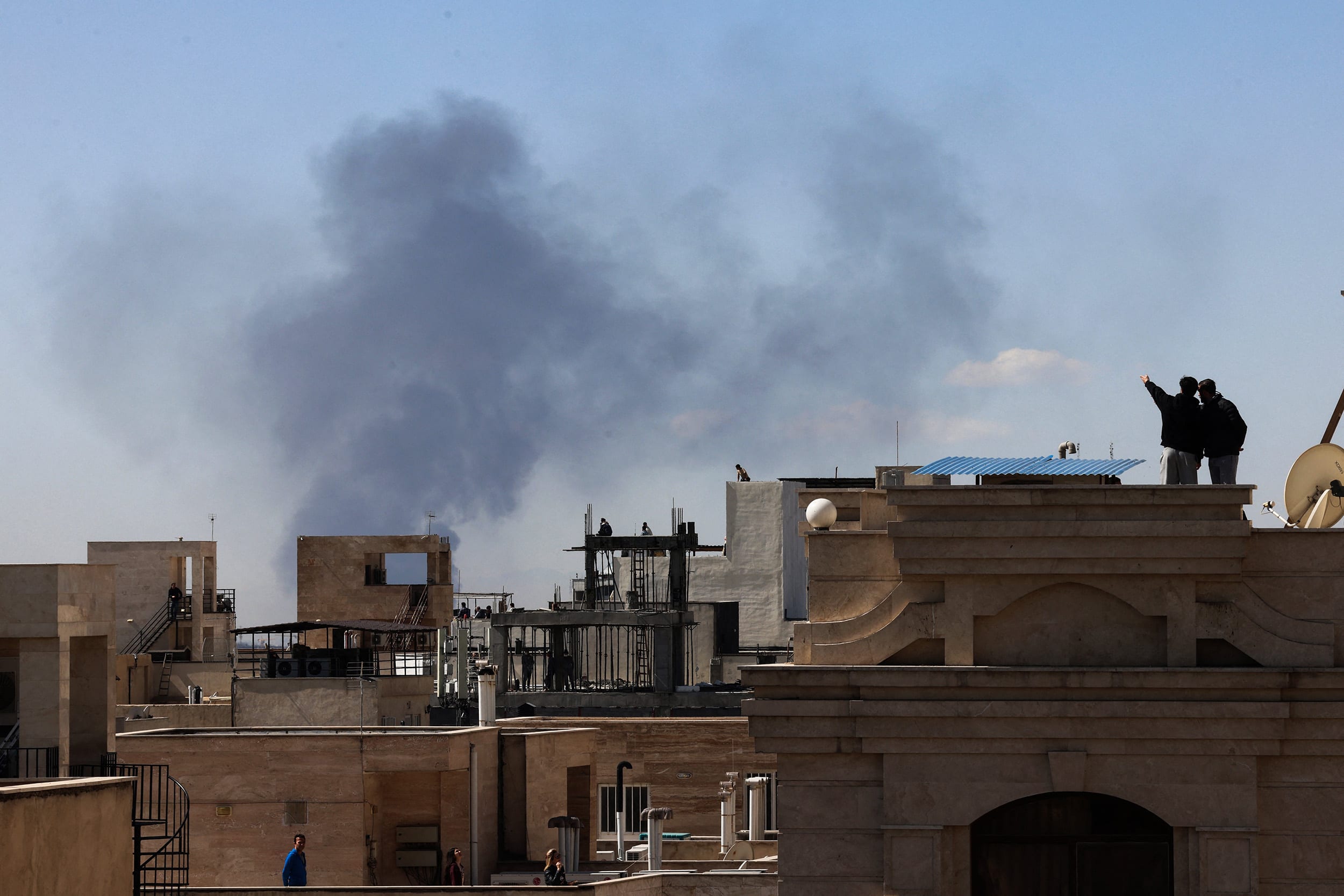
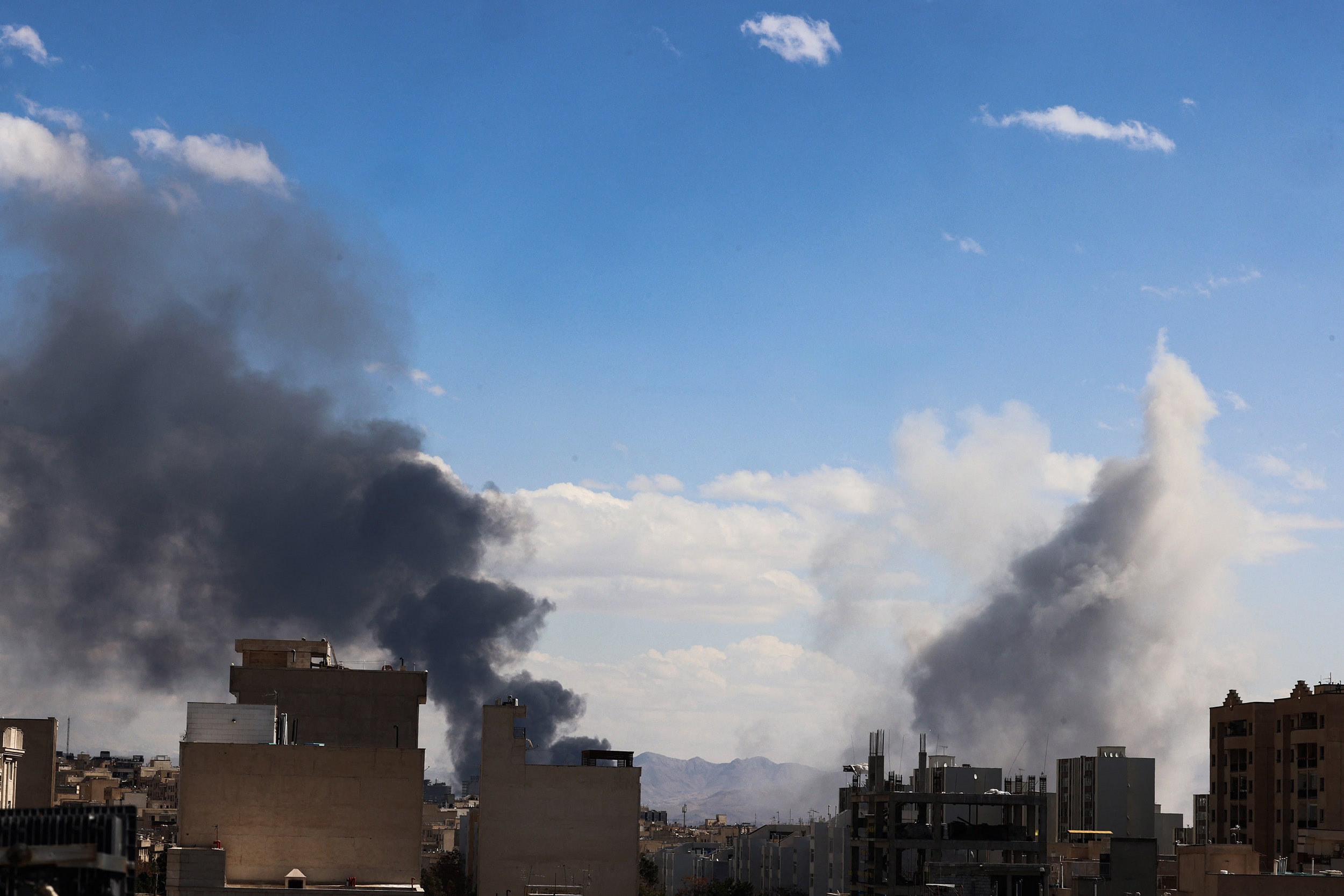
Explosions reported in Tehran
Vahid Salemi / AP
Atta Kenare / AFP via Getty Images
Atta Kenare / AFP - Getty Images
Atta Kenare / AFP - Getty Images
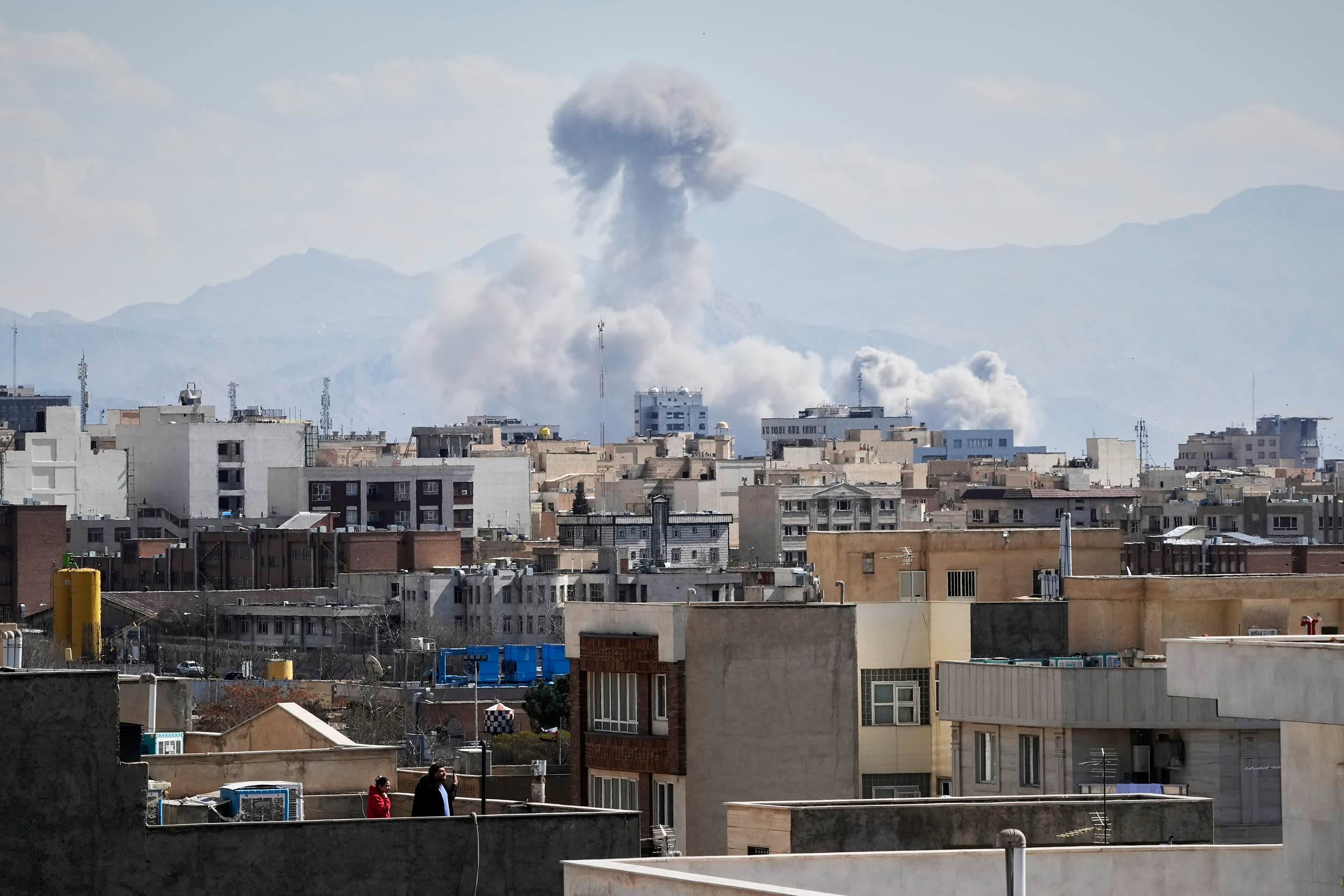
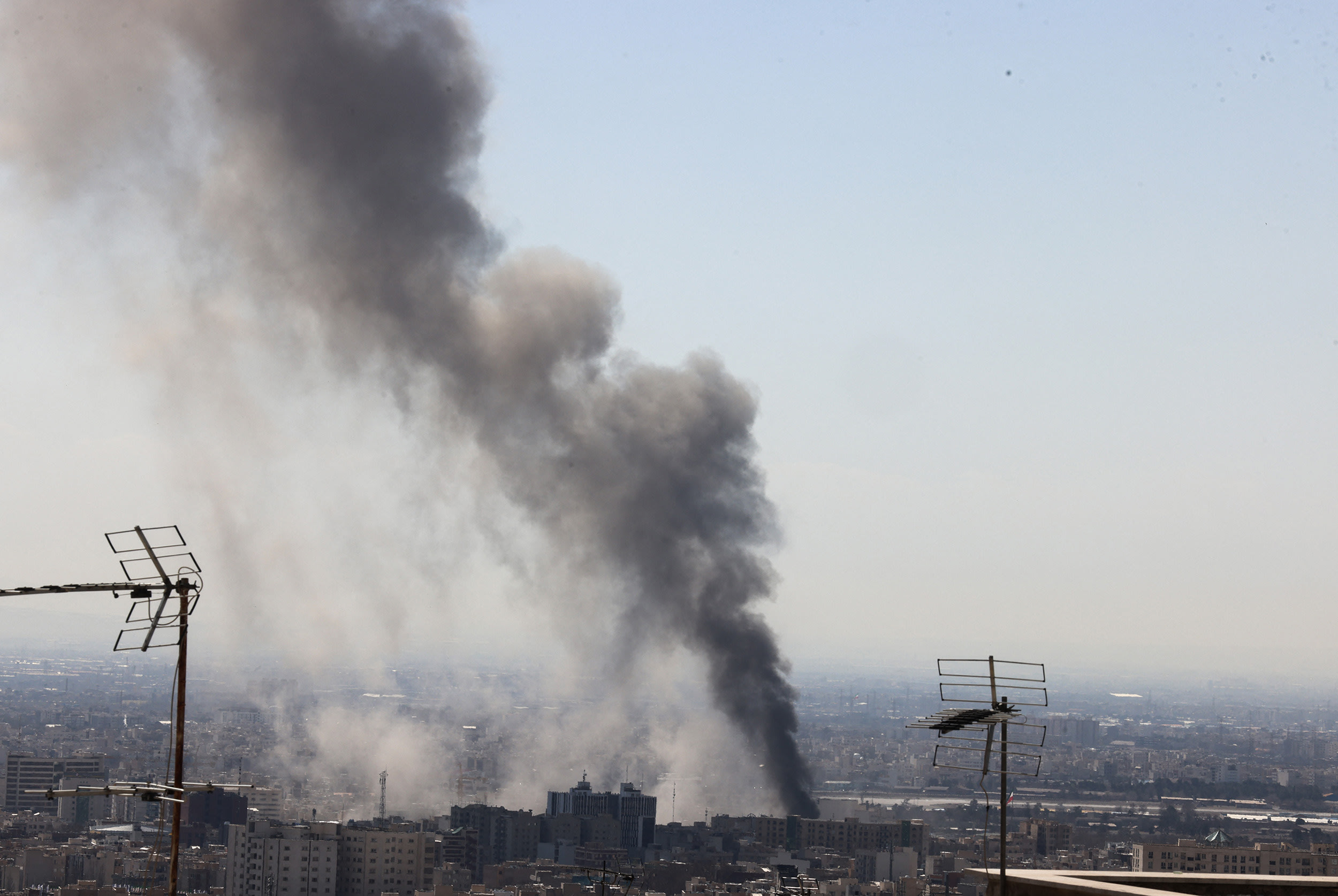
Plume of smokes rise from explosions in Tehran as residents watch from the rooftops this morning.
Nine people killed at protest outside U.S. consulate in Pakistan
At least nine people have been killed in a protest outside the U.S. consulate in Pakistan’s port city of Karachi, a hospital and a medical transport charity said, as local police clashed with protesters trying to enter the premises.
The killing of Ayatollah Ali Khamenei, Iran’s hard-line supreme leader, has caused widespread outrage among members of the Shia Muslim community in neighboring Pakistan, who have held demonstrations across the country.
The largest protest was held in Karachi, home to about 20 million people, where protesters chanted slogans against the U.S. and Israel. Roads were closed to traffic as protesters threw stones at the U.S. consulate in the center of the city.
A police official in Karachi told NBC News that some protesters had managed to get past the main security gate, hundreds of yards away from the U.S. consulate building, but that they were removed by police.
Karachi’s Civil Hospital said it had received the bodies of nine people who had been killed at the protest and 35 people who were injured, all because of gunfire. Separately, the Edhi Foundation said it had transported nine bodies from the protest.
The government of Sindh province, where Karachi is the capital, condemned the violence and said it would “assess how the situation escalated and identify those responsible.”
Shia protesters also marched toward the U.S. Consulate in the city of Lahore, the capital of Pakistan’s Punjab province, but were dispersed, police said. The U.S. Embassy in Islamabad said in a post on X that it was monitoring the protests in Karachi and Lahore as well as calls for additional demonstrations elsewhere in the country.
Trump says Iran ‘better not’ hit back hard as parliament speaker vows to ‘get even’
Trump warned Iran not to “hit very hard” as it responds to U.S.-Israeli strikes, saying the U.S. would respond with even more force.
“Iran just stated that they are going to hit very hard today, harder than they have ever hit before,” he said on social media. “THEY BETTER NOT DO THAT, HOWEVER, BECAUSE IF THEY DO, WE WILL HIT THEM WITH A FORCE THAT HAS NEVER BEEN SEEN BEFORE!”
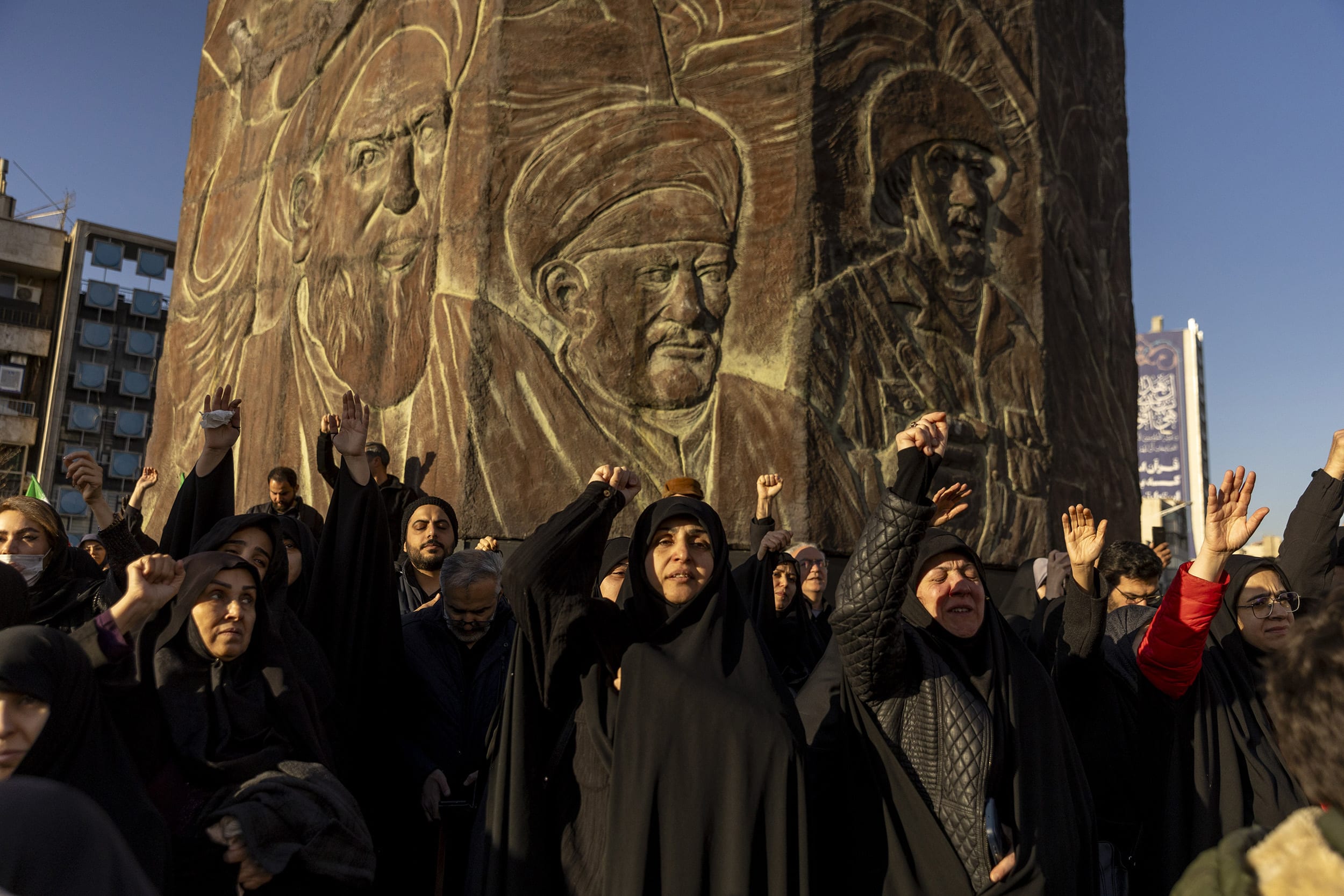
Mourners pay tribute to Khamenei in Tehran this morning. Majid Saeedi / Getty Images
Mohammad Bagher Qalibaf, Iran’s parliament speaker, said on state-run television that Iran would “get even with the Americans and Israelis.”
“Trump and Netanyahu have crossed a red line and will pay the price for it,” he said. “We will strike you with such painful blows that you will beg for mercy, you will see.”
Iran attack is an 'illegal war of choice,' arms control group says
The attack on Iran is an “illegal war of choice” that was not authorized by Congress, violates international law and was based on false claims by the Trump administration, a U.S. arms control group said.
There was no imminent threat from Iran, and the U.S.-Israeli attacks were “not justifiable on nonproliferation grounds,” the Washington-based Arms Control Association said in a statement.
“Trump and his aides have in recent days and hours claimed, without credible evidence, that Iran had restarted its nuclear program, had enough available nuclear material to build a bomb within days and was developing long-range missiles that could ‘soon’ be capable of hitting the United States,” the group said. “All three of these claims are false.”
Like the U.S.-Israeli attacks on Iran last summer, the group said, the attack this weekend came as U.S. and Iranian negotiators were making “significant progress” on a deal over Iran’s nuclear program. “The United States could have and should have negotiated in good faith with Iran to arrive at effective solutions,” it said.
Tehran falls quiet as Iranians wake up to life without Khamenei
Khamenei is dead, and as Tehran wakes up for the first time in 37 years without the supreme leader in charge, an NBC News producer on the ground in the Iranian capital captures the mood in the city.
Tehran is quiet.
It feels like everyone here is waiting, but no one knows what will come next, and people have not rushed to the streets to celebrate after the official announcement of Khamenei’s death this morning.
Businesses, schools and universities have shut down. The streets would normally be packed before Nowruz on March 20, Iran’s New Year's Day, but the mood is different this year.
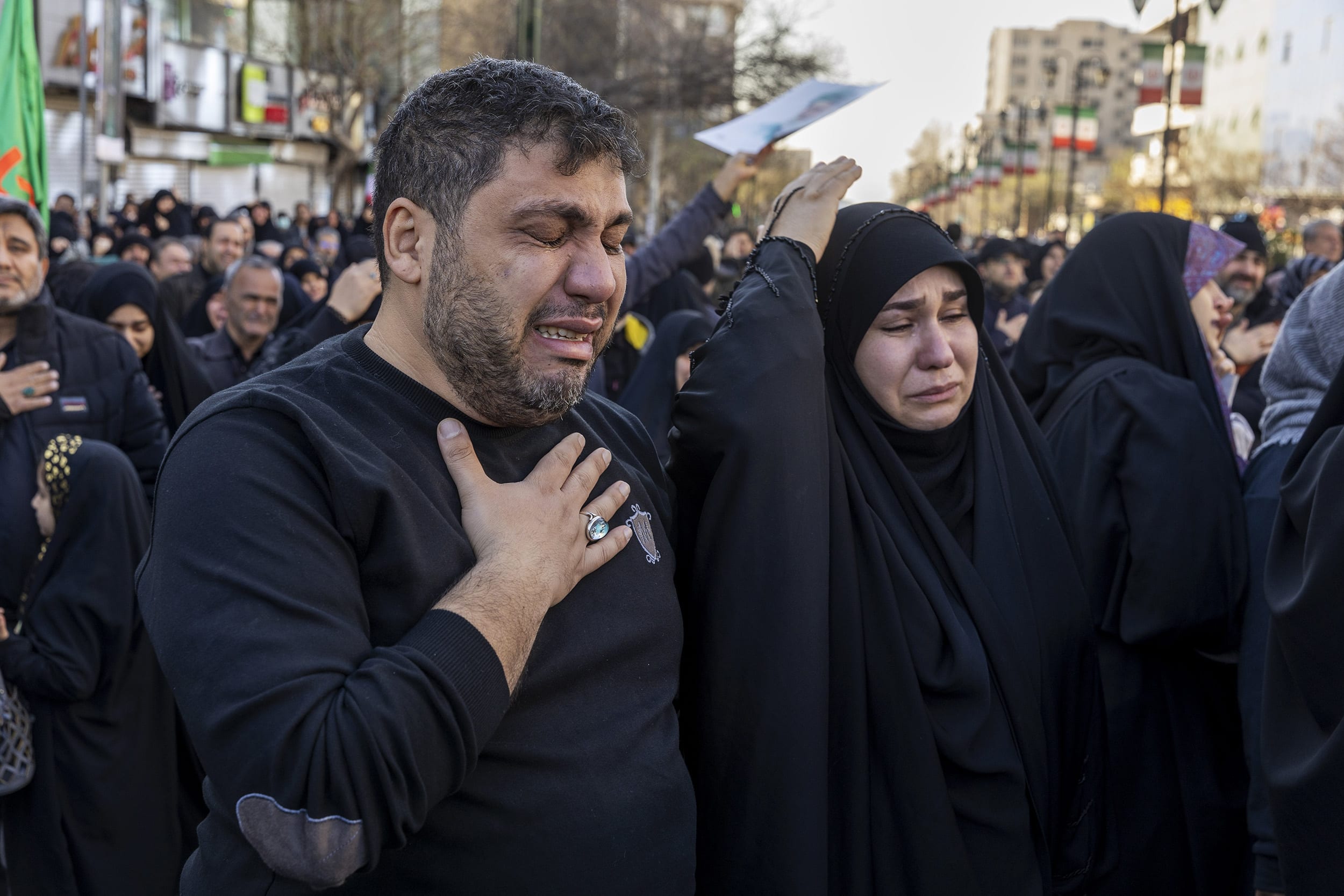
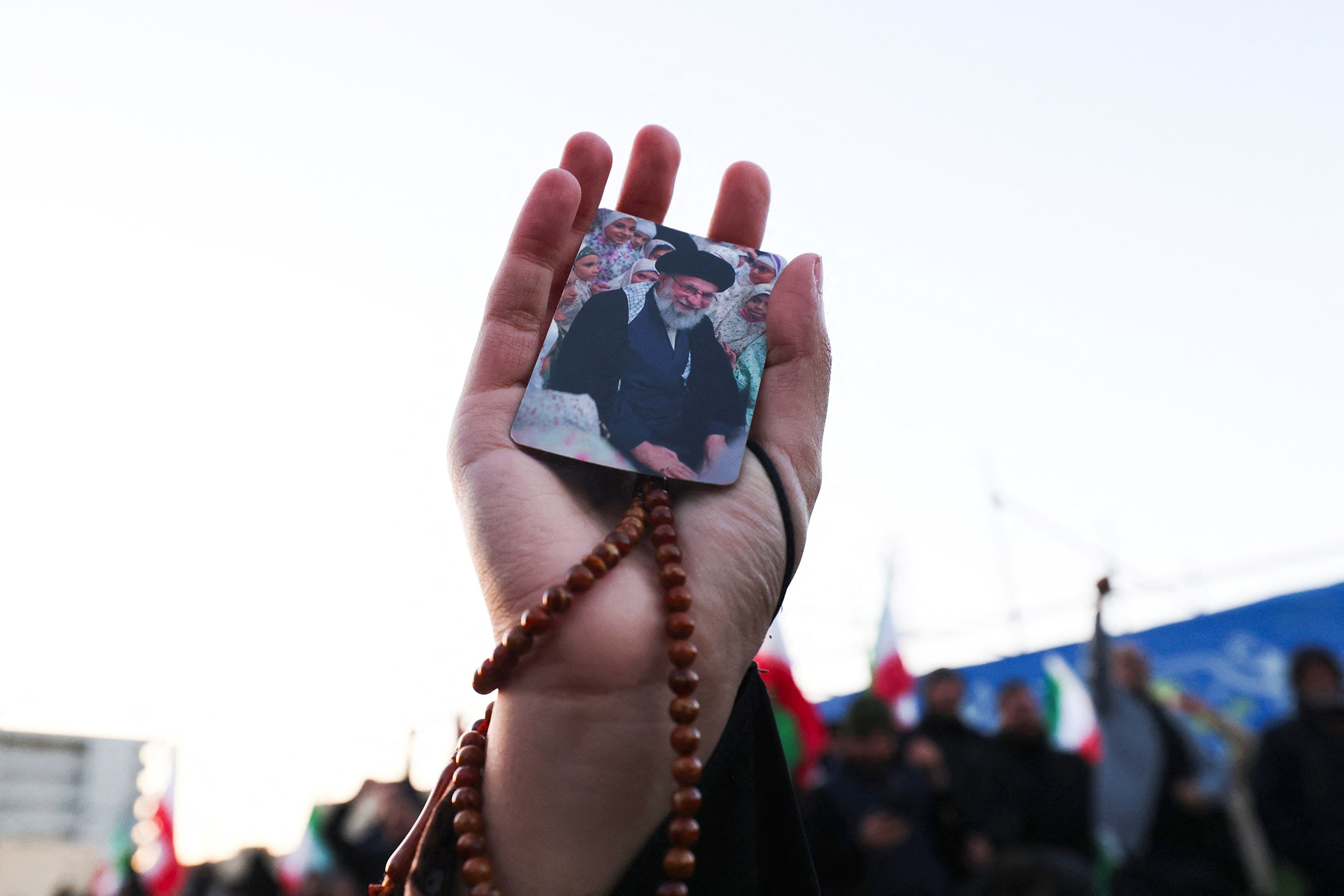
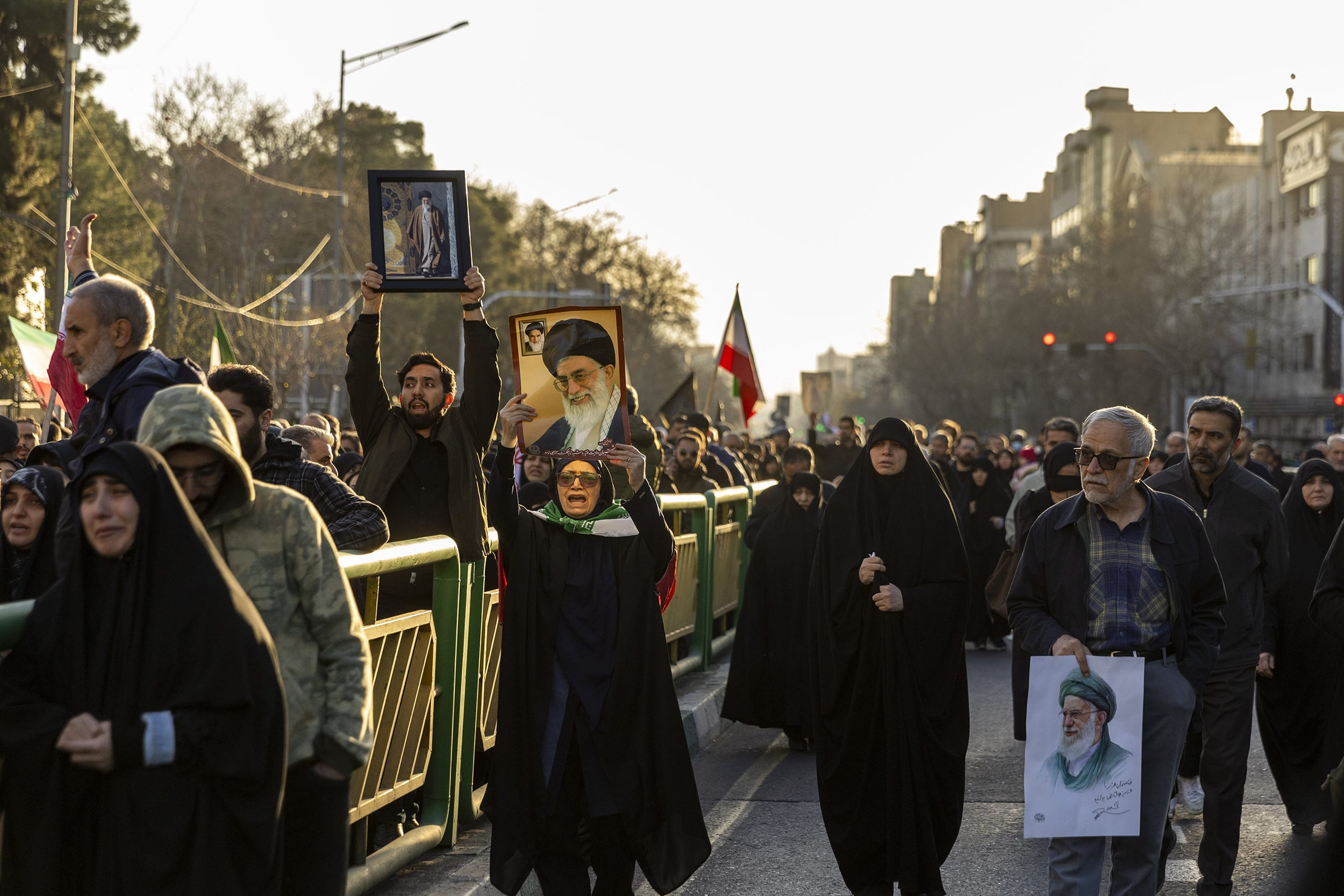
Only in Enghelab Square in downtown Tehran, where Khamenei supporters are mourning the supreme leader, is there a large crowd. He did have his supporters, and his base is turning out, banging their chests and heads and crying for the loss of their religious leader. People started turning up from the moment the news was announced.
Many people still have access to the internet, thanks to virtual private networks, despite a widespread blackout. Everyone is posting on Instagram and sharing stories. We had internet glitches yesterday, but today everyone I know is connected and in touch with each other.
Thousands gather in Tehran to mourn Khamenei
Majid Saeedi / Getty Images
Majid Saeedi / Getty Images
Atta Kenare / AFP - Getty Images
Majid Saeedi / Getty Images
Large crowds of mourners gathered in Enghelab Square in the center of the Iranian capital this morning after the killing of Supreme Leader Ayatollah Ali Khamenei, following the confirmation of his death in Iranian state media.
Hegseth touts ‘Operation Epic Fury,’ says U.S. will destroy Iran’s missile production
Defense Secretary Pete Hegseth praised the U.S. military’s strikes on Iran, calling “Operation Epic Fury” the “most lethal, most complex, and most-precision aerial operation in history.”
“The Iranian regime had their chance, yet refused to make a deal — and now they are suffering the consequences,” Hegseth said on X. “For almost fifty years, Iran has targeted and killed Americans, always seeking the world’s most powerful weapons to further their radical cause. Last night, unlike any previous president, President Trump began dealing with this cancer.”
He said the Defense Department “will not tolerate powerful missiles targeting the American people,” adding that the operation will destroy Iran’s missiles, missile production and its navy.
“As President Trump has said his entire life, Iran will never have a nuclear weapon,” Hegseth said.
“The United States did not start this conflict, but we will finish it. If you kill or threaten Americans anywhere in the world — as Iran has — then we will hunt you down, and we will kill you,” the post continued.
What comes next in Iran?
Ayatollah Ali Khamenei was killed by a joint U.S. and Israeli attack, but succession plans are kept secret, and with uncertainty over how many of his potential successors were also killed, it remained unclear who will be Iran's supreme leader.
Iran’s president declares martyrdom for Khamenei, says his death ‘will not go unanswered’
Iranian President Masoud Pezeshkian declared Khamenei a martyr and vowed revenge for his killing.
The martyrdom declaration means 40 days of mourning, as previously announced by state-affiliated news, can begin to take place nationwide.
Pezeshkian praised Khamenei, the Middle East’s longest-serving head of state, for 37 years of leadership in the statement via the semiofficial news agency Nour News.
Khamenei “led the Islamic Revolution with wisdom and courage, carried the flag of the Islamic front, and with his strong faith created a new chapter in Islamic governance,” Pezeshkian said.
He vowed to avenge Khamenei’s death, saying those who took part in planning it will regret their participation.
“This great crime will not go unanswered and will create a new chapter in the history of the Islamic and Shia world,” he said. “The pure blood of this respected leader will rise like a flowing spring and will root out American-Zionist oppression and crime.”
Pezeshkian concluded: “With full strength and support from the Islamic nation and free people of the world, we will make the planners and perpetrators of this crime regret it.”
Khamenei was killed in opening strike of attack, Israel’s defense minister says
Iran’s supreme leader was killed in Israel’s opening strike against Iran during its part of the U.S. and Israeli offensive, according to the Israel’s defense minister.
Khamenei was killed alongside other senior leaders in Iran during Israel’s attack, dubbed “Roar of the Lion,” Israeli Defense Minister Israel Katz said, according to a spokesperson who relayed his remarks.
He praised the Israel Defense Forces for what he characterized as their “brilliant execution.”
“Whoever acted to destroy Israel — was destroyed,” Katz said. “Justice has been served, and the axis of evil has suffered a crushing blow.”
Iranian President Masoud Pezeshkian vowed to avenge the killing of Khamenei, which has set off a declaration of martyrdom and 40 days of national mourning in Iran.
Katz said Israel will defend itself. “We will continue to act with full force to defend the State of Israel,” he said.
Map: Confirmed strikes on Iran
Ayatollah Ali Khamenei, religious cleric who ruled Iran for decades, dead in strikes at 86
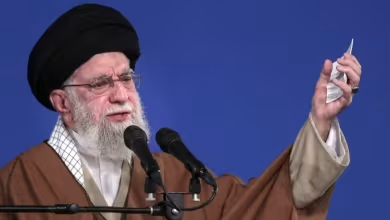
Ayatollah Ali Khamenei, who reigned as Iran’s supreme leader for the past 36 years, was killed in a sweeping U.S. and Israeli attack on the country Saturday. He was 86.
Trump announced his death on social media and state TV later confirmed it.
To Khamenei’s critics, he was a despot who consolidated power over nearly four decades, bolstered the Islamic Revolutionary Guard Corp to become the most powerful military and economic force in the country, and clung to power in his final days with a brutal crackdown on anti-government protesters that killed thousands.
To his supporters, he will be revered as a martyr who stood up to the aggression of the U.S. and Israel, which he said should be wiped off the map.
His death leaves a nation that he ruled with an iron grip for decades unmoored, possibly heading to a period of great turmoil. Two opposing factions, the protesters pushing for greater freedom and the heavily armed security forces confronting them, are now vying for power while American and Israeli bombs continue to fall.
“Khamenei, one of the most evil people in History, is dead,” Trump posted Saturday on Truth Social.
Comments (0)
No comments yet. Be the first to share your thoughts.
Sign in to leave a comment.