Neil Gorsuch Points to 'Unfortunate' Supreme Court 'Failure' - Newsweek
Gorsuch criticized other Supreme Court justices for not taking up a new case on Monday.

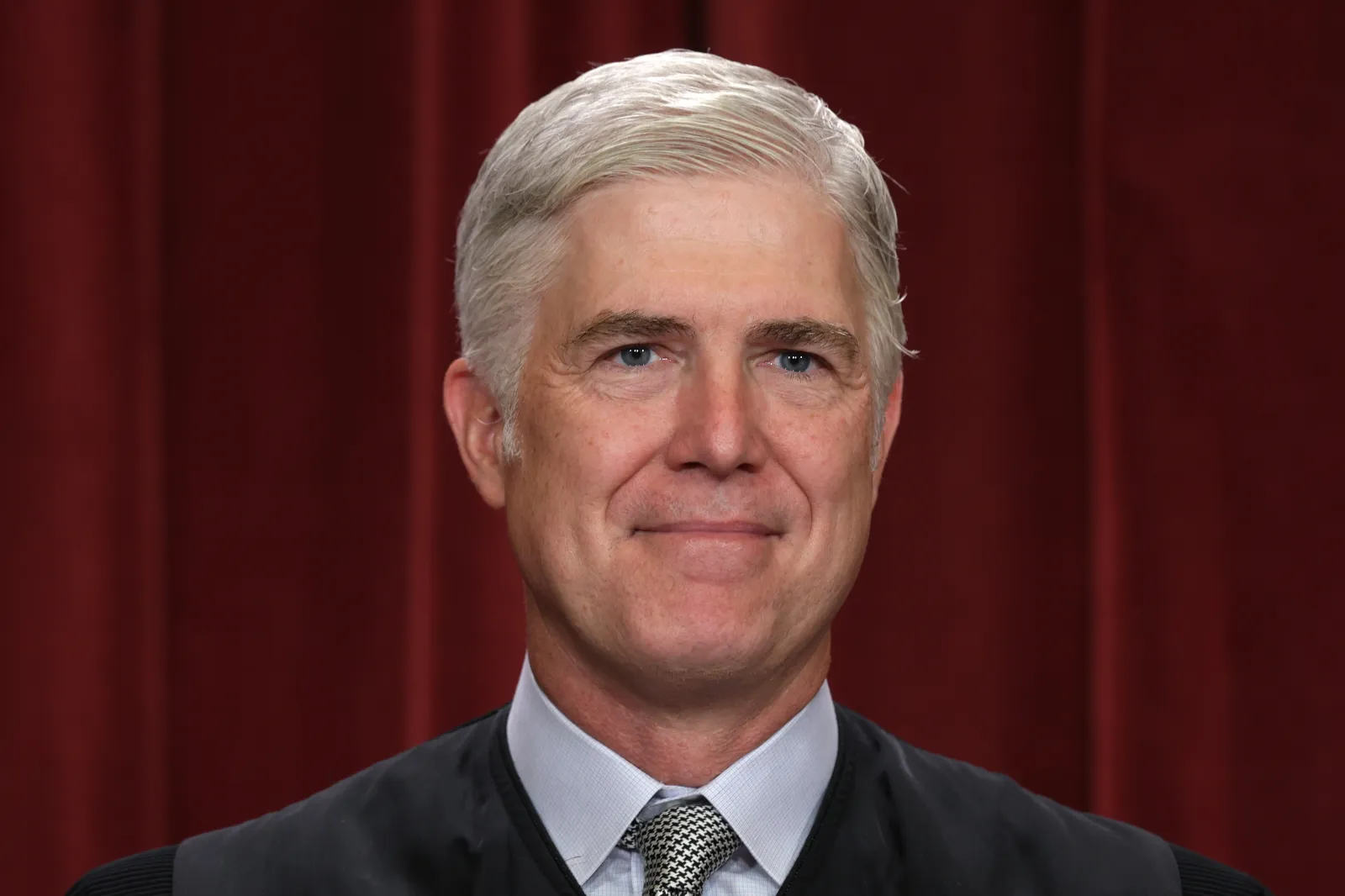
Supreme Court Justice Neil Gorsuch called out what he called an “unfortunate” decision by the High Court on Monday.
Why It Matters
Gorsuch broke from other justices in the case Jaron Burnett v. United States, marking just the latest divide among the justices.
The case centered on whether to pick up the case filed by Burnett, whom the government sought to send to prison after accusing him of violating the terms of his supervised release. He had pushed for a jury to decide on whether he should be sent back, as the additional time would exceed his original 120-month sentence. Lower courts disagreed with him and upheld the additional time, so he sought to appeal to the Supreme Court.
*Newsweek *reached out to Burnett's lawyer for comment via email.
What To Know
The court declined to grant certiorari, which requests that records be sent up from lower courts, in Burnett’s case on Monday. Gorsuch filed a dissenting opinion arguing the court should have agreed to hear the case.
Nearly two decades ago, Burnett pleaded guilty to “knowingly transporting an individual in interstate commerce with intent that the individual engage in prostitution and sexual activity for which a person can be charged with a criminal offense,” according to court documents. Burnett was sentenced to 105 months in prison followed by 15 years of supervised release.
More than six years after his release, the government charged him with violating his terms of release, so the district court sentenced him to an additional 13 months in prison—a total of 118 months.
He finished serving that sentence in July 2022 and returned to supervised release. In 2024, the government again charged him with violating his terms and sought to send him back to prison. Burnett argued that because the underlying conviction subjected him to a maximum 120 months in prison, the Sixth Amendment would require the government to prove its case to a jury.
Lower courts disagreed, and he was sentenced to 14 months in prison. A court of appeals upheld that sentence. A majority of justices agreed on Monday—but Gorsuch made his disagreement known in his dissent.
“In his petition to us, Mr. Burnett does not ask for much. He does not object to receiving new prison time for supervised release violations. He does not even object to a court issuing that prison time based on its own factual findings under a preponderance of the evidence standard, so long as the punishment issued does not exceed the statutory maximum for his underlying crime of conviction,” Gorsuch wrote.
He continued, “All Mr. Burnett claims is the right to have a jury decide any contested facts under the reasonable doubt standard where, as here, a court seeks to impose a sentence that will cause a defendant’s total time in prison to exceed the statutory maximum Congress has authorized for his underlying conviction.”
Gorsuch wrote that he would have taken the case as few defendants “face a realistic prospect of spending more time in prison than the maximum term authorized for their underlying convictions.”
He said he views the case as “high stakes” because defendants often serve long terms on supervised release and may “wind up losing for decades (and sometimes forever) the right to receive a federal jury trial to resolve charges against them under the reasonable doubt standard.”
“All the government need do is accuse the defendant of a supervised release violation and convince a judge to find by a preponderance of the evidence that more punishment is warranted. With no more than that, further prison time may follow—even for periods that exceed the maximum Congress has authorized for the defendant’s only crime of conviction,” he wrote.
The Supreme Court’s “failure” to not grant review to the case is “unfortunate,” he wrote.
“I can only hope we will take up another case like his soon—and that, in the meantime, lower courts will more carefully consider the Sixth Amendment’s application in this context,” he wrote.
What People Are Saying
*Justice Neil Gorsuch also wrote in his dissent: *“Bypassing juries, trials, and the reasonable doubt standard in this way may hold some obvious advantages for prosecutors. But whether this arrangement can be squared with the Constitution is another thing.”
*Burnett’s attorney Timothy Shepherd wrote in a petition to the court: *“Importantly, though, Petitioner does not challenge the constitutionality of the federal scheme of supervised release as a whole. In most instances, an aggregated revocation sentence does not exceed the underlying statutory maximum. So, the jury right is not clearly implicated. But, in cases like Mr. Burnett’s where the imposition of that new sentence would bring a defendant’s aggregate term of imprisonment beyond the underlying statutory maximum, Apprendi clearly commands that the additional factual findings must be made by a jury beyond a reasonable doubt. Therefore, granting Mr. Burnett’s petition would not disrupt most supervised release cases.”
*Solicitor General D. John Sauer responded to the request: *“Petitioner’s challenge to the length of his terms of imprisonment is now moot because that term has expired. In any event, the court of appeals’ decision is correct, and its decision does not conflict with any decision of this Court or another court of appeals.”
Comments (0)
No comments yet. Be the first to share your thoughts.
Sign in to leave a comment.