RFK Jr. Saying He Thinks Glyphosate Causes Cancer Resurfaces - Newsweek
Robert F. Kennedy Jr., who has previously linked glyphosate to cancer, resurfaced in the news after a video of him saying he believes glyphosate causes cancer was circulated. The White House issued an order to maintain supplies of glyphosate-based herbicides, which Kennedy has supported as necessary for national security and food production. The controversy highlights ongoing debates over glyphosate's health risks and its role in US agriculture.

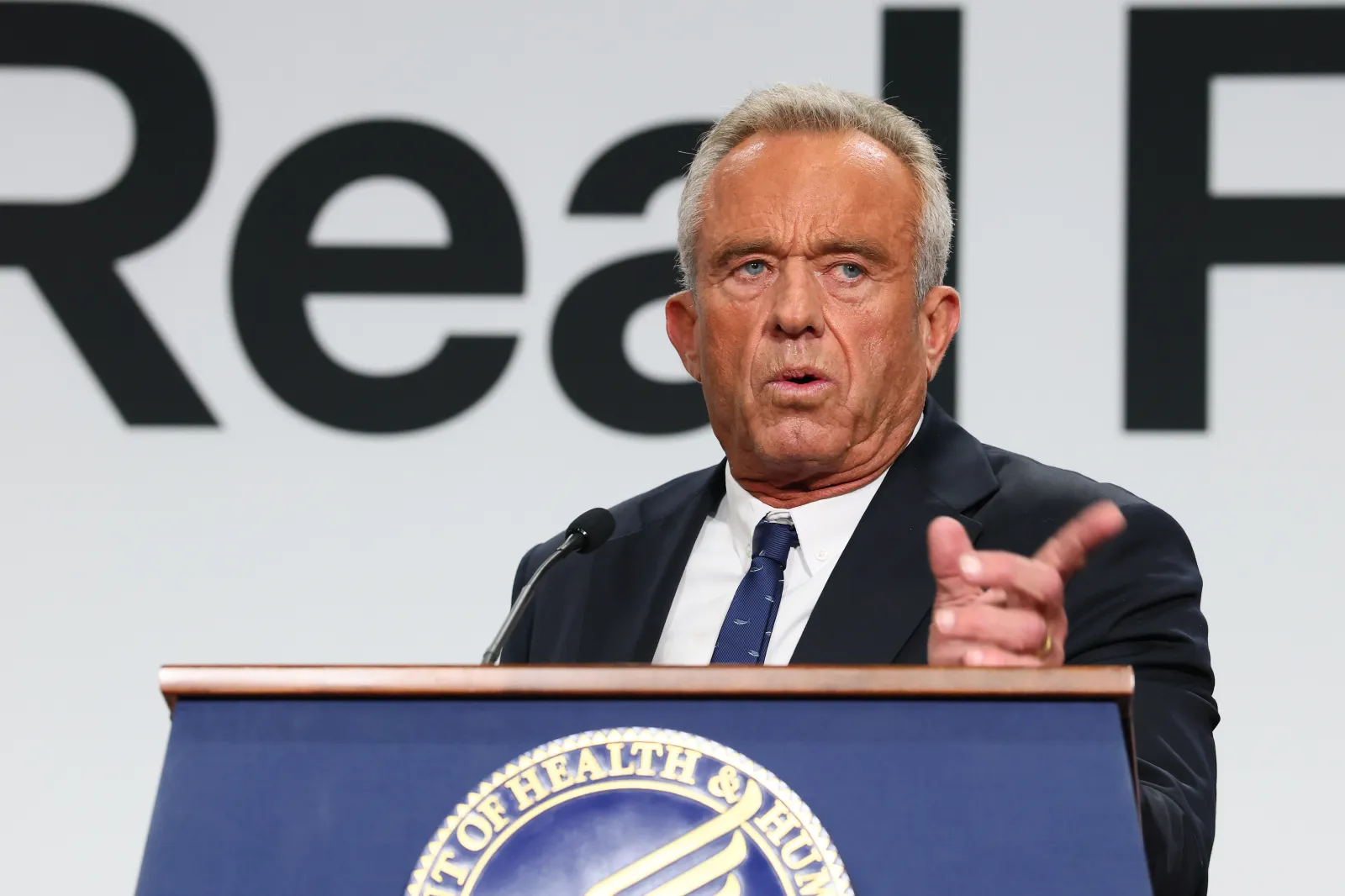
A video clip of an interview with Health and Human Services (HHS) Secretary Robert F. Kennedy Jr. has resurfaced in light of the White House issuing an order to maintain "adequate" supplies of glyphosate-based fertilizers, which the secretary previously said may cause cancer.
The clip is from his interview on the Katie Miller Podcast, which released in January. The secretary says: "I believe glyphosate causes cancer."
Some X users also found an old post from June 2024 in which Kennedy Jr. wrote: "The herbicide Glyphosate is one of the likely culprits in America’s chronic disease epidemic. Much more widely used here than in Europe. Shockingly, much of our exposure comes from its use as a desiccant on wheat, not as an herbicide. From there it goes straight into our bodies. My USDA will ban that practice."
When approached for comment on Friday, the HHS pointed *Newsweek *to a statement from Kennedy Jr.: "Donald Trump's Executive Order puts America first where it matters most—our defense readiness and our food supply. We must safeguard America's national security first, because all of our priorities depend on it. When hostile actors control critical inputs, they weaken our security. By expanding domestic production, we close that gap and protect American families."
Newsweek reached out to HHS for comment on Saturday morning outside of normal business hours.
Why It Matters
In the United States, glyphosate—the active ingredient in Monsanto‑Bayer’s Roundup—has been at the center of a long‑running health controversy: The International Agency for Research on Cancer classified glyphosate as “probably carcinogenic to humans” in 2015, while the U.S. Environmental Protection Agency (EPA) has maintained that it is unlikely to cause cancer when used as directed.
This divide has fueled public concern and helped drive thousands of lawsuits from plaintiffs who argue long‑term exposure caused cancers such as non‑Hodgkin lymphoma, even as manufacturers and regulators point to studies finding no clear causal link.
Kennedy Jr. has played a prominent role in linking glyphosate to health concerns, both before and after becoming U.S. health secretary. He has repeatedly argued glyphosate and similar herbicides contribute to chronic disease and has highlighted children’s exposure through food, water, and the environment as part of his “Make America Healthy Again” (MAHA) agenda, even as critics accuse him of overstating the science.
What To Know
President Donald Trump on Wednesday issued an executive order that aimed at shoring up supplies of elemental phosphorus and glyphosate-based herbicides by invoking the Defense Production Act (DPA). Through this act, the president is directing the US Department of Agriculture to prioritize contracts and allocate resources to ensure "adequate" supplies of both materials are maintained.
The president cited national security concerns, noting the role that phosphorus plays in national defense as it relates to supply chains and military readiness.
Specifically, regarding glyphosates, Trump's order argues that it is necessary to avoid critically jeopardizing agricultural productivity, writing that restrictions in access to glyphosate-based herbicides "would result in economic losses for growers and make it untenable for them to meet growing food and feed demands."
The order has stirred strong reactions from those wary of the herbicide and those who view it as critical to the U.S., and much attention turning back to Kennedy and his past comments and claims about the adverse health risks posed by its use.
Representative Thomas Massie, a Kentucky Republican, immediately launched an effort to counteract the executive order, writing on X that his "No Immunity for Glyphosate Act" will aim to undo Trump's order, which he says, "insulates manufacturers from liability."
But Republicans on the Senate Committee on Agriculture, Nutrition, and Forestry praised the order in an X post as "smart policy that protects American farmers' access to tools to help them efficiently and safely produce an affordable and abundant supply of food," adding that "food security = national security."
MAHA, Democrats and Others Take Aim at Kennedy Jr. for Supporting Order
Lawrence Gostin, faculty director of the O'Neil Institute for National and Global Health Law at Georgetown University, hit out at the secretary for seemingly supporting the increased of glyphosate, "a known carcinogen," writing on X that "it's striking how Kennedy is willing to jettison his core values to please Trump."
"In the process, he is betraying the MAHA movement that he was instrumental in creating. Shame," Gostin wrote.
Some health critics have weighed in on the topic, such as Vani Hari, founder of Food Babe & Truvani as well as a supporter for Kennedy Jr. who called the order "a grenade" for MAHA, arguing in an X post on Thursday that "every president since glyphosate was invented has increased the amount ... being sprayed on our farm land."
"The Chemical Lobby is controlling Washington, no matter who is in charge & this is why I hate politics," she wrote.
Kelly Ryerson, a prominent MAHA activist who goes by the handle "Glyphosate Girl," wrote on X on Wednesday: "Just as the large MAHA base begins to consider what to do at midterms, the President issues an EO to expand domestic glyphosate production. The very same carcinogenic pesticide that MAHA cares about most."
"The Democrats" X account has also done its part to highlight the disparity between Kennedy Jr.'s past comments and the seeming support for Trump's order, requoting the secretary's previous post on X in which he pledged "my USDA will ban that practice."
Democratic National Committee (DNC) chair Ken Martin also asked the secretary "is this Making America Healthy Again?"
Stephanie Eick, a professor of environmental health at Emory University, previously told Newsweek, "While I am very concerned about this executive order, there are actions that we can take on an individual basis to limit our intake of glyphosate. Examples of this include choosing organic products when possible (organic products are free of synthetic chemicals, including glyphosate). If that's not possible, also remember to wash fruits and vegetables thoroughly before eating them, this will help to remove potential pesticide residue."
What Is the Defense Production Act?
The Defense Production Act (DPA) is a U.S. law enacted in 1950 during the Korean War that gives the president broad authority to direct private industry to prioritize and produce goods deemed essential to national defense.
The act allows the federal government to require companies to accept and prioritize government contracts, expand domestic production capacity through loans or purchase guarantees, and allocate scarce materials during national emergencies. Although originally focused on military needs, the definition of “national defense” has expanded over time to include public health emergencies, disaster response, energy security, and critical supply chains.
One of the most prominent uses of the DPA was during the COVID‑19 pandemic, when President Donald Trump invoked it to boost production of ventilators, face masks, test kits, and other medical supplies, and later to keep meat‑processing plants operating to protect the food supply.
Other notable examples highlighted by Newsweek include its use to compel General Motors to manufacture ventilators during COVID‑19 shortages and its invocation to address supply disruptions tied to national emergencies beyond traditional warfare. Together, these cases show how the DPA has evolved into a powerful emergency tool that presidents of both parties have used to rapidly mobilize industry in response to crises affecting public health, food security, and national resilience.
In a polarized era, the center is dismissed as bland. At
Newsweek, ours is different: The Courageous Center—it's not "both sides," it's sharp, challenging and alive with ideas. We follow facts, not factions. If that sounds like the kind of journalism you want to see thrive, we need you.When you
[become a Newsweek Member], you support a mission to keep the center strong and vibrant. Members enjoy: Ad-free browsing, exclusive content and editor conversations.[Help keep the center courageous. Join today.]
Comments (0)
No comments yet. Be the first to share your thoughts.
Sign in to leave a comment.