Supreme Court tariff ruling: What is IEEPA, the law that Trump broke - Axios
The Supreme Court ruled 6-3 that President Trump's tariffs, enacted using the International Emergency Economic Powers Act (IEEPA), were illegal, stating that IEEPA does not authorize the president to impose tariffs unilaterally. The court emphasized that the Constitution grants Congress, not the President, the power to levy taxes and duties, and noted the lack of historical precedent for such sweeping tariffs under IEEPA. Following the ruling, Trump announced plans to impose a 10% tariff on all countries, but questions remain about potential refunds to businesses and international responses.

The Supreme Court said Trump's tariffs broke this law. Here's what to know
Add Axios as your preferred source to
see more of our stories on Google.
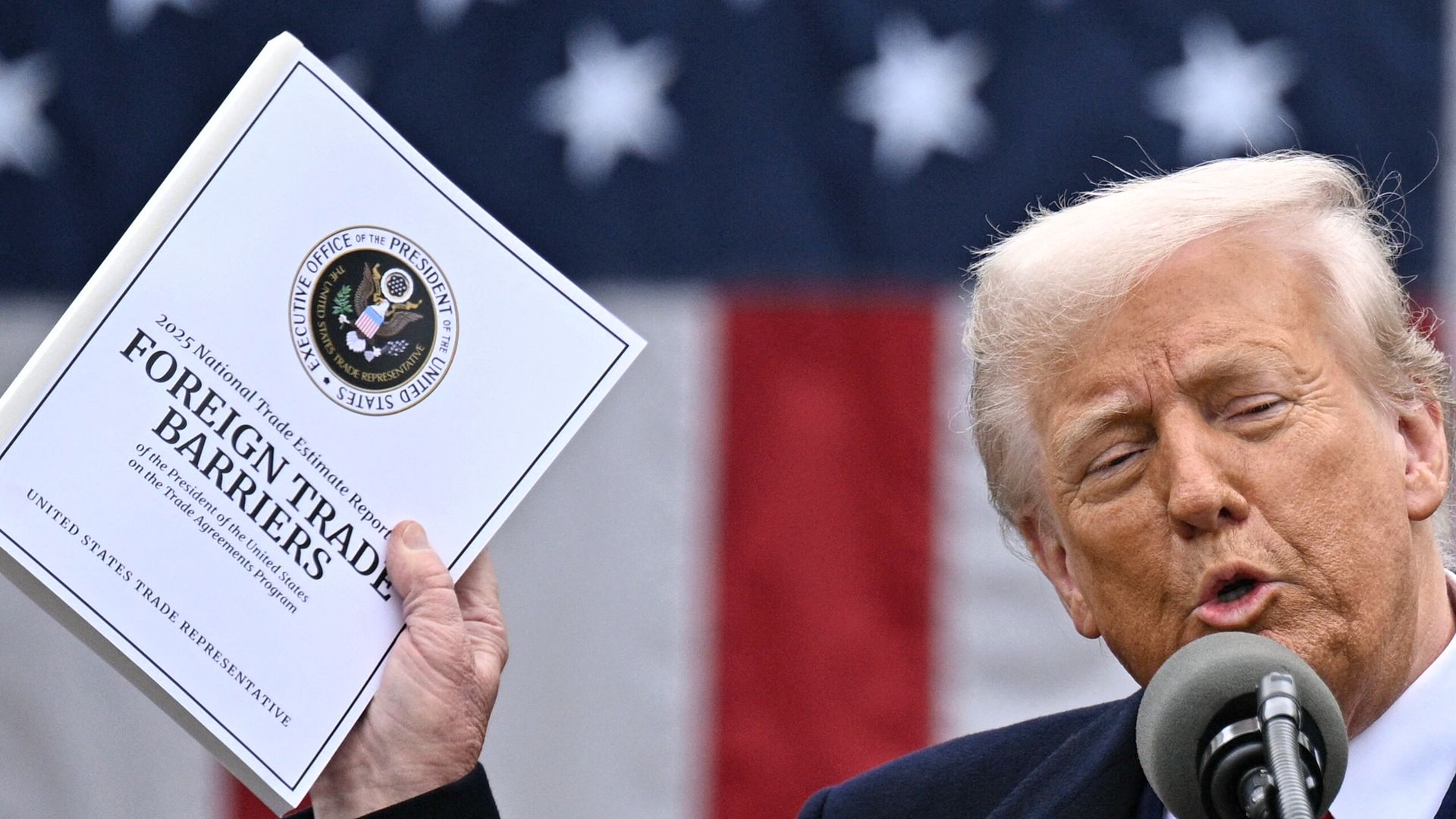
President Trump delivers remarks on reciprocal tariffs at the White House on April 2, 2025. Photo: BRENDAN SMIALOWSKI/AFP via Getty Images
The Supreme Court on Friday delivered a historic blow to President Trump's sweeping tariff agenda, declaring most of it illegal.
*Why it matters: *Trump used the International Emergency Economic Powers Act to enact his globe-shaking tariffs last year, but the nation's highest court drew a red line in the sand on when a president can invoke the law.
Driving the news: **The **court said many of the administration's tariffs were illegal in a 6-3 ruling.
- "The Government reads IEEPA to give the President power to unilaterally impose unbounded tariffs and change them at will. That view would represent a transformative expansion of the President's authority over tariff policy," the rulingsays. - "IEEPA does not authorize the President to impose tariffs."
*The latest: *Following the ruling, Trump said he would sign an executive order to impose 10% tariffs on all countries.
- Trump said Friday that he is "absolutely ashamed" of the ruling, and that he could still "destroy" other countries.
- "I'm allowed to destroy the country, but I can't charge them a little fee," he said.
*Here's what to know about IEEPA: *
What IEEPA is
*How it works: *IEEPA is a 1977 law giving the president "broad authority" during a "national emergency," per the Library of Congress.
- The law's passage followed decades of "increasing amounts of emergency power" delegated by Congress to the president.
- The 1976 National Emergencies Act and IEEPA "placed new limits on presidential emergency powers" including reporting requirements to increase transparency.
*By the numbers: *Presidents have typically used IEEPA to target foreign governments and even terrorists.
- As of last September, presidents had declared 77 national emergencies invoking IEEPA.
*Flashback: *The longest emergency invoking IEEPA was the first, when then-President Jimmy Carter during the Iran hostage crisis, when he used the law to freeze Iranian government assets held in the U.S.
How Trump tried to use IEEPA
Catch up quick: The Trump administration has said the tariffs give Trump leverage to address the trade deficit and other issues that the White House has deemed emergencies.
- "With a Victory, we have tremendous, but fair, Financial and National Security. Without it, we are virtually defenseless against other Countries who have, for years, taken advantage of us," Trump wrote on Truth Social last year.
- The Court of International Trade ruled last May that IEEPA didn't give Trump the authority to levy sweeping global tariffs. An appellate court later upheld that ruling before the Trump administration took it to the Supreme Court.
What the Supreme Court said about IEEPA
What they're saying: Chief Justice John Roberts noted in the ruling that the Constitution specifies that "Congress shall have Power To lay and collect Taxes, Duties, Imposts and Excises."
- He added that "The Framers did not vest any part of the taxing power in the Executive Branch."
*The court *noted that in "IEEPA's half century of existence, no President has invoked the statute to impose any tariffs, let alone tariffs of this magnitude and scope."
- That "'lack of historical precedent,' coupled with the breadth of authority" that the President now claims, suggests that the tariffs extend beyond the President's "legitimate reach."
What Trump might do next
Trump's swift announcement of a 10% tariff on all nations replaces only part of the levies the court struck down.
- It might be the beginning of a Frankenstein's monster of new tariffs to replace the old ones.
What we're watching: The ruling could also lead to a potentially chaotic refund process that could see billions of dollars returned to businesses that paid the tariffs the Supreme Court now deems illegal, *Courtenay Brown writes. *
- The Supreme Court does not address that question: "The Court says nothing today about whether, and if so how, the government should go about returning the billions of dollars that it has collected from importers," Justice Brett Kavanaugh wrote in his dissent.
- It's unclear how other nations will respond, given that the tariffs underpin many trade deals announced by the administration earlier this year.
Comments (0)
No comments yet. Be the first to share your thoughts.
Sign in to leave a comment.