The fuss about Thailand and Trump's Board of Peace - Bangkok Post
Thai media expressed confusion over the presence of the Thai flag at the inaugural meeting of the US-led Board of Peace, as Thailand is not a member and attended as an observer due to its caretaker government. Thailand is considering whether to join the BOP, with key concerns including financial commitments and regional security implications, especially relating to the ongoing Thai-Cambodian conflict and Cambodia’s strategy to strengthen US relations. The decision is ongoing, with the Thai government adopting a cautious approach amid regional tensions and international scrutiny.

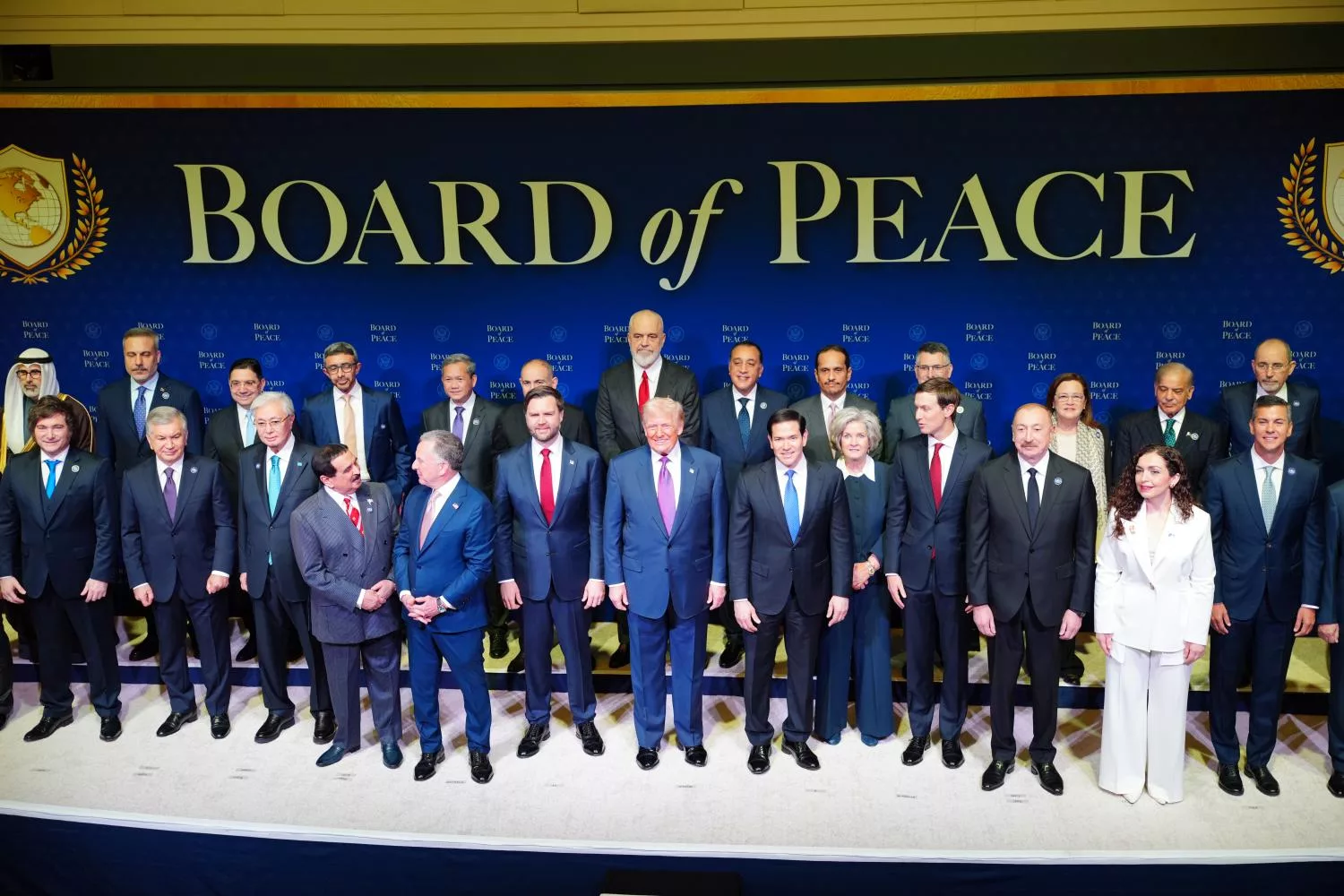
Thai media were perplexed by the appearance of the Thai flag in the background at the inaugural meeting of the Board of Peace (BOP) in Washington, DC last Thursday. After all, Thailand is not a BOP member. In a swift response, the Ministry of Foreign Affairs said the country was attending as an observer.
The main reason local media focused on the board was the presence of Cambodian Prime Minister Hun Manet, one of the 26 founding members. Hun Manet has been conducting a charm offensive during his week-long trip abroad. Maximising his appearance at the board last week to advance Cambodia's narrative on the current Thai-Cambodian conflict, he gave extensive interviews to major international news organisations, repeatedly claiming that Thailand had occupied Cambodian territory and obstructed displaced civilians. That much was clear.
On the same day as the Board of Peace meeting, the Joint Information Centre on the Thailand-Cambodia Situation rejected all Cambodian accusations and insisted that all deployments strictly comply with the agreed joint statement of Dec 27. Foreign Minister Sihasak Phuangketkeow urged Cambodia to avoid any actions that could further complicate the conflict.
At this moment, Thailand does not have a fully functioning government with a clear mandate -- only a caretaker administration. That means Bangkok cannot say much or make any official decisions regarding its position on the BOP. Truth be told, Prime Minister Anutin Charnvirakul was invited by US President Donald Trump to attend the Board of Peace inaugural meeting, but declined because he was leading a caretaker government. Two weeks have elapsed since the general election. Mr Anutin, whose party won the most seats (193), has yet to form a government. By sending its ambassador, Thailand signalled engagement without overcommitment, consistent with a cautious approach.
Bangkok has also said it is studying the proposal on whether to join the board. Two important issues require clarification -- the financial and security aspects. Few details about membership are publicly available. Permanent membership would reportedly cost US$1 billion (31 billion baht), with Mr Trump as permanent chief. He would also have the authority to decide and overrule any decision he sees fit.
Thailand understandably wants clarity on baseline contributions and other obligations. The Trump initiative, which has reportedly raised US$7 billion from members in the Middle East and Central Asia, would require substantial funding going forward. The Borrd of Peace plans to deploy up to 20,000 stabilisation personnel and train 12,000 police officers in the coming years. Indonesia initially pledged to dispatch 1,000 soldiers and recently increased the figure to 8,000. Unpaid founding membership would last only three years. Given the current state of the Thai economy and politics, any open-ended commitment could carry significant risks.
Another concern is the future of Thai-Cambodian security ties. With Cambodia as a founding member, Thailand's joining the BOP could further complicate existing tensions. Since the Asean summit in Kuala Lumpur in October, Hun Manet has been lavish in his praise of Mr Trump and his peace-making efforts. He even nominated Mr Trump for the Nobel Peace Prize last year.
While Thailand is considering membership, the prospective Anutin 2 government is weighing the broader implications for the country's eastern flank.
Needless to say, Thailand seeks to maintain constructive relations with the United States, especially under Mr Trump. For over two centuries, bilateral ties have been strong. During Mr Trump's first term, he invited former Thai prime minister Gen Prayut Chan-o-cha to the White House in October 2017. The two countries are treaty allies with shared security interests and cooperate closely in joint military exercises, including Cobra Gold, the largest multilateral military exercise in Asia.
In contrast, Cambodia's early decision to join the Board of Peace reflects its strategic calculation. Since assuming the premiership in May 2023, Hun Manet has sought to raise his global profile and distance himself from the shadow of his father, Hun Sen, now Senate president. Being part of a high-profile initiative championed by Mr Trump enhances his international standing. During the meeting, Mr Trump even mentioned him by name. Over recent months, Cambodia has signalled clearly its desire to forge closer strategic ties with the US.
The pertinent question is what would happen if Thailand were to join the new body.
If Thailand joins, both countries would fall under the board's purview for maintaining peace and security. Cambodia could potentially bring the conflict before the body. Since tensions broke out, Thailand has relied on bilateral mechanisms to manage the situation. Both Washington and Beijing have played facilitating roles in ceasefire arrangements with Cambodia. Despite their fragility, these agreements still hold. The Thai army has said it prioritises troop safety and reinforcement for emergency purposes.
Many local commentators, both in mainstream outlets and on social media, feel Hun Manet has diplomatically outmanoeuvred Thailand during his recent foreign visits. As the winning parties from the Feb 8 election continue negotiations to form the next cabinet, Cambodia has managed to elevate its global visibility. This comes despite ongoing international scrutiny over online scam centres in Cambodia. Yet Hun Manet has avoided addressing those concerns, instead advancing unhelpful claims about Thailand.
It remains to be seen what decision the new Thai cabinet will make regarding Mr Trump's board. For Thailand, there is no need to rush. Like Bangkok, many of Washington's allies and partners are proceeding cautiously, adopting a wait-and-see approach. They are mindful not to undermine the sacrosanct role of the United Nations and the existing rules-based order. If future geopolitical circumstances warrant it, Thailand can then make its decision.
Comments (0)
No comments yet. Be the first to share your thoughts.
Sign in to leave a comment.