The Iran Gamble - Rob Horowitz | Go Local Prov
In 1981, then Senate Majority Leader Howard Baker famously called President Reagan’s proposal for a 25% cut in the income tax a “riverboat gamble.” …

The Iran Gamble - Rob Horowitz
Rób Horowitz, MINDSETTER™
The Iran Gamble - Rob Horowitz
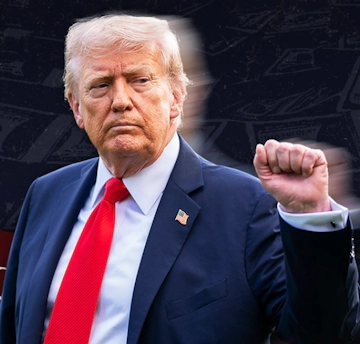
In 1981, then Senate Majority Leader Howard Baker famously called President Reagan’s proposal for a 25% cut in the income tax a “riverboat gamble.” President Trump’s decision to attack Iran without an imminent threat to the United States as justification is a far riskier roll of the dice.
Mr. Trump ordered a full-scale series of airstrikes in a joint operation with Israel aimed at taking out top Iranian leaders and degrading its military infrastructure without first making a case to the nation about why attacking an already weakened Iran was worth the risk of setting off another war in the Middle East. “This was a decision made by one man with no legal basis, little public support and no coherent explanation of an endgame,” Ben Rhodes aptly puts it in his New York Times opinion piece. This is a war of choice, not of necessity, using a formulation that Richard Haas, former president of the Council on Foreign Relations and top George H.W. Bush foreign policy advisor, devised.
It is the case that-- taken on its own terms--the thousands of bombs and missiles that have been dropped by the U.S. and Israel over the first few days of this war have yielded some noteworthy results. These include the killing of Ayatollah Ali Khamenei, Iran’s supreme leader since 1989, as well as a good portion of the top leadership of the government and the Islamic Revolutionary Guards Corps (IRGC), the most hardline component of Iran’s military. We are a long way, however, from the regime change that Mr. Trump has at least hinted is his ultimate objective.
In fact, the current Iranian regime is digging in for a fight that it knows is for its survival. New top leaders are already in place, a result of having prepared a succession plan with this eventuality in mind. It is retaliating across the region with missiles that are hitting Israel, along with American military bases and other targets in the Gulf nations. Its proxy, Hezbollah, is bombing Northern Israel, triggering a fierce Israeli response, including striking targets in Beirut, the capital of Lebanon. Iran is also succeeding in its effort to close the Strait of Hormuz, a critical global shipping route through which about 25% of the world’s oil exports travel.
Perhaps the most important obstacle to achieving our long-term objectives, however, is that in a nation of 90 million people in which the opposition is fractured and unarmed, it is hard to see how airpower alone, no matter how effectively employed, can bring about a fundamental change in the regime. The best one can probably hope for is that there are elements of the military that, combined with a few of the reform faction in the government, could result in Iran being somewhat less oppressive to its own citizens and a less malign force in the region(though their regional influence has already been greatly degraded). But it's as or more likely that the hardline elements within the IRGC and the theocracy will gain even greater power due to our attacks.
These realities are what makes Mr. Trump’s repeated calls for Iranian citizens to rise up and take their country back at best wishful thinking and at worst irresponsible. Without putting any troops on the ground or at least providing the opposition with arms and communication assistance, we are not creating the conditions on the ground conducive to bringing about true regime change.
In terms of another one of Mr. Trump’s professed goals--preventing Iran from producing a nuclear weapon--these attacks may lead to the opposite outcome. There is no doubt we will further degrade its nuclear program, which was damaged by our strikes this past June, but not obliterated, contrary to the president’s repeated claims. This full- scale attack, however-- launched while we were in the middle of negotiations with Iran over how to limit its nuclear ambitions--is likely to convince the regime that working to reach a mutually acceptable agreement with the United States on this question is a fool’s errand, and that possessing nuclear weapons is the only effective deterrent. This is especially the case since Mr. Trump pulled the United States out of the previous nuclear agreement during his first term, even though Iran was adhering to its terms, according to international inspectors, and that it prevented the development of a nuclear weapon until at least 2030.
Since Mr. Trump has recklessly chosen to take us down this unmarked and risky path, I hope it turns out well. From the moment it came into power in 1979, the despotic theocracy that has now governed Iran for nearly 50 years has oppressed its own citizens, mercilessly mowed down thousands of dissenters, and exported terrorism throughout the region. If a fundamental positive change in the regime comes about because of these attacks, the benefits may well end up being worth the costs. Unfortunately, that is far from the likeliest outcome.
No matter how this ends up turning out, Mr. Trump owes the nation a full explication of his reasoning for launching these sweeping attacks and a plan going forward. While he should have sought Congressional authorization before launching these attacks, it is not too late to do so, especially if our military involvement goes beyond the next several days as appears likely. Most importantly, he should actively look for off-ramps, including a return to negotiations on the nuclear program, which was bearing some fruit before it was interrupted by our all-out attack.
As the old saying goes, "it's better to be lucky than good." I sure hope that's the case this time.
Comments (0)
No comments yet. Be the first to share your thoughts.
Sign in to leave a comment.