Trump's Pardon Office Is 'Totally Decimated' - New York Magazine
The Office of the Pardon Attorney under former President Trump has been significantly weakened and criticized for being bypassed in decision-making, with staffers describing it as "totally decimated" and corrupt. Trump’s clemency actions have favored allies and wealthy individuals, often influenced by lobbyists, resulting in high-profile pardons that redirect the traditional review process and sometimes overlook legal concerns. The process has become increasingly opaque and lucrative for lobbyists, raising questions about the influence of money and connections on presidential clemency decisions.

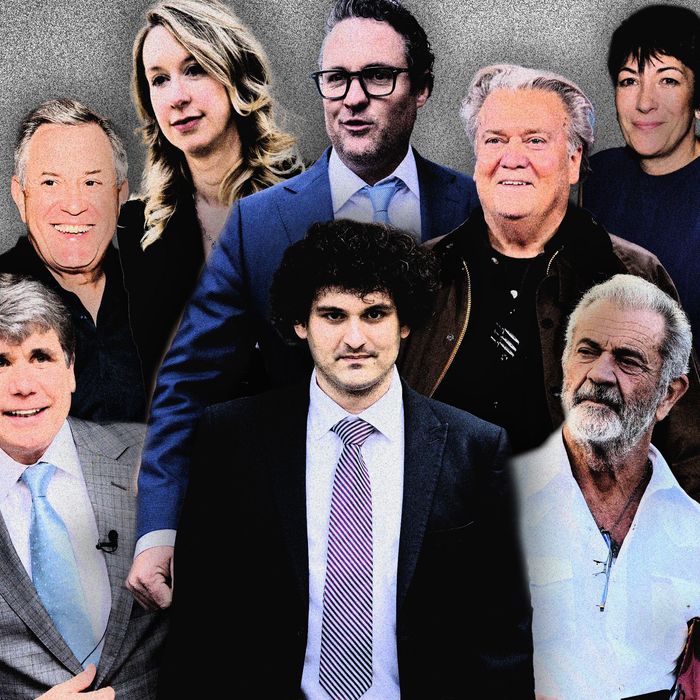
Staffers at the Office of the Pardon Attorney knew it was going to be a rough four years on day one of the new administration, when President Trump, just hours after being sworn in, granted a blanket pardon to nearly 1,600 supporters involved in the January 6 attack on the Capitol. He was just getting started. Over the next two months, Trump commuted the sentences of or wiped the slate clean for dozens of high-profile convicts, among them the Silk Road founder Ross Ulbricht — serving a life sentence for ordering a hit online — and the ex–Illinois governor and fraudster Rod Blagojevich.
“I mean, there were dozens of people who received clemency in addition to the January 6th folks,” says Liz Oyer, who was head of the Office of the Pardon Attorney when Trump came into office. “I was not consulted about any of those decisions.” Oyer, who had been in the position since 2022, was the first former public defender to lead the office that recommends candidates for clemency; her staff of 45 was responsible for reviewing the cases of thousands of offenders to determine who had reformed and was worthy of receiving a pardon. Within days of Trump taking office, she was cut out of the process, which was rerouted from the top down. “I learned about all of them when they popped up in the news,” she says.
The pressure on Oyer and her staff to absolve Trump’s allies grew as the days wore on. In late February 2025, Trump appointees at the Justice Department tasked her with restoring gun rights for certain people with prior convictions. Among the names recommended by the office of Assistant Attorney General Todd Blanche was actor and director Mel Gibson. Over a decade ago, Gibson lost his right to own a firearm after pleading no contest to a misdemeanor domestic-assault charge for beating his ex-girlfriend and allegedly threatening her with a gun. But Trump officials wanted Oyer to consider the president’s friend, whom he had just named as one of his made-up “ambassadors” to Hollywood.** **(While the president is granted the full power of clemency in the Constitution, the Office of the Pardon Attorney is there to provide recommendations on which potential recipients were prosecuted under outdated laws or have shown a willingness to reform.)
Oyer told her superiors at the DOJ she would not recommend the Australian action star get his firearms rights back, citing the danger of past domestic-violence abusers who own guns. After the second time she said “no,” on March 7, she was pulled from a meeting and handed a letter signed by Blanche firing her from the position. Within a month, Attorney General Pam Bondi announced Gibson’s gun rights were restored. “Many, if not most, of the pardons are bypassing any review by anyone in the Office of the Pardon Attorney and are just going straight through the front doors of the White House,” Oyer, now a Substacker, says.
Oyer’s ouster was a death knell for the office, according to some former staffers. “It’s heartbreaking,” says one attorney who left shortly after Oyer was fired. “It’s not that they’re doing it differently that makes it heartbreaking. It’s that it’s corrupt.”
“It’s abominable to me,” says another former attorney who left years ago. “I can’t imagine how it feels that they” — former colleagues still at the pardon office — “know that if they find somebody who merits a grant of clemency, there’s virtually no chance that person is going to get it through the traditional process.”
“The office has been totally decimated,” says another ex-staffer, who adds that it’s “down to somewhere around 15 employees” compared with the 30 to 45 that was standard in previous years. Many took buyouts during the DOGE months; others quit rather than stick around in an office where their work was being ignored. (A DOJ spokesperson said in a statement that the Office of the Pardon Attorney “continues to serve a key role in assisting the President with exercising his constitutional authority to grant pardons and commutations,” insisting there has been “no departure” from past years.)
Those who remain are led by two Trump appointees. The first is Alice Marie Johnson, the “pardon czar” Trump appointed in February who was in federal prison for cocaine trafficking before Trump commuted her sentence in 2018 thanks to a PR campaign by Kim Kardashian. Some ex-staffers hoped Johnson would maintain the office’s mission-based work, that she might see the value of what staffers, many of whom worked as public defenders and advocates of criminal-justice reform, do with the office of the president. “But I don’t know that she has a staff,” says one former employee. The other leader is Ed Martin, the sidelined Trump-supporting attorney who was parked at the pardon office after it became clear he would not pass the Senate appointment process for the U.S. Attorney for Washington, D.C. He has reportedly not been enthralled by the pardon position. “He would apparently come in just once a week,” says one former staffer. “He’s just not there that much.”
By the power of the Constitution, clemency has always been an unlimited right to be used (and abused) by the president. Under Trump, it has become an expensive, unpredictable circus. And the only surefire way to secure a pardon is to get close to the ringleader.
In December, former Honduran president Juan Orlando Hernández was released from a 45-year sentence for drug trafficking after Roger Stone told Trump that Hernández had been prosecuted unfairly under Biden. Crypto billionaire Changpeng Zhao, who violated anti-money-laundering statutes at his exchange, Binance, was pardoned in October just over a month after hiring the lobbying firm of Donald Trump Jr.’s close friend Ches McDowell. In the niche industry of pardon lobbying that has popped up in Trump’s second term, it doesn’t matter if the president knows who you are as long as someone near him does. Of Hernández, Trump said he knew “very little about him” but “they think he was treated horribly and they asked me to do it.” In October, Trump said he had “no idea” who Zhao was, though “good people” told him he had been treated unfairly.
Trump commuted Hernández’s sentence just a month before ordering the attack on Venezuela to kidnap Nicolás Maduro on suspiciously similar drug-trafficking charges. (After Hernández’s release, ProPublica reported that the Trump administration paid for a specialized tactical team to escort him from prison in West Virginia to the Waldorf Astoria hotel on Park Avenue, a move that one Bureau of Prisons staffer called “fucking nuts.”) Trump is even willing to undercut the active cases being pursued by his own Justice Department — like that of Tim Leiweke, the former CEO behind the holding company that owns the Los Angeles Kings. Leiweke was charged last summer for allegedly rigging the bidding process for the University of Texas basketball arena. Then he hired former representative Trey Gowdy, a golf friend of the president. Gowdy told The Wall Street Journal that, the week before Thanksgiving, he was out on the green with Trump when the president asked if there was anything he needed. Two weeks later, Leiweke was granted a preemptive pardon.
It’s unclear how much Leiweke paid Gowdy to get his case in front of Trump, but pardon lobbying is already proving quite lucrative for many close to the current administration. For one month of lobbying for “executive relief” before Zhao’s pardon, Binance paid McDowell’s firm $450,000. (Binance is also a major backer of the Trump family’s stablecoin, holding 87 percent of the supply.) Nursing-home magnate Joseph Schwartz paid serial conservative hucksters Jack Burkman and Jacob Wohl nearly $1 million last April to lobby on his behalf after he was imprisoned on tax-fraud charges; by November, Schwartz was free. Attorneys close to Trump are now seeking fatter fees. Rudy Giuliani was reportedly shopping around a $2 million price last year. One former pardon-office lawyer I spoke to said they were hearing lobbyists go as high as $5 million to work their connections in the White House.
An attorney currently working as a pardon lobbyist says everyone is trying to keep their price hidden. “People are very cagey about this because everybody seems to profess that they have some kind of special access to the White House,” they say. A different pardon lobbyist said the price was worth it for the exceptionally rich on the wrong side of the law: “Most billionaires would pay $1 million to get a decent shot at a pardon, right?”
For the many fraudsters absolved by Trump, clemency is more than just an early release date or a clean reputational slate. By last June, Trump’s pardons in his second term had already wiped out $1.3 billion in restitution payments to victims and the government, according to an estimate released by House Democrats at the time. The largest single debt was wiped out in March 2025 when Nikola founder Trevor Milton was freed of nearly $680 million in payments for his conviction on securities-fraud charges for getting people to invest in his fake electric-truck model, which he rolled down a hill in a promo video to make it seem like it worked. (He is now the CEO of a company trying to build the “fastest and farthest flying” private jet in the world.) Milton skipped the lobbyist route, instead donating over $1.8 million to a Trump reelection fund in the weeks before his win in 2024. The White House has denied the president’s acts of clemency are influenced by any financial contributions, including Milton’s.
The $1.3 billion sum of voided restitution grows with each high-profile pardon: George Santos (fraud, $374,000 voided), junk-bond snitch Terren Scott Peizer (insider trading, nearly $33 million voided), British billionaire Joe Lewis (trading insider information to his ex-girlfriend, $50 million voided). “Trump believes businesspeople should be unrestrained in their ability to enrich themselves,” says Oyer. “He’s granting pardons to people convicted of crimes that are along lines he can sympathize with or relate to.” In particular, pardon lobbyists say, the president who feels he was a victim of a weaponized Justice Department is keen to hear about other wealthy people who were wronged by the law.
Still, no one really knows what Trump will do until he acts. “Nobody knows how it works,” says attorney Alan Dershowitz, who worked closely with Trump on pardons during his first term. One high-profile clemency recipient I spoke with said they learned they would be released by watching the TV in the prison day room. “Everybody’s watching TV, and MSNBC says that I’m going home,” they say. “I was in shock, like pure, straight, fucking shock.”
Without any guardrails on the process, there are some weird anomalies surrounding Trump’s exonerated convicts. He granted clemency to the private-equity executive David Gentile while leaving Gentile’s partner from the same $1.6 billion fraud scheme unpardoned for no apparent reason. Duncan Hunter, the ex-congressman who used campaign funds to fly his pet rabbit across the country, became a lobbyist after being pardoned of corruption charges in Trump’s first term. He is now representing the son of G. Gordon Liddy, the Watergate operative whose sentence was commuted by Jimmy Carter. (He is hoping to get Liddy’s son off his conviction for possession of child pornography.) There are so many pardon recipients that they are even becoming friends in federal prison. William Goodman, pardoned for blocking access to an abortion clinic, says he got to know several January 6 defendants while at FCI Danbury in the fall of 2024. He also became friends with the teacher of a civics course in prison, Steve Bannon, who had been locked up for contempt of Congress after receiving a pardon in Trump’s first term. “I got a lot out of the class. It was a nice reprieve from prison life,” Goodman says. After serving 17 months, he was released in January 2025 and quickly welcomed into the fold of conservative influence, receiving an invitation to sit at the White House VIP table at the National Prayer Breakfast. It was so soon after his release that he didn’t have time to pick up his car and driver’s license from a friend. “The only thing I had was my Bureau of Prisons ID,” he says. “Secret Service was kind of laughing at me.”
At least 33 people arrested for offenses in the Capitol riot have been charged with other crimes since January 6. According to the watchdog group Citizens for Responsibility and Ethics, at least six of those pardoned were charged with child-sex crimes and two with rape. But Trump does not seem to mind that his pardon recipients keep running afoul of the law. In his first term, Adriana and Andres Camberos hired two attorneys close to Trump before receiving commuted sentences for a fraud selling counterfeit 5-Hour Energy supplements. Last month, Trump pardoned the siblings for a similar white-collar scam selling wholesale groceries that were meant for distribution in Mexico.
With nearly three years remaining in Trump’s presidency, former pardon-attorney staffers expect he will only ramp up the clemency sweepstakes. But they also said the pardon spree — which has faced limited public outcry amid Trump’s Epstein and ICE crises — could garner unwanted attention if he were to pardon the wrong candidate. That red line could involve Jeffrey Epstein’s convicted co-conspirator, Ghislaine Maxwell, who told Blanche she would be willing to testify that Trump had done nothing wrong in exchange for a commuted sentence. “It’s so embarrassing,” said a former pardon-office attorney. “That interview should be grounds for disbarment.” (Vanity Fair reports that Representative James Comer told colleagues he had to persuade Trump not to grant the Maxwell pardon.)
As for other famous convicts publicly seeking Trump’s grace, such as Elizabeth Holmes and Sam Bankman-Fried, the high-profile clemency recipient says it’s all about humility. “Admit your shortcomings and be blunt and ask,” they said. “Ask and you shall receive. All these elaborate lawyers and consultants, they’re gonna mine people for money. At the end of the day, what matters is, Are you able to connect with the president?” Or, alternatively, can you pay someone to connect with him for you?
Comments (0)
No comments yet. Be the first to share your thoughts.
Sign in to leave a comment.