Catholic University Scholar: Trump's 'Loophole' Approach Is Reshaping Executive Power
Professor Matthew Green of The Catholic University of America warns that President Trump's use of rapid, unilateral executive actions, often relying on legal loopholes, is reshaping the scope of executive power and raising constitutional and moral questions. Green highlights the pattern of aggressive executive measures during Trump's presidency, including numerous executive orders and emergency proclamations, and emphasizes the broader institutional imbalance and legal challenges faced by current administrations. He advocates for structural reforms to restore checks and balances, stressing that constitutional adherence depends on institutional restraint rather than self-enforcement.

Catholic University Scholar: Trump’s ‘Loophole’ Approach Is Reshaping Executive Power
Professor Matthew Green of The Catholic University of America warns that unchecked speed and unilateral action raise lasting questions about the Constitution and moral limits of the executive branch.
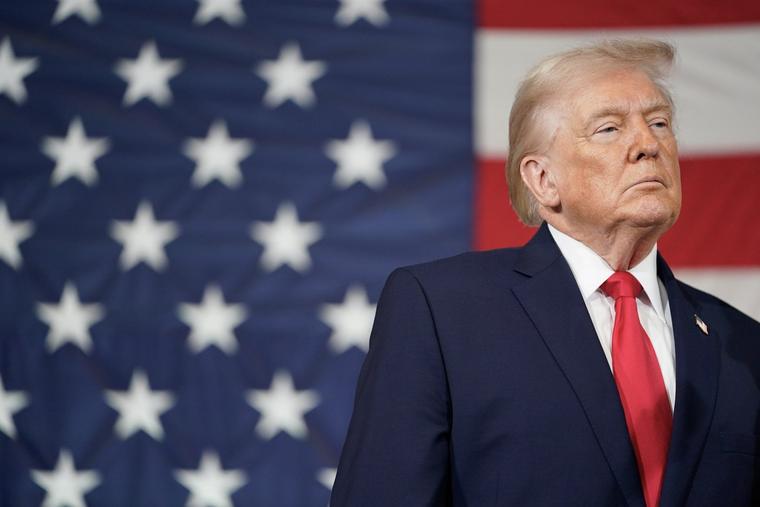
WASHINGTON — The Supreme Court threw a wrench into President Donald Trump’s trade policy on Feb. 20, ruling 6-3 that he overstepped his authority by invoking emergency powers to impose aggressive new tariffs.
Within hours, Trump criticized the decision and called two justices he had appointed “disloyal to our Constitution,” signaling a willingness to pursue “very powerful alternatives.”
The high court’s ruling was the latest in a series of judicial checks on Trump’s second-term agenda and highlighted a broader pattern of aggressive executive action since his return to office in January 2025.
As of Feb. 19, Trump had signed 128 proclamations, 57 memoranda and 243 executive orders in his second term, according to Ballotpedia. While still short of the historic heights set by Franklin D. Roosevelt during the Great Depression and World War II, his early-term pace of executive orders alone already surpasses those of other 21st-century presidents, signaling a style that prioritizes speed and direct control.
“I sometimes call President Trump the ‘loophole president,’” said Matthew Green, a politics professor at The Catholic University of America. “He’s looking at the law and he’s saying, ‘Well, this sounds like something I could do. It doesn’t say I can’t do it, so I’m going to do it.’”
Green, who has written extensively on political institutions, checks and balances and the nation’s founding documents, presented a lecture to Catholic University students and faculty on Feb. 19 on “The Imperious Executive: Lessons From the Current Trump Presidency.” Green argued that the modern presidency has become uniquely suited to leaders inclined toward unilateral power and increasingly difficult for other institutions to restrain.
“Trump, in short, likes to do things by himself,” Green said. “The modern presidency is a great office for someone who wishes to do that because of the power given to him.”

Green also cited former FBI director James Comey, who recently described Trump’s presidency as a “bungee jump,” with events unfolding faster than institutions can respond. Journalist Gabe Fleisher has called it the “sandcastle presidency”: impressive in construction, but nonpermanent, since executive orders, emergency declarations and politically charged indictments can be reversed or dismissed. “It’s not necessarily because what Trump is doing is wrong,” Green said, “but it’s the means of which he’s doing it.”
The warning is structural, not partisan.
“You might agree with Trump,” he added, moving on to reference a Democratic U.S. representative. “You might think what he’s doing is great. But imagine a President Ocasio-Cortez who decides that she wants to start indicting JD Vance, and Hugh Hewitt, and the staff at Fox. And then you have the same problem in reverse.”
Presidents of both parties have relied on executive authority when Congress has stalled — Obama with Deferred Action for Childhood Arrivals (DACA), Biden with student-loan forgiveness — but Green said, “Trump is on steroids.”
Trump has moved quickly on immigration, reshaping border enforcement, restricting asylum pathways and altering refugee admissions. He has also used executive orders to adjust health-related regulations, influence energy policy and shift trade rules. The modern presidency, with control over federal agencies and enforcement authority, provides a leader extraordinary leverage to test limits and absorb significant backlash.
Legal resistance has been significant. According to Just Security, the current administration has faced more than 660 lawsuits, with 217 total plaintiff wins.
Green said that volume of litigation underscores what he views as a broader reality of modern power: the contest between the branches of government. Rather than settling lasting boundaries, he argued, such clashes often generate new tests of authority.
For Green, who described himself as an “Article I person,” the recurring legal battles reveal a longer-term imbalance between the branches. Strengthening Congress, narrowing emergency powers or reconsidering how parties select candidates could help restore equilibrium, he said.
Catholic voters, he noted, remain “closely divided.” Trump’s Supreme Court nominations marked a milestone on abortion, a central issue for many Catholics, while debates over immigration and social welfare expose tensions between partisan alignment and Catholic social teaching.
Those divisions reflect broader pressures on the presidency. Powers like executive orders and emergency authorities allow presidents to act quickly — often faster than the constitutional system can normally respond.
“I think people’s expectations need to be tempered,” Green said. “We’ve increasingly thought, ‘We need a solution, and we need it now. Presidents can act.’ Bur our system was not designed to be that way, not at the national level.”
He said the implications extend beyond a single administration. “I do think — and I hope that this is a lesson that people have learned whether, again, you agree or disagree with Trump — that the Constitution is not self-enforcing,” Green said.
Green explained what he meant by that: It exists “on paper,” but the nation has long relied on people to “follow what it says,” to listen to “trusted legal experts” and not “look for loopholes to think about how they might take advantage of it.”
For him, the solution is not simply legal reform. “We should think … long term and not just say, ‘Well, that’s just Trump,’” he added. “It’s not.”
Comments (0)
No comments yet. Be the first to share your thoughts.
Sign in to leave a comment.