Dems warn DOJ's new anti-fraud unit will target Trump's opponents - Democracy Docket
Democratic senators expressed concerns about the DOJ's new National Fraud Enforcement Division, questioning its independence and potential partisan use, especially given its reported reporting directly to the White House. Critics argued that the division may be a "Potemkin prosecutor" aimed more at political targeting than addressing fraud effectively, citing previous dismantling of anti-fraud units by the Trump administration. Despite bipartisan support from some Republicans, there were inquiries about how the division would coordinate with existing DOJ units and concerns over its actual focus.

Dems warn DOJ’s new anti-fraud unit will target Trump’s opponents
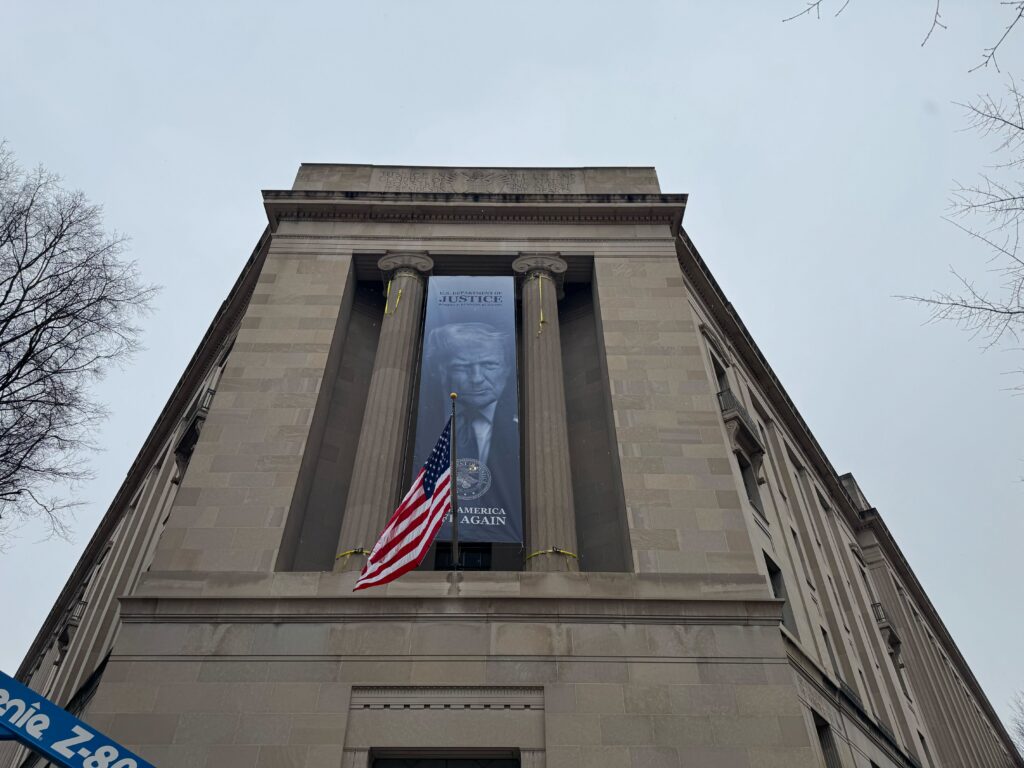
Democratic senators sharply questioned President Donald Trump’s pick to run a new Department of Justice (DOJ) division focused on fraud, doubting the real aim of the new unit and its independence from the White House.
The White House announced the creation of a National Fraud Enforcement Division within the DOJ in January, saying it would focus on “rampant fraud” across the country allegedly driven by immigrants.
As thousands of ICE and CBP agents flooded Minnesota, sparking vociferous opposition from Democratic state officials and widespread public demonstrations, the Trump administration glommed onto a New York Times report on a fraud scheme there. Even though the plot — led by a white American citizen — was already being prosecuted, the White House claimed it as evidence of Somali migrants’ widespread abuse of welfare programs.
Get updates straight to your inbox — for free
Join 350,000 readers who rely on our daily and weekly newsletters for the latest in voting, elections and democracy.
Announcing the new unit, Vice President J.D. Vance suggested it would be “run out of the White House,” rather than answer to DOJ leadership.
Such an unprecedented set up would further demolish longstanding norms that isolated the DOJ from the White House and partisan politics. Vance claimed having a DOJ official report directly to him was “actually constitutionally legitimate,” despite the novelty of the arrangement.
Trump later nominated Colin McDonald, a veteran assistant U.S. attorney from San Diego, to lead the controversial new unit. McDonald, currently associate deputy attorney general, previously helped lead a corruption case against Honolulu’s police chief.
When Sen. Dick Durbin (D-Ill.), the Senate Judiciary Committee’s ranking member, asked McDonald if he was co-chair of DOJ’s Weaponization Working Group, which has been heavily criticized for targeting Trump’s political opponents, McDonald deflected instead of offering a simple confirmation.
“President Trump was right early in the administration to identify the reality of weaponization in the federal government in the recent past, and commissioned the Department of Justice to review certain prior cases… and to ensure that those misuses of the government power were not engaged in again,” McDonald said.
Durbin also grilled McDonald over his involvement in the hiring of Jared Wise, a Jan. 6 rioter who called U.S. Capitol Police “nazis” and urged other insurrectionists to kill them. McDonald declined to criticize Wise’s employment at the Justice Department, saying he wasn’t involved in hiring decisions.
Durbin characterized the new office as a Potemkin prosecutor, designed to give the impression that this administration is taking fraud seriously when it is in fact enabling it.
“Last April, Attorney General [Pam] Bondi disbanded the team responsible for prosecuting cryptocurrency crime. Last September, she dissolved the Consumer Protection Branch in the Department of Justice, which enforced federal laws prohibiting fraud against consumers,” Durbin said. “The administration also did away with the Justice Department’s Tax Division, [which was] established a century ago by Robert Jackson and led efforts to prosecute tax fraud. And the Attorney General has gutted the Public Integrity section, responsible for enforcing laws against public corruption.”
“The worst examples of waste, fraud and abuse in recent years are coming from inside the Trump administration,” Durbin added, noting how multiple donors to Trump’s campaigns and inauguration funds have received presidential pardons clearing their fraud convictions.
During the State of the Union address Tuesday night, Trump reiterated that the new unit would report to the White House, saying “I am officially announcing the war on fraud to be led by our great Vice President JD Vance.”
But as the hearing began, Grassley entered into the record an organization chart, previously reported on by Democracy Docket, showing the new office report to the deputy attorney general, like other assistant attorney generals do, saying it should put to rest speculation that the White House might “exert improper influence.”
Durbin highlighted the contradictions, saying it’s still unclear whether the National Fraud Enforcement Division would operate like a normal DOJ unit.
“The confusion doesn’t stop there. Justice Department officials cannot agree whether the [new] division will absorb staff and resources from the existing civil and criminal division fraud offices, or whether it will hire new staff,” Durbin said. “Last week, I spoke to Attorney General Bondi asking for clarification on these issues. She has not responded.”
Sen. Chris Coons (D-Del.) said he worried that, given that this administration has previously dismantled other anti-fraud units, this new DOJ division would be used by the White House to simply harass Democratic-led states.
“I am concerned [that] the administration is less concerned with specifically fighting fraud than with targeting people and states it dislikes or that it has a partisan agenda against,” Coons said.
The Government Accountability Office has estimated that the federal government loses between $233 billion and $521 billion annually to various forms of fraud.
Republicans generally applauded the new division’s creation, although some, like Grassley, questioned how it would fit in and coordinate with existing units with jurisdiction over investigating fraud.
Comments (0)
No comments yet. Be the first to share your thoughts.
Sign in to leave a comment.