DOJ attempts to evade state ethics oversight of its attorneys - Democracy Docket
Legal groups swiftly denounced the department's latest attempt to avoid oversight.

DOJ attempts to evade state ethics oversight of its attorneys
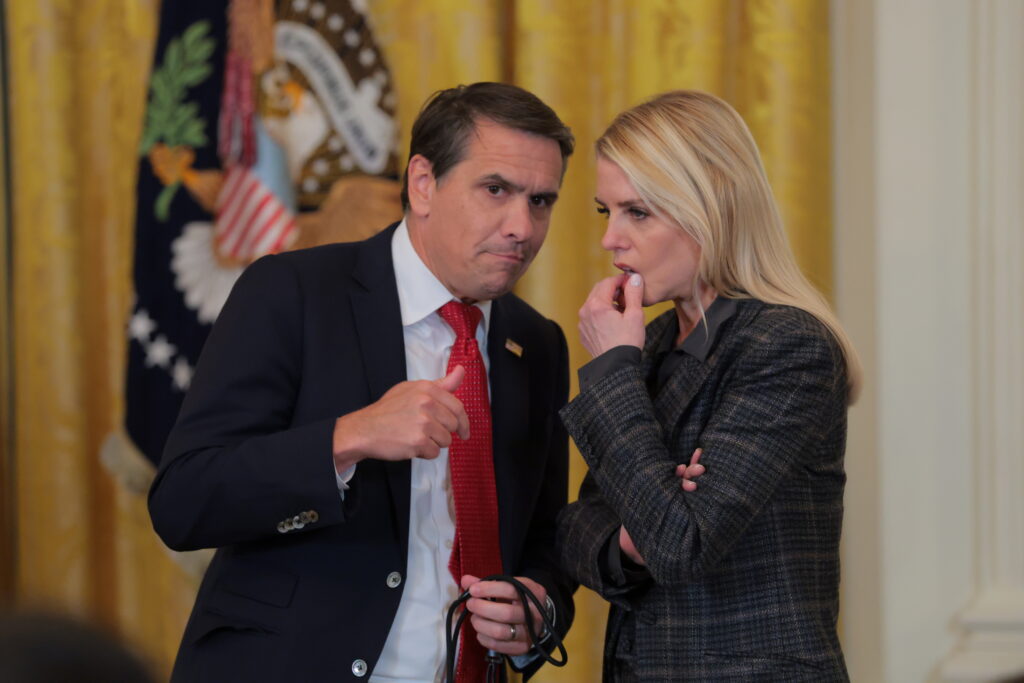
The Department of Justice (DOJ) is attempting to short-circuit state bar ethics investigations into department attorneys through a new and unexpected proposed rule.
Posted in the Federal Register Wednesday, the proposed regulation seeks to suspend any state ethics proceedings against current or former DOJ attorneys if the department decides to conduct its own review first.
If finalized after a 30-day public comment period, the proposed regulation would in theory allow the DOJ to head off any state bar investigation into a DOJ lawyer by opening — and indefinitely stalling — its own investigation into the attorney.
Get updates straight to your inbox — for free
Join 350,000 readers who rely on our daily and weekly newsletters for the latest in voting, elections and democracy.
The proposal was swiftly denounced by legal groups as the Trump DOJ’s newest attempt to limit ethical oversight of its lawyers by courts and bar associations.
“This appears to be the latest example of DOJ leadership trying to avoid oversight and accountability for their lawlessness,” Stacey Young, executive director of Justice Connection, a support network for DOJ alumni, said in a statement to Democracy Docket.
“They purged the head of [Office of Professional Responsibility] and the ethics office. They mock congressional oversight and slander whistleblowers. Now they want to be unaccountable to state bars,” Young added.
All U.S. attorneys, including those in the DOJ, must be licensed by a state bar association to practice law in the U.S. Such associations are responsible for investigating ethics complaints against the lawyers they license, and if necessary, taking disciplinary actions for misconduct, including suspending law licenses and permanent disbarment.
“Subverting state bar authorities would give DOJ lawyers carte blanche to violate ethics rules,” Barb McQuade, a University of Michigan law professor and a former U.S. attorney, said in a social media post Wednesday reacting to the proposed regulation.
The proposal also attempts to allow the department to take “appropriate action” against any state bar disciplinary authorities if they refuse to pause their investigation until the DOJ’s internal review is completed.
Joyce Vance, a University of Alabama Law professor who is also a former U.S. attorney, noted in a social media post that the DOJ has no authority to suspend state bar operations.
The DOJ “can’t avoid investigation and incredible allegations of clear, ethical violations, like lying to or misleading judges and failing to follow court orders if state bars want to pursue them,” Vance wrote. “The process is usually long and involves wrist slaps instead of jumping straight to disbarment, but egregious cases deserve serious discipline.”
The DOJ claimed the new policy is needed to end “the weaponization of the bar complaint and investigation process.”
“Over the past several years, political activists have weaponized the bar complaint and investigation process,” the proposal reads. “This unprecedented weaponization of the State bar complaint process risks chilling the zealous advocacy by Department attorneys on behalf of the United States, its agencies, and its officers.”
The department’s new proposal comes after legal professionals and watchdog groups have filed several state bar complaints against DOJ officials, including Attorney General Pam Bondi and Deputy Attorney General Todd Blanche.
Last year, over 70 lawyers and former judges, including two Florida Supreme Court justices, requested that the Florida Bar investigate Bondi for allegedly seeking to compel DOJ lawyers to violate their ethical obligations while defending President Donald Trump’s policies.
In response, the Florida Bar refused to investigate Bondi because it does not take actions against sitting officers appointed under the U.S. Constitution while they are in office. The Florida Supreme Court refused to force the state bar to open an investigation.
Lawyers Defending American Democracy, a non-partisan group dedicated to upholding the rule of law that was involved in the ethics complaint against Bondi, also denounced the new proposal as seeking “to remove an entire cohort of lawyers, that is, DOJ lawyers, from the disciplinary requirements that the public has long relied upon.”
“To ensure that this proposal will never provide appropriate discipline of its own lawyers, it offers no timelines under which a state could follow up if the Department of Justice does not,” the group said in a statement to Democracy Docket. “And all of this occurs in an administration that is adept at running out the clock to its own advantage.”
The Legal Accountability Center, a bipartisan legal watchdog group, also filed a complaint against Blanche, requesting that the New York Attorney Grievance Committee investigate him for multiple different alleged ethics violations.
Speaking at a Federalist Society event earlier this year, Blanche claimed that the department was in a “war” against bar associations and also vowed to curb their oversight powers by limiting referrals and hiring outside counsel to fight disciplinary actions. Some state bar associations swiftly denounced Blanche’s comments.
“Any lawyer who abandons their oath to the constitution and who intentionally misrepresents facts or law in court is properly subject to discipline, even if they work for the Department of Justice,” Kathleen Sweet, the president of the New York State Bar Association, said in a statement at the time.
“The judiciary is a coequal branch of our government,” Sweet added. “It is not an inferior entity to be treated with disdain as an irksome impediment to the will of the executive branch.”
Comments (0)
No comments yet. Be the first to share your thoughts.
Sign in to leave a comment.