Epstein Files: A Roadmap of Post-Cold War Corruption and Geopolitical Chaos
Recently released documents from the Department of Justice reveal that Jeffrey Epstein was a central figure in international politics, facilitating security agreements, arms sales, and backchannels involving various nations and actors, illustrating a network of global corruption and influence. The files shed light on the activities of a transnational elite, dubbed the “Epstein Class,” that has impacted the post-Cold War world order through secrecy and manipulation. Discussions involving investigative journalists and policy experts are planned to analyze the broader implications of Epstein’s role in these geopolitical dynamics.

Epstein Files: A Roadmap of Post-Cold War Corruption and Geopolitical Chaos
Troves of documents released by the Department of Justice over the past several months reveal the extent to which convicted sex offender Jeffrey Epstein was a central figure in international politics. Epstein was a global power broker, helping to facilitate security agreements and arms sales for Israel, working with powerful Emiratis to further their interests in Africa, establishing a backchannel between Israel and Russia during the Syrian Civil War, and much much more.
Epstein and his network are emblematic of a powerful transnational elite in which relationships were in many cases built on greed, manipulation, secrecy and corruption. These documents offer a rare window into the inner workings of how these elites — dubbed the “Epstein Class” — quietly infected and influenced the diminishing post-Cold War world order for decades. How can we benefit from our new knowledge and understanding of this, and what was Jeffrey Esptein’s role in it all?
Kelley Vlahos, editor-in-chief at Responsible Statecraft and senior advisor at the Quincy Institute, will speak with Murtaza Hussein, who has been engaged in deep investigative reporting on the Epstein Files for Drop Site News, and Harrison Berger, correspondent at *The American Conservative. *An additional panelist to be announced.
Program
Entities
Panelists
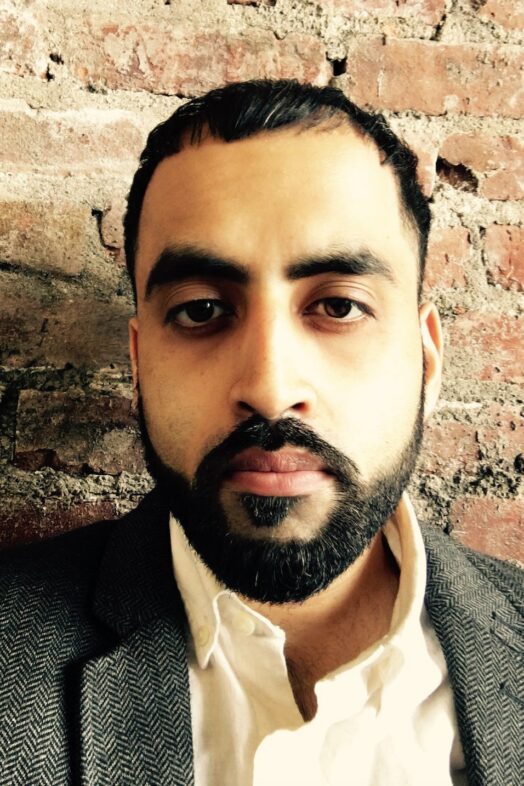
Murtaza Hussain
Murtaza Hussain is an investigative journalist and reporter at Drop Site News, specializing in national security, foreign policy, and human rights. Formerly with The Intercept, he focuses on U.S. foreign policy in the Middle East and South Asia, including coverage of surveillance, state violence. He has reported from Egypt, Iraq, Turkey, Jordan, Pakistan, and other countries and covered top secret national security leaks from Pakistan, Iran, India, as well as the FBI and NSA.
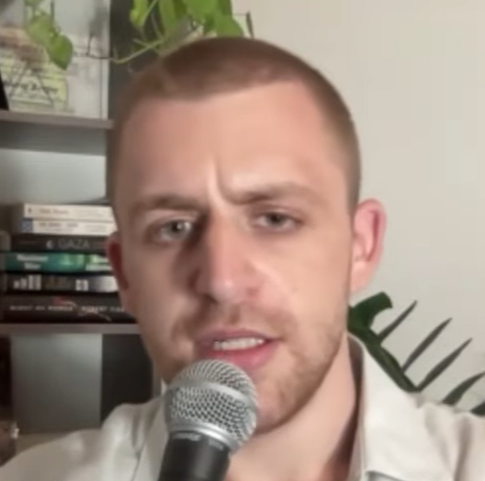
Harrison Berger
Harrison Berger is a correspondent at The American Conservative. He has contributed to Drop Site News, The Nation, and Responsible Statecraft. Previously, he was a researcher and producer for System Update with Glenn Greenwald. His work focuses on civil liberties and U.S. foreign policy. He studied Political Science and Russian Studies at Union College (NY).

Kelley Beaucar Vlahos
Kelley Beaucar Vlahos is editor-in-chief at Responsible Statecraft and a senior advisor at the Quincy Institute. Previously she was executive editor of The American Conservative magazine. Before joining TAC in 2017, Vlahos served as a contributing editor to the magazine, reporting and publishing regular articles on U.S. war policy, civil liberties, foreign policy, veterans, and Washington politics since 2007. She spent 15 years as an online political reporter for FOX News at the channel’s Washington D.C. bureau, as well as Washington correspondent for Homeland Security Today magazine
Comments (0)
No comments yet. Be the first to share your thoughts.
Sign in to leave a comment.