House passes Jenna Persons-Mulicka's voter citizenship verification overhaul - Florida Politics
The Florida House approved a bill requiring U.S. citizenship verification for voter registration, with applicants whose status cannot be verified registered as "unverified voters" eligible for provisional votes. The legislation mandates data sharing between agencies, narrows acceptable ID forms at polls, and introduces an automated vote validation process, while also addressing election security and candidate qualification rules. Democratic amendments aimed at expanding voting access were rejected, with opponents citing concerns over potential barriers and fraud.

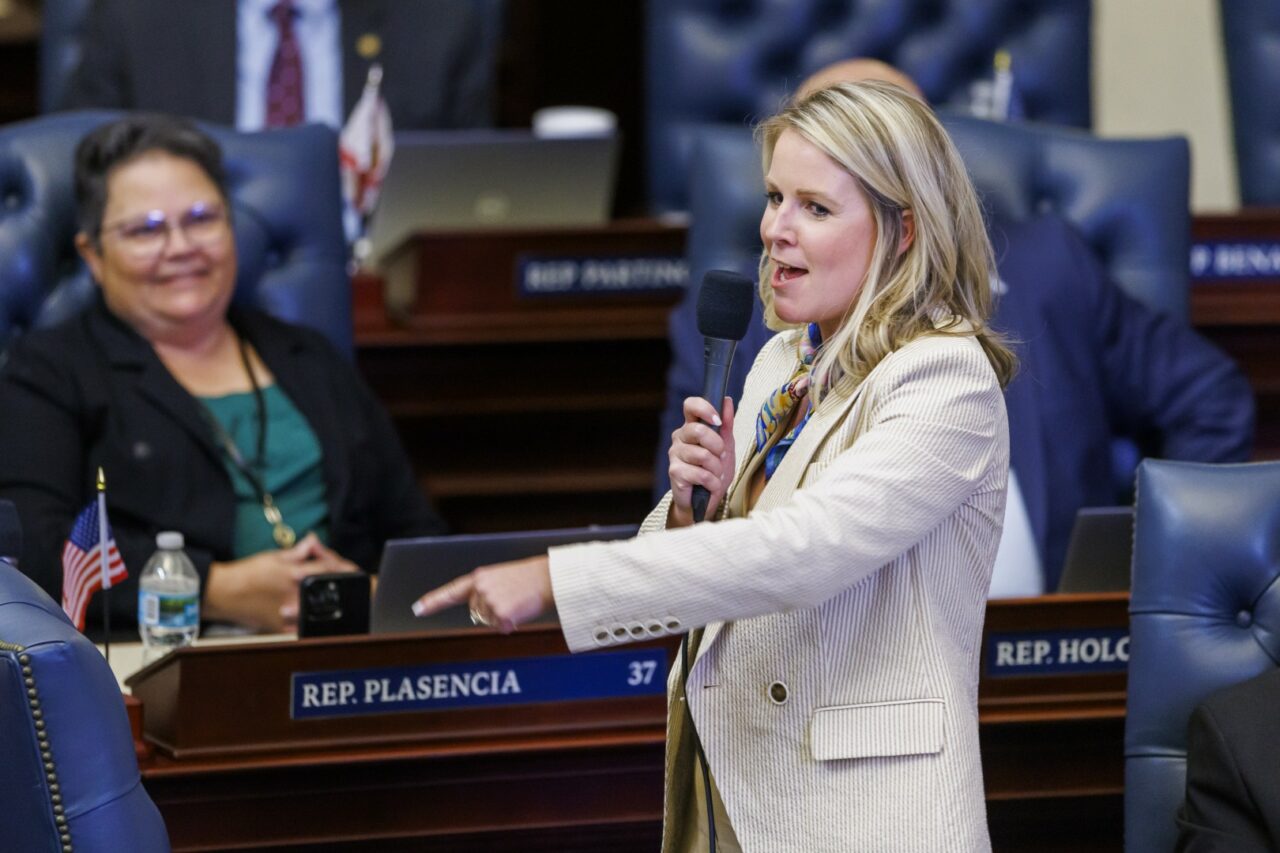
The House has approved a sweeping elections bill that would require verification of U.S. citizenship before voters can cast a ballot, mandate statewide re-checks of existing voter rolls, and overhaul how election results are audited.
Sponsored by Fort Myers Republican Rep. Jenna Persons-Mulicka,
requires that an applicant’s U.S. citizenship be
HB 991maintained by the Florida Department of Highway Safety and Motor Vehicles (
verified through records) before a voter registration application is deemed valid.
FLHSMVThe measure would also tighten voter eligibility verification, narrows acceptable forms of identification at polling places, revises candidate qualification rules and creates a new automated, independent vote-validation process before results can be certified.
“We are the gold standard on election integrity, and we continue to be that gold standard … because we build on the work that prior legislatures have done. Our job doesn’t end when we say Sine Die,” Persons-Mulicka said.
“But the work of this Legislature continues, and I ask for you to vote up on this election integrity bill today. A vote for this bill is a vote for our Constitution, it’s a vote for Floridians, and it’s a vote for the United States of America.”
If an applicant’s legal status as a U.S. citizen cannot be verified, the individual would be registered as an “unverified voter” and would only be allowed to vote provisionally, with the ballot counted only if sufficient documentation of citizenship is provided by 5 p.m. on the second day following the election.
The measure would also require the Florida Department of State to verify the citizenship status of registered voters whose status has not previously been confirmed and notify supervisors of elections if a voter’s citizenship cannot be verified. Supervisors must then provide notice and an opportunity for the voter to submit proper documentation.
The bill also mandates expanded data sharing between FLHSMV and the Department of State with weekly reports that include information identifying residents who presented proof of U.S. citizenship when obtaining a driver license or identification card. The legislation would also require most voting to be completed on an official paper ballot using a pen or marker compatible with the voting system, and replaces manual audits with an automated, independent vote-validation process. The validation must be completed and made public prior to certification.
The measure also ** revises the list of valid photo IDs** accepted at polling places, eliminating certain nongovernment-issued identification cards such as Student IDs or retirement home IDs that are currently accepted under law.
In addition, HB 991 would establish a five-year statute of limitations for election fraud and expand prohibitions on foreign national involvement in elections, including restrictions on certain contributions and expenditures. The bill would also require candidates seeking to qualify as a member of a political party to have been a registered member of that party for 365 consecutive days before the beginning of qualifying, and requires no-party candidates to have been unaffiliated for that same period.
Before final passage, the House adopted a strike-all amendment from Persons-Mulicka making technical and conforming changes to the bill to candidate qualification language and refining administrative procedures tied to verification and enforcement.
Democrats, meanwhile, offered a series of amendments aimed at easing access to the polls, including proposals to preserve student IDs as acceptable identification, soften documentation requirements and expand voter protections. Each was rejected, with Republicans maintaining the underlying bill already contains notice and due process safeguards and warning certain Democratic proposals could open the door for fraud.
Comments (0)
No comments yet. Be the first to share your thoughts.
Sign in to leave a comment.