Senate Dems aim to disrupt Trump bid to declare national emergency on elections
The fast-track process would ensure a public vote and put pressure on Republicans to take a position.

Senate Dems aim to disrupt Trump bid to declare national emergency on elections
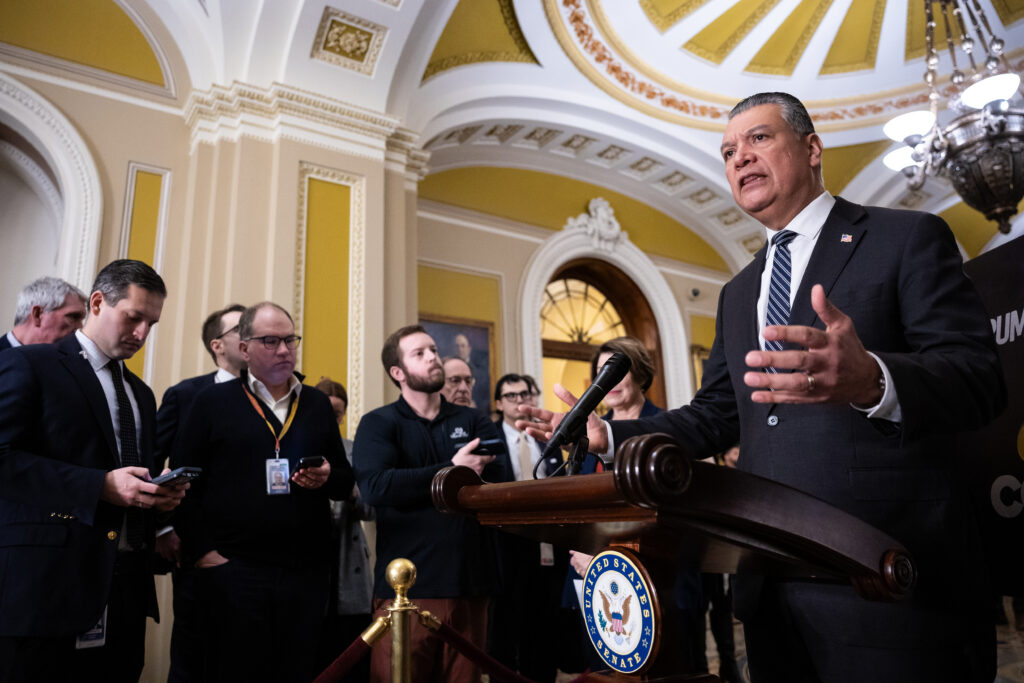
If President Donald Trump attempts to declare a national emergency to seize control of federal elections, Senate Democrats say they are ready to force an immediate vote aimed at blocking it.
Trump has not yet declared an emergency on elections. But Democrats are moving preemptively amid reports that Trump allies are circulating a draft executive order asserting sweeping federal authority over elections.
Get updates straight to your inbox — for free
Join 350,000 readers who rely on our daily and weekly newsletters for the latest in voting, elections and democracy.
Sen. Alex Padilla of California, the ranking Democrat on the Senate Rules Committee, warned that Trump is considering “a new illegal, unconstitutional Executive Order as part of the ongoing Trump Takeover of our elections.”
In a letter to fellow senators last week, Padilla wrote that the potential order “may include banning mail-in voting, eliminating major voting registration methods, voter purges, and/or new document barriers for registering to vote and voting.”
Padilla said he and committee staff are monitoring the situation closely and are prepared to act if Trump moves forward with any such plan.
“Even more disturbingly, the President is also reportedly considering whether to declare an emergency under the National Emergencies Act (NEA) and the International Emergency Economic Powers Act (IEEPA) related to elections,” Padilla wrote, referencing two laws that allow presidents to declare national emergencies and activate certain authorities in specific circumstances. “Put simply, no President has the power under the Constitution or any law to take over elections, and no declaration or order can create one out of thin air. Any such fake emergency should lack any force of law, and any attempted actions pursuant to such a declaration would face extremely strict scrutiny in the judicial system.”
To immediately counter such a move, Padilla attached a draft joint resolution that would terminate any election-related emergency declaration under Section 202 of NEA. That law gives Congress the authority to end a president’s emergency declaration through a fast-tracked vote.
Under the procedures laid out in the law, the resolution would receive expedited consideration in the Senate. If a committee fails to act within 15 calendar days, it is automatically discharged. Within three days after that, the full Senate must consider the measure — effectively forcing every senator to go on the record.
Padilla made clear he intends to use that mechanism if necessary and argued that neither the NEA nor the IEEPA gives a president power over voting systems or ballot access.
“If the President does escalate his unprecedented assault on our democracy by declaring an election-related emergency, I will swiftly introduce a privileged resolution and force a vote in the Senate to terminate the fake emergency,” Padilla added. “Any such fake emergency should lack any force of law, and any attempted actions pursuant to such a declaration would face extremely strict scrutiny in the judicial system.”
Even if Congress were to pass the termination resolution, however, Trump could veto it — meaning lawmakers would need two-thirds majorities in both chambers to override. Still, the fast-track process would ensure a public vote and put pressure on Republicans to take a position.
The move comes as Democracy Docket reported last week on a draft executive order circulating among Trump allies that would declare a national emergency related to elections and assert sweeping federal authority over how they are run. The draft leans heavily on conspiracy theories about foreign interference in past U.S. elections and seeks to justify federal intervention in elections, which are primarily administered by states under the Constitution.
Trump previously issued an executive order related to elections, much of which has been blocked by federal courts. Padilla noted that those legal challenges are ongoing and suggested any new order would likely face similar scrutiny.
Any election-related emergency declaration by Trump could be used to justify sweeping restrictions to mail voting, voter registration or other core election procedures.
Comments (0)
No comments yet. Be the first to share your thoughts.
Sign in to leave a comment.