Trump Administration Only Briefly Abandons Orders of Sanctions Against Law Firms
<p>WASHINGTON — Government court filings Monday indicated the Trump administration was abandoning its tactic of sanctioning law firms that opposed the president’s policies but a day later the Justice Department appeared to change course again. President Donald Trump issued executive orders in early 2025 against major law firms that did legal work for clients the […]</p>

Trump Administration Only Briefly Abandons Orders of Sanctions Against Law Firms
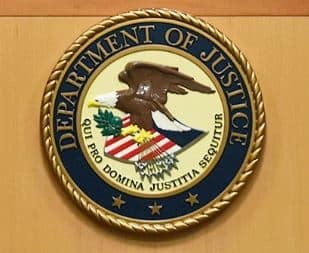
WASHINGTON — Government court filings Monday indicated the Trump administration was abandoning its tactic of sanctioning law firms that opposed the president’s policies but a day later the Justice Department appeared to change course again.
President Donald Trump issued executive orders in early 2025 against major law firms that did legal work for clients the White House viewed as politically adversarial.
The orders sought to revoke the firms’ security clearances, bar their access to federal buildings and end their government contracts. For some of them, it could have meant the end of their firms’ existence.
They came from some of the nation’s biggest and most prestigious law firms, such as Perkins Coie, Jenner & Block and WilmerHale. They sometimes represented Democratic leaders; clients in politically controversial lawsuits; or diversity, equity and inclusion practices.
Law firms that chose to settle agreed to provide nearly $1 billion in pro bono services to conservative causes rather than face the possibility of sanctions.
When other firms sued — such as Susman Godfrey — judges in Washington, D.C.’s federal courts unanimously blocked the sanctions as unconstitutional. Several described the measures as retaliatory efforts that undermined First Amendment protections and threatened the independence of the legal profession.
On June 27, 2025, the U.S. District Court for the District of Columbia granted a summary judgment dismissing the Justice Department’s claims, which led to the appeal.
The order of summary judgment quoted Supreme Court precedent in saying that “[a] government official can share h[is] views freely and criticize particular beliefs, and he can do so forcefully in the hopes of persuading others to follow h[is] lead. What he cannot do, however, is use the power of the State to punish or suppress disfavored expression.”
On Monday, the Justice Department filed a motion to voluntarily dismiss its appeal of the lower court ruling. It followed months of courtroom defeats and growing criticism from legal scholars and members of Congress.
Justice Department officials did not explain their change in policy either in a court filing or public statements.
Their brief motion said, “Pursuant to Federal Rule of Appellate Procedure 42(b)(2), Defendant-Appellants respectfully move to voluntarily dismiss these consolidated appeals, with all parties to bear their own fees and costs.”
On Tuesday, the Justice Department sent emails to law firms that it had sued saying it planned to renew its defense of the president’s executive orders. The emails said the government planned to withdraw its voluntary dismissal of appeal.
It was unclear what legal strategy the Justice Department plans to pursue. It’s also uncertain whether the U.S. Court of Appeals for the D.C. Circuit will allow the Justice Department to renew its case.
Initially, Justice Department officials said they would take their appeals to the Supreme Court if they believed it was necessary. They said the firms were using the courts for political motives that they said “weaponizes the American legal system.”
Other Justice Department allegations said the firms engaged in racism by defending diversity, equity and inclusion programs in the military and elsewhere. The Trump administration said some of the firms undermined the American electoral process by opposing his efforts to overturn results of the 2020 presidential election that was won by Joe Biden.
Their lawsuit restated President Trump’s belief that “lawyers and law firms that engage in activities detrimental to critical American interests should not have access to our nation’s secrets, nor should their conduct be subsidized by Federal taxpayer funds or contracts.”
The Justice Department’s motion Monday to drop its appeal was welcomed by bar associations and the affected law firms.
“The government has capitulated, which is a fitting end to its plainly unconstitutional attack on Susman Godfrey and the rule of law,” the law firm said in a statement. “In doing so, it has abandoned any attempt to defend the indefensible executive order against our firm.”
It added, “We did not seek this fight, but neither did we run from it. And we won.”
A WilmerHale statement said the firm was pleased to see the “foundational principle” of a client’s right to counsel vindicated.
You can reach us at *[email protected] and follow us on Facebook and *Twitter
We're proud to make our journalism accessible to everyone, but producing high-quality journalism comes at a cost. That's why we need your help. By making a contribution today, you'll be supporting TWN and ensuring that we can keep providing our journalism for free to the public.
Donate now and help us continue to publish TWN’s distinctive journalism. Thank you for your support!
Comments (0)
No comments yet. Be the first to share your thoughts.
Sign in to leave a comment.