Trump and MAGA are not Conservative - Calvin University Chimes
The article argues that Donald Trump and the MAGA movement do not embody true conservatism, which historically emphasizes limited government, constitutional restraint, and moral integrity. It criticizes Trump's actions, such as expanding executive power, disregarding legal norms, and engaging in crony capitalism, as antithetical to conservative principles. The author warns that equating Trump’s rhetoric with conservatism risks undermining the constitutional order and enabling authoritarian tendencies, emphasizing the need for authentic conservative values rooted in restraint and respect for institutions.

“I’m worried that I will be the last Republican President.” So said George W. Bush — the 43rd President of the United States and a good man — in 2016 to Mark Updegrove, author of “The Last Republicans.” Unfortunately, he spoke prophetically. As a conservative myself, I am particularly troubled by a peculiar ritual now performed across American politics: a charismatic leader says something sharp against “The Establishment,” waves vaguely in the direction of tradition and mentions faith ambiguously, and suddenly half the country declares the resurrection of conservatism.
Thus we are told that Donald Trump and his MAGA movement is synonymous with the conservative movement. This record is in desperate need of correcting. It doesn’t take much to realize that the Trump Presidency represents something else entirely: a Machiavellian politics of authoritarian power untethered from principle, perversely dressed in the language of faith and arrayed against the common good. And, if many supposedly conservative folk continue confusing “talking the talk” for “walking the walk,” they will wake up to discover they have spent a decade cheering the destruction of their own tradition.
At its core, conservatism distrusts concentrated authority. From Edmund Burke to George W. Bush, the conservative instinct has been simple: human beings are fallen, therefore power must be divided. The architecture of the Constitution — separation of powers and federalism — is not mere inefficiency; it is moral realism. Trump’s government rejects this outright. He has consistently treated the presidency not as an office bound by constitutional restraint but as a personal instrument of self-enrichment and convenient immunity. Congress, the very branch designed to deliberate and legislate, has been reduced to a prop, wherein the Republican caucus has become a cheerleading section. Conservatives once warned that executive orders were dangerous shortcuts around democratic accountability; under Trump, they became the preferred method of governing (George W. Bush averaged 36 executive orders per year, Donald Trump signed 225 of them in 2025 alone). The conservative position is that lawmaking should occur through the legislature.
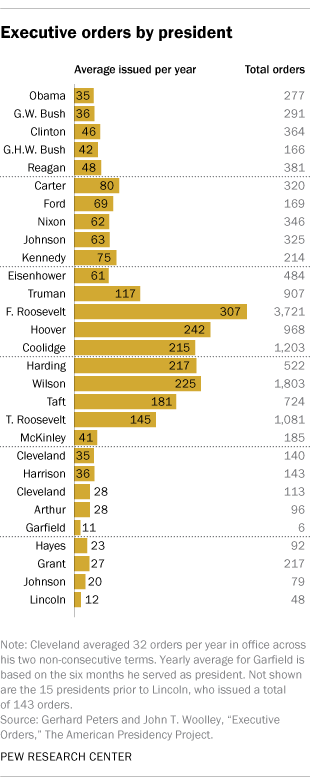
This was perfectly articulated by conservative Supreme Court Justice Neil Gorsuch last Friday, February 20, when he wrote, “Yes, legislating can be hard and take time. And, yes, it can be tempting to bypass Congress when some pressing problem arises. But the deliberative nature of the legislative process was the whole point of its design.” Later on in the same concurring opinion, Justice Gorsuch aptly refers to the legislative process as a “bulwark of liberty.” Yet MAGA cheers as Trump repeatedly bypasses Congress via unilateral executive action when it produces desired outcomes. That is antithetical to the true conservatism exemplified by Justice Gorsuch. That is transactional Caesarism — cheering a charismatic populist authoritarian when he does things that you like, without a care for rule of law or ethics. Ironically, the pursuit of centralized administrative power has historically been a progressive project. Conservatives opposed it precisely because we know that concentrated civic authority erodes liberty. Trump did not dismantle that system — he personalized it.
MAGA defenders would doubtlessly cite pro-life victories in response to this, yet the record reveals not conviction but opportunism. Yes, defunding efforts toward Planned Parenthood appeared in major budget legislation — and conservatives rightly applauded — but funding quietly returned through administrative maneuvering when political incentives shifted. Again, the irony here is that abortion is something that progressives protect and frame not as an attack on natural rights, but as “pro-choice.” This move by the Trump administration is, once again, transactional Caesarism. A true conservative statesman treats natural rights as goods ordained by God and worthy of protecting independent of polling. Trump treats them as a constituency management problem, and suspends them where and when he will. The distinction matters. A movement that reduces moral claims to bargaining chips is no conservative movement at all.
Immigration enforcement is a legitimate function of the state, and conservatives historically support thorough border policy because political communities require definition to preserve civic order. But the methods matter. Under Trump, U.S. Immigration and Customs Enforcement (ICE) increasingly operates not merely as a law enforcement body but as the President’s personal police force — an instrument of humiliation and fear — which often operates with utter disregard for the rule of law and will very likely interfere with the midterm elections. Warrants, congressional oversight, and probable cause are treated as trivial and often unnecessary. Publicized raids, spectacle arrests, dehumanizing carceral conditions and expansive, illegal surveillance practices have gone beyond immigration enforcement. Conservatives once warned against secret-police mentalities precisely because unchecked enforcement powers threaten the very Republic itself, and totally undermine the “social contract.” A government strong enough to arrest everyone you dislike is strong enough to arrest you. Conservatism remembers this. MAGA forgets it or simply does not care.
Political corruption is not a partisan category; it is a human one. And yet, the Trump administration has normalized behavior that conservatives condemn as textbook crony capitalism, worthy of impeachment and removal. Financial ventures intertwined with political office — including controversies reported by The New York Times surrounding crypto ventures and self-enrichment — reveal a governing ethic (or lack of one) alien to conservative thought. Free markets depend on trust, and trust depends on constitutional rule. When public office becomes a cash cow so you can pay your personal legal fees and keep your Mar-a-Lago mansion, capitalism itself is under attack. The conservative defense of free enterprise has always rested on some discernable legitimacy in government; Trump’s cronyism is destroying that legitimacy faster than any ill-conceived socialist critique ever could.
I could have gone into numerous more policies and decisions made by the President and defended by MAGA, including but not limited to: demolishing the East Wing of the White House, regulating trade by using the tariff power without discrimination between allies and enemies, taking regulatory oversight of critical infrastructure from states, withdrawing from important treaties and other agreements, negotiating with terrorists and international pariahs, bullying our allies in internationally televised meetings, disrespecting NATO, raising the debt limit, needlessly banning travel from numerous countries, and attacking private companies and firms that do or say things that the President does not like. I regrettably do not have the space.
If Trump’s “walking the walk” contradicts conservative philosophy, why does the label persist? Because he “talks the talk.” He promises budget cuts while increasing the deficit. He invokes faith while practicing political vengeance, and proclaiming that he hates his enemies. He praises tradition while eroding the very institutions that preserve it. The modern right hears familiar phrases and assumes familiar principles, but conservatism is not a vocabulary list, it is a disposition. Restraint, humility, respect, and moral consistency even when inconvenient: that is real conservatism. Trump offers the emotional satisfaction of rebellion against elites without the discipline of ordered liberty. He channels conservative frustrations while dismantling conservative safeguards.
Many Christians defend Trump as a cultural protector, yet refuse to acknowledge how his governing style contradicts Christian political thought at nearly every point. Christianity distrusts Nietzsche’s will-to-power, but Trump glorifies it. Christianity honors truthfulness, but Trump lies pathologically. Christianity restrains vengeance, but Trump operationalizes it — and people die. The irony is painful: many believers defend the Trump administration as a champion of faith precisely because he speaks religiously inflected rhetoric, even while embodying a politics closer to domination than service. A ruler who promises protection in exchange for unyielding loyalty to him (or else) is not a defender of faith; he is a test of it. For many, President Trump serves a function not unlike that of the golden calf — only now there is no Moses coming down from the mountain. Perhaps he was deported.
Real conservatism is slow, oft-frustrating, procedural, and principled. It prefers losing honorably to winning destructively. It insists that the means shape the ends — that preserving the constitutional order and rule of law matters more than achieving any single policy victory. By that definition, Trump is not conservative. He is post-constitutional populist: a figure who uses conservative language to justify expanding executive discretion while weakening mediating institutions, including the United States Congress and civil society itself. And here lies the deepest danger: a generation of voters now actually believes that conservatism means enabling a strong leader to defeat his enemies rather than limiting leaders to protect neighbors.
Trump and his MAGA coalition are many things — nationalist, populist, disruptive, dangerous, transactional — but conservative is not one of them. If conservatives equate the rhetoric of victory with virtue, they will lose both. If they mistake opportunism for philosophy, they will inherit neither tradition nor republic. And if they defend absolute power instead of restraining it, they will discover too late that they have not saved America from progressivism; they have enabled a more powerful federal government than they can possibly imagine.
The United States can only survive when conservatism serves as the bulwark against unchecked progressivism — and vice versa — along with similarly sinister manifestations of authoritarianism. President Trump is now deploying the rhetoric of conservatism to mask his brand of the very authoritarianism that conservatism exists to protect against. For the sake of the nation, we all must hope that conservatism can survive Trump 2.0, and that one day, we might see the first truly Republican President since George W. Bush.
Comments (0)
No comments yet. Be the first to share your thoughts.
Sign in to leave a comment.