Trump DOJ's own goals could stymie its efforts to undermine midterms - Democracy Docket
Election law experts warn that efforts by the Trump-era DOJ to challenge and undermine the upcoming midterm elections may be hindered by the department's legal missteps, inexperience, and declining credibility. The DOJ is expected to pursue aggressive litigation similar to past efforts, but recent court rejections and eroded trust could limit its influence. Additionally, the department's shift away from neutrality, staffing reductions, and questionable legal tactics raise concerns about the potential impact on election integrity, though officials also acknowledge judicial skepticism may act as a check against unfounded claims.

Trump DOJ’s own goals could stymie its efforts to undermine midterms
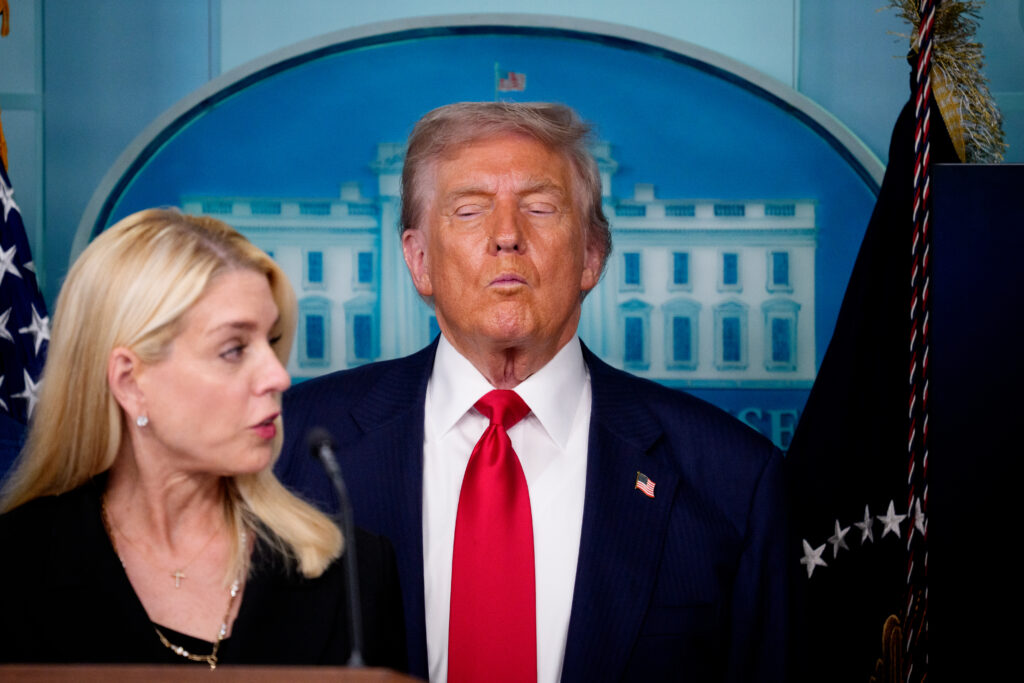
Among other steps that President Donald Trump will take to undermine a fair election this fall, he’ll likely use the U.S. Department of Justice (DOJ) to bring a flood of litigation aiming to challenge Democratic wins and shape the rules in the GOP’s favor.
But election law experts say those efforts may stumble over the administration’s many legal missteps: the likely weakness of the claims themselves, the lack of experienced and competent voting lawyers in DOJ’s ranks, and the department’s record of consistently misleading the courts, which judges may hold against it.
“Is DOJ going to allege crazy shit, just like in Fulton County?” asked Justin Levitt, a constitutional law professor at Loyola Marymount University and a former DOJ voting official, referring to the department’s debunked claims about potential fraud in Georgia, which underlay its recent seizure of election records there. “Absolutely, yes…. That’s the new normal for the Department of Justice.”
But, he added: “The quantity of litigation isn’t all that frightening when the quality is crap. And the quality is crap.”
Get updates straight to your inbox — for free
Join 350,000 readers who rely on our daily and weekly newsletters for the latest in voting, elections and democracy.
With Trump’s poll numbers at record lows, democracy advocates and Democrats are preparing for the White House to use a range of tactics to prevent a fair election — from sending federal law enforcement to the polls to seize mail ballots, to declaring a state of emergency to allow for a full takeover of the voting process.
These nightmare scenarios can’t be ruled out and pose a clear threat to U.S. democracy. But experts say it’s more likely — all but certain, in fact — that Trump will use the DOJ to try to rehash the same kind of legal challenges he made in 2020, which led to more than 60 courtroom losses.
“Most of us expect that they’re going to try more of that,” said Walter Olson, a senior fellow at the libertarian Cato Institute. “Of course, the courtroom stuff is a logical place to look.”
Under Attorney General Pam Bondi, the DOJ has abandoned its longstanding neutrality, instead working to “zealously advance” Trump’s agenda. Rather than trying to impress judges, this DOJ prefers to bully the president’s political opponents and mug for the cameras.
And since Trump retook office, Olson noted, the DOJ has sued 25 states for unfettered access to their voter registration records, appointed a U.S. attorney to head “election integrity” investigations nationwide (leading to the Fulton County raid), and pursued prosecutions against sitting Democratic members of Congress, journalists, a former FBI director, and New York’s current attorney general.
So, Olson fully expects this Justice Department to litigate the outcome of the upcoming midterm elections — nominally on behalf of the American people, functionally for Trump. But just what those investigations, criminal charges or civil lawsuits will be, Olson isn’t sure.
“They want to walk away from a big midterm loss having delegitimized the results in the minds of their followers and as many other people as possible,” Olson said. “But that’s kind of minimal — that’s almost like a best case scenario, if all they try is to cast doubt on legitimacy.“
“I have no doubt that you will see aggressive nonsense theories, warmed-over conspiracy, wild shambolic allegations, and you’ll probably see lots of it,” added Levitt, the former DOJ official. “You’ll see it before election day. You’ll see it after election day. You’ll see it during certification.”
Writing on the Execution Functions Substack, New York University Law Professor Bob Bauer, a veteran Democratic election lawyer, noted that the DOJ quietly took the 8th edition of its Federal Prosecution of Election Offenses manual off its website. Given Trump’s rhetoric, Bauer wondered if this presages a move away from the department’s existing policies, which embrace “the basic principle that the federal government’s role in elections is ‘prosecution, not intervention.”
“The manual counsels that a prosecutor conducting an election crimes investigation should abstain from the seizure of voting materials related to a particular election until after that election has been certified, and refrain, as well, from voter interviews because these could ‘chill legitimate voting activities,’” Bauer noted. “Moreover, it advises that the prosecutor has ‘no authority to send FBI Special Agents or Deputy U.S. Marshals to polling places.’”
If the purpose is to investigate and punish a crime committed, rather than prevent one from happening, the DOJ would have little justification to intervene in ongoing vote counts. But a shift in the agency’s approach could signal greater willingness to keep election administrators from certifying results.
In response to Democracy Docket’s inquiries, a DOJ spokesperson said the document, which has not been updated since 2017, was currently under review to ensure accuracy.
Another factor that could weigh against the department: Once the paragon of legal professionalism, the DOJ has repeatedly embarrassed itself in court during Trump’s second term, filing error-riddled briefs against the wrong plaintiffs and in the wrong jurisdictions.
“There are very few lines this president won’t cross,” David Becker, the executive director of Center for Election Innovation & Research and a former DOJ Civil Rights Division attorney, told reporters on a recent press call. “However, I have confidence in the election officials all over the country. This administration and this Department of Justice has racked up one of the most remarkable records of losing of any department of justice in the country. They have hollowed out their ranks. They have gotten rid of the experienced individuals. They have hired solely for loyalty.”
The DOJ has reportedly lost around 10,000 employees and the U.S. Attorneys Offices workforce has shrunk 14 percent. At the same time, Trump’s militant deportation push has caused the number of habeas corpus petitions to increase exponentially, burdening the DOJ’s decimated ranks all the more. Bondi and her lieutenants have taken to social media to recruit attorneys “who support Donald Trump,” hiring inexperienced lawyers who’ve previously peddled lies about the 2020 election.
“That’s going to be a really big problem when this President seeks to engage in conduct that violates the Constitution, and he’s relying upon lawyers who are overworked, who are not experienced, who might only have their loyalty to fall back on,” Becker said.
Over the past year, the DOJ’s Civil Rights Division has filed lawsuits against 23 states (and Washington, D.C.) demanding unfettered access to their voter registration rolls. The aggressive litigation strategy baffled legal observers, who also questioned the department’s purported grounds for obtaining state voter records.
So far, things are not going well for the feds.
“They’re 0 for 3,” Levitt said. “Seems they’re going to be 0 for 24 or 1 for 23 — and that’s only to allow an alarming possibility that some judge might go rogue somewhere.”
“DOJ has managed to tank [their] credibility, throwing 150 years of excellence down the drain is very short order,” Levitt added. “When I say they’ve shot their credibility, I think that’s across the board — in a profoundly bipartisan fashion — and it’s only going to get worse between here and there.”
In doing so, the DOJ has weakened its ability to rely on deferential standards the federal government usually enjoys in court.
Government lawyers could normally rely on the presumption of regularity, which lets judges assume, absent clear evidence to the contrary, that federal officials have discharged their duties properly, with procedural regularity and for real, non-pretextual reasons.
But as the administration’s lies have piled up, defense attorneys have begun to closely track the DOJ’s abnormalities. And judges have become increasingly quick to dismiss this administration’s assertions in court, as federal agencies — particularly ICE and other immigration enforcers under DHS — have defied judicial orders by the dozens. The DOJ’s assertions, once treated as nearly inviolable, are now subject to extreme suspicion.
“The government representations are simply not as reliable — both about the motivation of the government and as to the facts that they aren’t swearing to,” said Olson. “There is no comparison. It’s just much less reliable. They are much more insouciant … about what the judges are going to think of them once further facts emerge.”
That indifference to truth has led federal judges to open contempt proceedings against the administration, and one in Minnesota using the court’s inherent contempt powers to charge a government lawyer $500 a day until her order requiring the return of a migrant’s identification documents was carried out, even though the lawyer claimed ICE’s delay in doing so was unintentional.
“The average opinion is showing more skepticism and a little more incredulity than it would have under Trump’s first administration or in more normal times,” Olson said.
When U.S. Judge David O. Carter issued the first written rejection of the DOJ’s many voter roll cases in California, he made clear that he distrusted the department’s in-court assertions, which contradicted federal officials’ extrajudicial statements.
“The Court is not required to accept pretextual, formalistic explanations untethered to the reality of what the government has said outside of the courtroom,” Carter wrote.
Dismissing the DOJ’s lawsuit against Oregon shortly thereafter, U.S. Judge Mustafa Kasubhai, cited Carter’s decision and then made the rejection of regularity unequivocal.
“The presumption of regularity that has been previously extended to Plaintiff [DOJ] that it could be taken at its word—with little doubt about its intentions and stated purposes—no longer holds,” Kasubhai wrote. “When Plaintiff, in this case, conveys assurances that any private and sensitive data will remain private and used only for a declared and limited purpose, it must be thoroughly scrutinized and squared with its open and public statements to the contrary.”
The overall effect on the presumption, Olson said, is “not as a single switch that is turned on or off, but rather as a matter of erosion.”
Whether judges set precedent for dismissing the deferential standard ahead of the DOJ’s anticipated attack on November’s election outcomes or not, Levitt said, is almost beside the point.
“I’m actually not that scared of the DOJ’s capacity to do evil — at least in and through the courts — because they have no magic button,” Levitt said. “There is a select set of statutes that they’re empowered to enforce, and they might jump into other cases where they have power to intervene. But one more crappy set of briefs isn’t anything that’s going to make anyone sort or shake and tremble in their boots.”
“To delay or postpone or interfere with certification, you can’t just say ‘delay certification because extraterrestrials are invading from the sky,’” Levitt said. “You have to actually show some degree of proof the thing you’re pointing it to is a problem. And not just — this is really key — not just isolated mistakes by election officials that a conspiracy theorist can gin together as some kind of master stroke.”
And, Levitt added, “one constant” over the past year is that “trial courts and appellate courts — regardless of who appointed the judge — have been, in a pretty sober fashion, reviewing facts and law and assessing claims against reality.”
While the FBI’s recent seizure of 2020 election records in Fulton County had Levitt concerned, he said it would ultimately undermine the later attempts to seize ballots. “It’s a complete anomaly,” he said, noting the considerable issues in the FBI’s affidavit, which relied on debunked conspiracy theories. “The attention that it has gotten is going to give magistrates a lot of pause.”
Still, the raid — and the possibility that the FBI might have intentionally misled the magistrate judge who issued the warrant — has worried election officials and voting rights advocates across the country, who fear it presages attempts to seize ballots mid-count.
While concerned with the “lawless actions” taken by the Supreme Court on the shadow docket to block lower court injunctions against the Trump administration, Levitt argued that an emergency ruling forcing a state election official to comply with DOJ demands would go even further.
“An affirmative injunction to make somebody do something specifically is a lot harder — and a lot harder to order in one sentence without rationale,” he said.
Still, the Supreme Court’s willingness to ignore the concerns of voters, especially when it comes to emergency election interventions, remains a source of angst.
In 2024, the court’s conservatives allowed Virginia officials to cull 1,600 registered voters from its rolls just days before the general election — even though federal law prohibits registration purges within 90 days of a race. Last year, they appeared to set aside a lower court’s findings of fact to allow Texas Republicans to use a racially gerrymandered map in the upcoming midterms. And, most infamously, the Supreme Court voted 5-4 to stop Florida’s recount in 2000, handing the presidency to George W. Bush.
Olson again said he wouldn’t try to predict what the Supreme Court might do if control of the House or Senate hung on the outcome of a lower court’s decision. But, “it seems almost inconceivable that this Court would not, like most other courts, agree to handle it very, very quickly.”
Comments (0)
No comments yet. Be the first to share your thoughts.
Sign in to leave a comment.