Trump's Secret Weapon For Keeping MAGA Support - BuzzFeed
The article discusses how Truth Social, a social media platform launched by Donald Trump, functions as an echo chamber that reinforces users' existing beliefs by primarily displaying content aligned with their views, thus limiting exposure to opposing perspectives. Experts highlight that such environments provide safety and validation but can be harmful by promoting incomplete information, fostering black-and-white thinking, and preventing critical reflection. Trump’s use of the platform is seen as a way to reinforce his worldview, surround himself with yes-men, and communicate without opposition.

It’s hard to go a day without hearing about something Donald Trump shared on Truth Social, the social media platform owned by Trump Media & Technology Group. The president uses the service to share everything from racist memes of the Obamas to a strange, self-praising acknowledgement of the Rev. Jesse Jackson’s death.
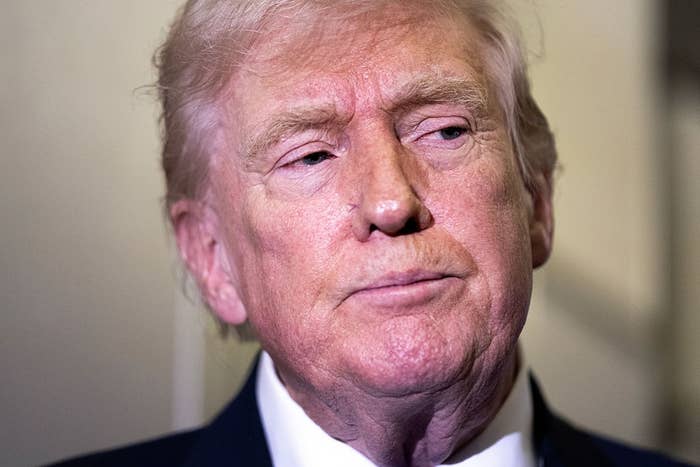
Experts in psychology and politics say Truth Social is a questionable social network for a number of reasons. But perhaps the most egregious is that the platform ― much like other social media networks ― is an “echo chamber,” which “is an environment in which people seek out and consume information that reinforces their existing beliefs, values or opinions,” said Manahil Riaz, a psychotherapist in Houston and the owner of Riaz Counseling.

Echo chambers became a more common topic of conversation around the 2016 election, said Claire Robertson, an assistant professor of psychology who focuses on political polarization and extremism at Colby College in Maine. “And it was ... the first acknowledgment that what we see online is not necessarily representative of the offline world,” Robertson said.

Online, we curate our friends, the brands we follow, and the news we see. If I don’t want to see updates from an ex, I don’t have to — and while that can be fine for a situation like that, it’s not so great when it comes to news and politics.
“The only content that we’re seeing online is from people who agree with us. That was the original kind of conceptualization of an echo chamber,” Robertson explained.
And while it is true that social media mostly shows us opinions from people who align with our beliefs, we will occasionally see content from people or news we don’t agree with ― but not in a way that’s helpful, either. “It does happen, but for the most part, we see opinions from people who are most extreme versions of either side of the aisle. And then that can become substantiated in our minds as what’s normative or representative of those different groups of people,” Robertson said.
Truth Social was designed to ‘bring together like-minded individuals.’

Truth Social was launched in 2022 as a conservative response to Trump getting kicked off of Facebook and Twitter (now known as X) after the Jan. 6 insurrection.
“Facebook, Instagram, TikTok, and everything, they can become echo chambers, right? They just house echo chambers on both sides, whereas something like Truth Social versus Bluesky [which tends to be more left-leaning], they are much more specific to one side,” Robertson explained.
The platform was also created with the intention of being a conservative outlet, Robertson said.
Social media channels like Facebook and X were “originally designed to be like a digital town square. That’s the line that a lot of these tech companies still say,” Robertson said.
They were meant to be a place where people from different areas and backgrounds could speak to each other. “There was this kind of hope that it would improve democracy. ... That obviously did not happen,” Robertson added.
Echo chambers create a feeling of safety.

“Echo chambers are environments that might appeal to some people, because there is a sense of safety, comfort and validation,” Riaz said. “As humans, we love those three things. In these spaces, people are surrounded by beliefs and perspectives that align with their own, which can make their world feel very confirmed and secure.”
In an echo chamber, there isn’t pressure to back up or reassess beliefs, either.
“When we’re engaging with opposing viewpoints, that requires a significant amount of emotional and cognitive effort,” such as discomfort, curiosity, and tolerance,
Someone who prioritizes familiarity also may be more drawn to an echo chamber, she said.
“These environments can affirm a sense of reality, a sense of belonging, while protecting their ideas. To be exposed to opposing ideas can be very destabilizing, like, ‘Who am I if I’m not Republican?’ My identity is so tied with this that it almost feels like a death. It almost feels like it’s a threat,” Riaz noted.
Being in an echo chamber is problematic and even dangerous.
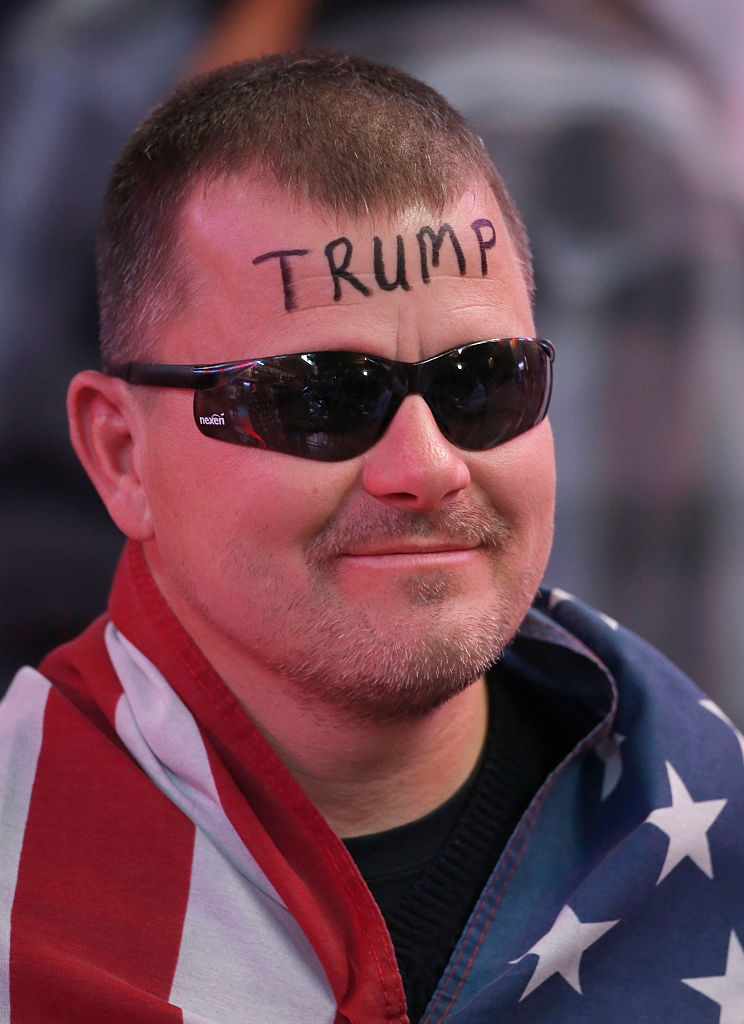
This goes for anyone, whether you’re on the left or the right. It even extends to opinions outside of politics.
“Any time that people are exposed to an extremely biased selection of something — opinions people — they start to think that’s A: how everything is, and also B: how everything should be,” Robertson said. “And neither of those things are inherently true.”
Online echo chambers also lead folks to have “severely incomplete information,” she said.
“I also think that we make the most mistakes when we don’t have complete information,” Robertson said. “We aren’t skeptical of information that we agree with. We take that as ground truth. And I think that’s where the echo chambers can really be a problem.”
Beyond not being exposed to other opinions, the fact that folks in echo chambers don’t question what they’re seeing is the bigger concern. Echo chambers simply promote the idea that your own perspective is the “absolute truth,” Riaz explained.
“There’s little room for alternative viewpoints or critical reflection,” she said. “Within that echo chamber, ideas are repeated, reinforced, creating this black-and-white understanding of the world, and this is harmful because most social and political cultural issues are so complex and nuanced that they rarely have a single or a simple explanation.”
Opposing perspectives may feel overwhelming or even threatening, which can lead to people dismissing perspectives that don’t align with theirs and close them off to meaningful dialogue. “Whatever the contradicting information is, it could be labeled as an exception rather than a meaningful challenge that exists,” Riaz said. “So the mindset can reinforce harmful stereotypes and prejudice.”
In the case of Truth Social, specifically, Trump gatekeeps information on the platform by only sharing updates on this one site, which doesn’t reach everyone.
“Gatekeeping information is usually not good, just from history ... things tend to get more equitable when information is shared more widely,” Robertson said.
Why might Trump be attracted to an echo chamber?
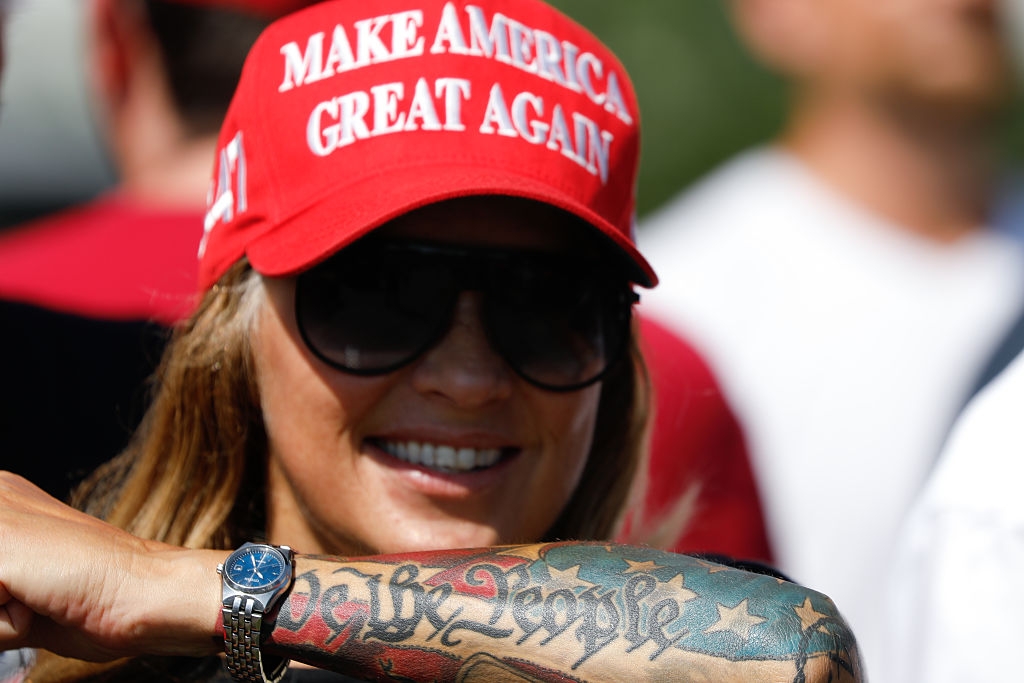
Between reinforcing false beliefs, prejudice, stereotypes and keeping certain information away from others, the echo chamber of Truth Social isn’t an ideal space for anyone, especially a president. But experts feel there are a few reasons why he may be drawn to this kind of space.
“I think he wants his worldview to be reiterated. I think he’s power hungry, and he can’t go to the general public and say something, that he has to create an audience for himself,” Riaz said.
He typically surrounds himself with “yes” people, Riaz said — people who say yes to his every request, demand or idea. When someone disagrees with him, like recently when Republican Sen. Tim Scott and Katie Britt criticized his posting of a racist video of the Obamas, Trump reportedly lambasted them.
Since Truth Social was created as a conservative platform and an “alternative” version of social media, Trump’s thoughts are only backed up here instead of questioned, as they reasonably should.
He turns to Truth Social as a place where people will listen and “treat me like the entitled person I am,” Riaz said.
This article originally appeared on HuffPost.
Comments (0)
No comments yet. Be the first to share your thoughts.
Sign in to leave a comment.